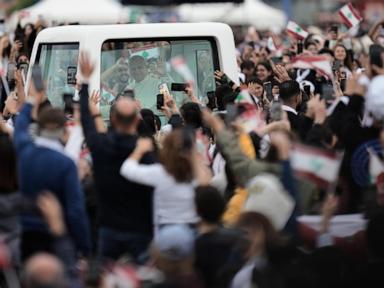
The utilization of synchronous video communication by the Holy See to engage with clergy in high-conflict zones represents a shift from symbolic distance to immediate operational solidarity. When Pope Leo XIV bypassed traditional diplomatic channels to initiate a direct video call with thirteen priests in southern Lebanon, the action functioned as more than a gesture of comfort. It served as a tactical deployment of the "Papal Presence" to stabilize the morale of a critical administrative layer within the Maronite and Melkite hierarchies. In volatile border regions, the local priest is not merely a religious figure; he is the terminal node of a global distribution network for humanitarian aid, psychological support, and community cohesion.
The Triad of Ecclesiastical Crisis Intervention
To understand the mechanics of this engagement, one must analyze the intervention through three distinct structural layers: the validation of the individual, the reinforcement of the institution, and the signaling of geopolitical interest.
1. The Validation of Local Node Resilience
In high-stress conflict environments, the primary risk to an organization is "node failure"—the psychological or physical withdrawal of the person in charge of a specific sector. By establishing a direct visual and auditory link, the Vatican executes a high-level validation of these thirteen individuals. This contact functions as a psychological force multiplier. The priests, who operate under the constant threat of kinetic exchange, receive a direct mandate that elevates their local suffering into a global narrative. This prevents the "isolation effect," where field operatives feel abandoned by the central command, leading to a breakdown in local service delivery.
2. Institutional Continuity and Hierarchy Bypass
Traditional ecclesiastical communication follows a rigid, top-down sequence: Holy See to Nunciature, Nunciature to Bishop, Bishop to Parish Priest. This latency can be fatal during active hostilities. A surprise video call effectively flattens the organizational chart. While this bypasses standard protocols, it serves a specific function: it demonstrates that the central executive is monitoring real-time data from the ground. This creates an accountability loop. If the Pope is aware of the specific conditions in a Lebanese village, every intermediate layer of the Church hierarchy is incentivized to prioritize that region’s logistics and safety.
3. Geopolitical Signaling and "Soft Power" Deterrence
The publicizing of this call serves as a non-kinetic deterrent. By placing the "digital eyes" of the Vatican on thirteen specific locations in southern Lebanon, the Holy See signals to state and non-state actors that these individuals—and by extension, their facilities and congregations—are under active monitoring. This increases the political cost of accidental or intentional targeting of these sites. The Vatican uses its unique status as a sovereign entity without a standing army to exert influence through moral and diplomatic visibility.
The Cost Function of Religious Neutrality in Lebanon
The priests in southern Lebanon operate within a complex cost-benefit framework governed by the principle of positive neutrality. Their presence is contingent on maintaining relationships with a diverse set of stakeholders, including the Lebanese Armed Forces, UNIFIL, and local political factions. The Pope’s intervention provides these priests with "sovereign capital."
This capital is essential when negotiating the safety of non-combatant populations. The mechanism works as follows:
- The Resource Allocation Mechanism: Religious institutions often control the last remaining functional infrastructure in conflict zones (schools, clinics, basements).
- The Neutrality Premium: Because the Pope remains a neutral arbiter on the global stage, his direct involvement reinforces the status of these priests as non-partisan humanitarian actors rather than political targets.
- The Information Feedback Loop: These calls allow for the collection of unvarnished situational intelligence. The Vatican's diplomatic corps relies on these grassroots reports to inform their briefings at the United Nations and other international forums.
The Logistics of the "Surprise" Call
The term "surprise" in a diplomatic context is rarely literal. It indicates a bypass of scheduled public appearances to project spontaneity and urgency. The technical execution of a video call into a conflict zone involves navigating degraded telecommunications infrastructure. The success of this call implies the use of either hardened terrestrial networks or satellite-based backhaul, suggesting a level of technical coordination between the Vatican’s communications office (Dicastery for Communication) and local Lebanese providers.
The choice of thirteen priests is statistically significant. It is small enough to allow for meaningful individual interaction—lasting roughly 60 to 90 seconds of direct speech per person—while large enough to cover the primary geographic sectors of the southern Lebanese border. This is a deliberate "sampling" of the clergy to ensure that the message of support permeates the entire southern diocese.
Structural Challenges to Virtual Diplomacy
While the video call is an effective short-term morale stabilizer, it faces three significant limitations that prevent it from being a standalone strategy for conflict resolution.
The Substitution Risk
There is a danger that virtual presence becomes a substitute for material intervention. A video call costs nothing but bandwidth; however, the needs of the southern Lebanese parishes include medical supplies, fuel for generators, and food security. If the symbolic gesture is not followed by a tangible increase in "Cor Unum" (the Pope’s charitable arm) funding, the initial morale boost will suffer from rapid depreciation.
The Security Paradox
High-profile attention can occasionally be counterproductive. By identifying specific priests as "favorites" of the Vatican, the Holy See may inadvertently increase their profile to a level that makes them targets for those seeking to provoke a global religious incident. The transparency of the digital age removes the "safety of obscurity" that previously protected rural clergy.
The Connectivity Divide
The ability to receive a video call from the Pope assumes a baseline level of technological access. This creates a hierarchy of "visible" vs. "invisible" suffering. Parishes in even deeper isolation, without electricity or data coverage, remain outside this loop of digital comfort, potentially creating a sense of secondary abandonment among the most marginalized clergy.
The Cognitive Shift in Papal Strategy
This event marks a departure from the traditional "Urbi et Orbi" (to the city and the world) model of communication. We are seeing a shift toward "Niche Solidarity." In this model, the executive leader of a global organization uses targeted, private-yet-publicized interactions to address specific crises.
This mirrors modern corporate crisis management, where a CEO might skip a board meeting to speak directly with factory floor workers during a strike or a disaster. The goal is the same: to humanize the institution and to gather raw, unfiltered data from the point of impact.
Framework for Future Ecclesiastical Engagements
The Holy See’s engagement in Lebanon provides a template for how religious organizations can navigate the 21st-century conflict landscape. The framework consists of:
- Rapid Flattening: Reducing the distance between the executive and the field operative to boost resilience.
- Digital Visibility: Using modern communication tools to create a "protective halo" around vulnerable personnel.
- Hyper-Local Focus: Moving away from broad theological statements toward specific, named individuals and locations.
The efficacy of this strategy will be measured by the retention rate of the clergy in southern Lebanon. If these thirteen priests remain at their posts despite the escalation of hostilities, the Vatican’s move to virtualize its presence will be validated as a successful exercise in institutional maintenance.
The strategic priority now shifts to the "Material Follow-up." The Vatican must translate the emotional resonance of the video call into a reinforced supply chain. To maintain the credibility established by the Pope's direct outreach, the Dicastery for the Service of Integral Human Development must now synchronize its financial disbursements with the geographic nodes highlighted during the call. Failure to provide this material backing will render the digital intervention a hollow performance, ultimately weakening the Holy See’s influence in the Levant. The move from digital comfort to physical support is the only way to ensure the "sovereign capital" generated by this call is not squandered.

