Imagine being a student on the cusp of an international career, finally landing in a global hub like Dubai for an educational tour, only to have the sky literally turn into a battlefield. That’s the reality for 84 MBA students from a prominent Pune institute who found themselves caught in the middle of the escalating West Asia conflict. They didn't sign up for a lesson in geopolitical crisis management, but that's exactly what they got.
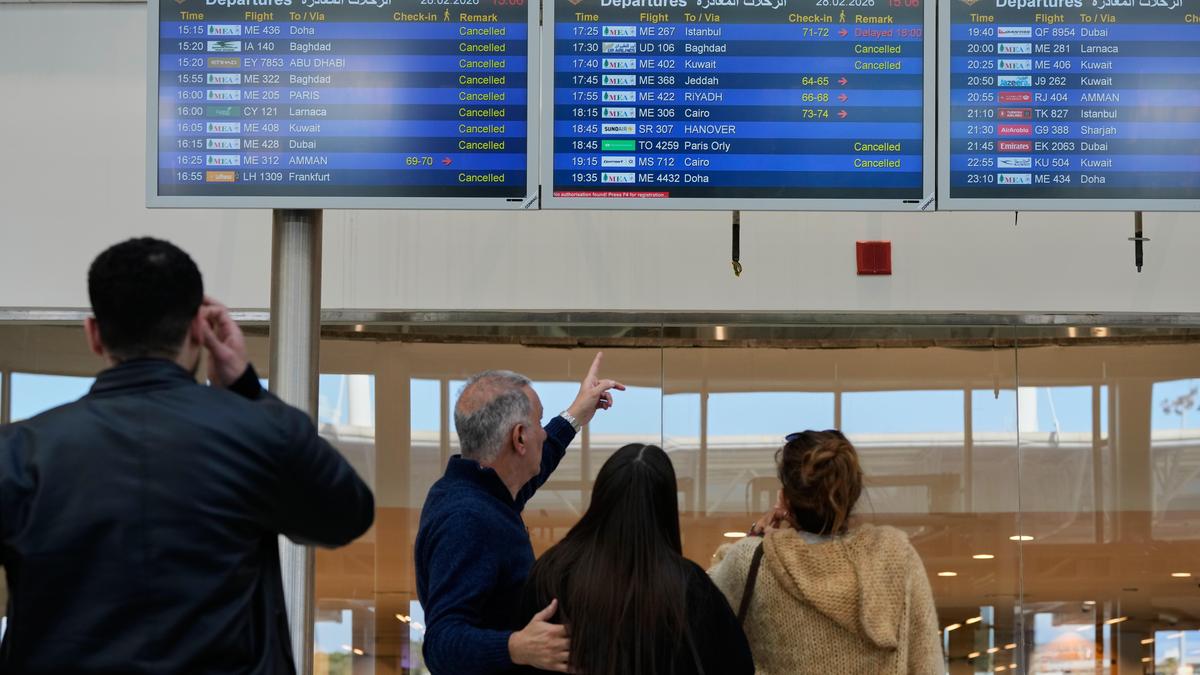
The situation is messy. These students, hailing from the Pune Institute of Business Management (PIBM), traveled to the United Arab Emirates for what was supposed to be a standard industrial visit. Instead of touring corporate headquarters and logistics hubs, they're watching flight boards turn red with cancellations as missiles fly across neighboring airspaces. It’s a stark reminder that in 2026, "business as usual" can evaporate in an afternoon. For a more detailed analysis into similar topics, we suggest: this related article.
The Reality of Being Stuck in a War Zone Transit Hub
Dubai is the world's busiest junction. When Iran launched its massive missile barrage toward Israel, the ripple effect didn't just stop at the borders. Airspace across Jordan, Iraq, and parts of the UAE became a "no-go" zone almost instantly. For the 84 students from Pune, this meant their ticket home became a useless piece of digital paper.
The anxiety for parents back in Maharashtra is peaking. I’ve seen this play out before during the early days of the Ukraine crisis and the 2023 Gaza escalations. The first 24 hours are always the worst because information is fragmented. You have students texting home about loud noises or diverted planes, and you have parents refreshing news feeds that only offer vague updates about "regional instability." For broader background on the matter, detailed analysis can also be found at Reuters.
It's not just about the fear of an immediate strike on Dubai. The UAE remains relatively safe and highly defended. The real issue is the logistical paralysis. When major carriers like Emirates and Air India suspend flights, thousands of people are displaced. Hotels fill up. Food costs spike. For a student group on a fixed budget, "waiting it out" isn't just an inconvenience—it's a financial drain.
Why Educational Tours Keep Getting Caught in Crossfire
You might wonder why colleges are still sending large batches of students into regions with simmering tensions. It’s a calculated risk that occasionally fails. These trips are planned months in advance. Contracts are signed, visas are issued, and deposits are paid. Stopping a trip because of "tension" is hard for an administration until the missiles actually start flying.
The Pune students were there to learn about global markets. Well, they're seeing the ultimate market disruptor now. Geopolitics.
The institute has been quick to claim that all students are safe in their hotel rooms. That’s great, but "safe" is a relative term when you're 2,000 kilometers from home and the regional powers are threatening "crushing responses." The Indian Consulate in Dubai is now involved, which is the standard protocol. If you're ever in this spot, the Consulate is your only real lifeline. They coordinate with the Ministry of External Affairs (MEA) to prioritize student groups and the elderly for evacuation flights if the commercial sector stays grounded.
Logistics of an International Rescue
Getting 84 people out isn't as simple as booking a few Uber rides. It requires a coordinated effort.
- Airspace Clearance: Even if a plane is ready, it needs a flight path that doesn't involve flying over a combat zone. This usually means longer routes, more fuel, and higher costs.
- Manifest Priority: The MEA often negotiates with airlines to "bump" non-essential travelers to make room for large student groups or those with medical emergencies.
- Communication Buffers: The biggest mistake institutes make is letting 84 different versions of the story leak out via Instagram stories. It creates panic. Centralized updates are necessary, yet they often feel too slow for terrified parents in Pune.
The Pune Institute of Business Management has confirmed they are in touch with the authorities. This is the part where bureaucracy meets boots-on-the-ground reality. It’s a slow process. Honestly, it's frustrating. You’re sitting in a hotel lobby in a city that looks like the future, but you feel like you’re stuck in the past because you can't move.
Lessons for Future International Travelers
If you’re a student or a professional planning a trip to West Asia or any "hot" zone, stop assuming your travel insurance covers "Act of War." Most don't. Or if they do, the fine print is a nightmare.
The Pune 84 are lucky in one sense: they are together. There is safety in numbers and a single point of contact for the government to deal with. If you were a solo backpacker in this mess, you'd be much further down the priority list.
The Indian government’s Madad portal is the primary tool here. If you’re ever stuck, that’s where you register. It’s not just a suggestion; it’s the only way the government can track you when the cellular networks get congested or GPS starts getting jammed.
Navigating the Next 48 Hours
The focus now shifts from "what happened" to "how do we get out." The students are currently staying in transit accommodations. The goal is to get them on a flight to Mumbai or Pune the moment a window opens in the flight corridors.
The West Asia conflict isn't going to resolve by dinner time. It’s a multi-polar struggle that involves complex drone tech and ballistic trajectories. For the students, the "MBA experience" has shifted from supply chain management to survival and patience.
Don't wait for the college to give you every update. If you have family among the 84, stay in direct contact with the Consulate General of India, Dubai. They have a 24/7 emergency helpline specifically for situations where regional conflict disrupts travel.
Check your own travel readiness before your next flight. Make sure you have digital and physical copies of your passport. Keep a backup power bank fully charged at all times. In a conflict zone, a dead phone is a dangerous liability.
Keep your location services on for trusted family members and register your presence with the embassy immediately upon arrival in any foreign country, conflict or not. It takes five minutes and can save your life when the world decides to turn upside down.