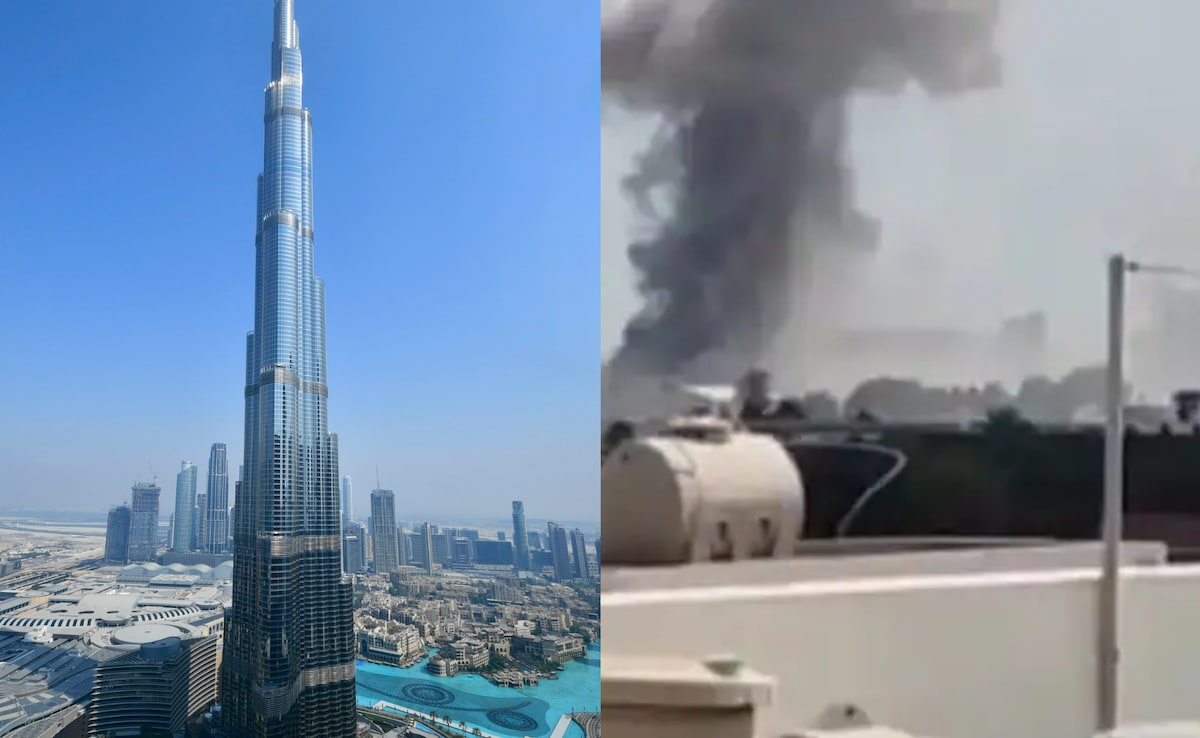
The glass and steel needle of the Burj Khalifa has long served as a monument to the idea that money can insulate a city from history. For decades, Dubai operated on a simple, profitable social contract: leave your regional grievances at the gate, and in exchange, the Emirates will provide a friction-less playground for global capital. That illusion shattered the moment emergency sirens echoed through Downtown Dubai. The evacuation of the world’s tallest building amid the widening arc of the Israel-Iran conflict marks more than a temporary security breach. It signals the end of the Gulf’s "safe harbor" status.
When regional tensions spill over into the United Arab Emirates, the primary casualty isn't just physical infrastructure; it is the carefully cultivated perception of invulnerability. Dubai’s economy is built on confidence—the belief that even if the rest of the Middle East is on fire, the Burj remains a cool, air-conditioned sanctuary. This latest escalation proves that geography eventually trumps policy. You cannot sit at the center of a geopolitical earthquake zone and expect the floor not to shake.
The Geopoliticization of the Skyline
The decision to clear the Burj Khalifa was not a mere fire drill. Security sources within the region indicate that the threat level reached a threshold where the symbolic value of the tower became a liability. In a conflict defined by asymmetric warfare—where $50,000 drones can threaten billion-dollar real estate—every high-profile landmark is a target.
For Iran and its proxies, the UAE represents a complex target. On one hand, Dubai is a vital clearinghouse for Iranian trade and a bypass for sanctions. On the other, the Abraham Accords have placed the UAE firmly in a strategic partnership with Israel. This dual identity is becoming impossible to maintain. Tehran has signaled that if its territory is hit, the "proximate allies" of the West will pay the price in disrupted commerce and broken glass.
The Logistics of a Vertical Panic
Evacuating a structure that stands 828 meters tall is a mathematical nightmare. The Burj Khalifa relies on high-speed elevators and pressurized "refuge floors" every 30 stories to manage emergencies. However, those systems were designed for fires and mechanical failures, not the chaotic uncertainty of a regional missile exchange.
Eyewitness accounts from the ground described a scene that the Dubai Media Office tried to downplay. The orderly flow of tourists and residents quickly gave way to a bottleneck at the base of the tower. When the world’s most famous address becomes a place people are desperate to leave, the branding damage is immediate and perhaps permanent.
The Economic Aftershocks of the Siren
Dubai’s stock market reacted with the predictable jitters of a city that lives and dies by foreign direct investment. But the deeper concern lies in the insurance markets. The cost of insuring commercial assets in the Gulf had already been climbing; a high-profile scare at the Burj Khalifa pushes those premiums into a bracket that threatens the feasibility of new mega-projects.
Logistics firms and multinational corporations choose Dubai because it is a "boring" place to do business in a volatile neighborhood. If the city loses its reputation for stability, the capital flight won't be a slow leak—it will be a flood. The regional headquarters for tech giants and financial institutions are mobile. They are here for the tax breaks and the safety. If the safety vanishes, the tax breaks aren't enough to justify the risk to personnel.
Comparison of Regional Risk Profiles
| City | Primary Economic Driver | Risk Level (Pre-Escalation) | Risk Level (Current) |
|---|---|---|---|
| Dubai | Tourism & Finance | Low | Moderate-High |
| Abu Dhabi | Energy & Defense | Low | Moderate |
| Riyadh | Domestic Reform | Moderate | High |
| Doha | Natural Gas | Low | Moderate |
The Intelligence Gap and the Drone Threat
The UAE has invested billions in advanced missile defense systems, including the US-made THAAD and the "Iron Hawk" variants. Yet, the nature of the current threat is shiftier than a traditional ballistic missile. Low-altitude "suicide" drones and cruise missiles follow flight paths that hug the terrain, making them difficult for radar to pick up until they are over the target.
Investigative leads suggest that the evacuation was triggered by a "grey zone" detection—an unidentified flight pattern that didn't fit standard civilian or military corridors. In the nervous atmosphere of a proxy war, security forces no longer have the luxury of "wait and see." They have to assume the worst. This creates a state of perpetual hyper-vigilance that is exhausting for a city built on luxury and relaxation.
The Abraham Accords Under Pressure
The diplomatic fallout is just as significant as the security risk. The UAE’s normalization of relations with Israel was a bet on a new Middle East focused on technology and trade rather than ideology. That bet is currently being tested to its breaking point.
While Abu Dhabi remains committed to the long-term vision of the Accords, the domestic and regional pressure is mounting. Every time an Israeli-linked conflict forces an Emirati landmark to close, the "peace dividend" looks smaller. The Iranian strategy is to make the cost of the UAE-Israel alliance too high for the Emirati leadership to bear. By turning Dubai into a front line, they are attacking the very foundation of the UAE’s national identity: its status as a global hub.
Why the Burj Matters More Than a Building
The Burj Khalifa is a psychological anchor. When people look at the Dubai skyline, that tower tells them that the 21st century belongs to the Gulf. If the tower is empty, or if its lights are dimmed for security reasons, the narrative of the "Emerging East" takes a massive hit.
The Iranian-Israeli shadow war has moved out of the shadows. It is now playing out in the elevator lobbies of five-star hotels and the boardrooms of sovereign wealth funds. The UAE finds itself in a precarious position, trying to de-escalate through back-channel diplomacy while simultaneously showing strength. It is a balancing act that requires a level of finesse that the current regional heat might not allow.
The Mirage of Total Security
The hard truth that many analysts ignore is that no amount of military spending can protect a city like Dubai from the consequences of a total regional war. The city is too dense, too vertical, and too dependent on a continuous flow of people and goods.
A single "lucky" strike on a desalination plant or a power grid would do more damage to the UAE’s standing than a decade of low oil prices. The evacuation of the Burj Khalifa is a warning shot. It is a message that in the modern era, there are no spectators—only participants and targets.
The Shift in Global Supply Chains
We are already seeing the first signs of a "risk pivot" among major logistics players. Shipping lanes through the Strait of Hormuz are being re-evaluated. If Dubai's ports or airports are perceived as being within a predictable strike zone, the cargo will move to Salalah in Oman or even back toward Mediterranean hubs.
The UAE knows this. Their frantic efforts to mediate behind the scenes are not born of a desire for regional harmony, but of a desperate need to protect their balance sheets. They are fighting for the right to remain irrelevant to the kinetic war. But as the Burj Khalifa incident proves, that ship has sailed.
The Technology of Interception vs. The Cost of Defense
The physics of modern defense are increasingly lopsided. Using a multi-million dollar interceptor to take down a drone that costs as much as a used car is a losing game of attrition.
$Cost_{Defense} \gg Cost_{Attack}$
This equation is the fundamental challenge for Dubai’s security apparatus. The attacker only has to get through once to cause a global headline and a market crash. The defender has to be perfect every single time. For a building like the Burj Khalifa, the margin for error is exactly zero.
The Human Element
Beyond the drones and the diplomacy, there is the reality of the people living in these towers. Dubai is home to millions of expatriates who are there for the lifestyle and the salary. They are not ideologues. They have no "skin in the game" when it comes to the Levant or the Iranian plateau.
If the sirens become a regular occurrence, the "brain drain" will be swift. The talent that fuels Dubai’s tech and finance sectors is highly mobile. They will move to Singapore, London, or Riyadh the moment the risk-to-reward ratio flips. The evacuation wasn't just about clearing a building; it was a glimpse into a future where the city’s most valuable asset—its people—decide that the view from the top isn't worth the anxiety.
The New Reality of the Gulf
The UAE has spent forty years trying to decouple its economy from the traditional instabilities of the Middle East. It built islands, launched a Mars mission, and turned a desert outpost into a global node. But the evacuation of the Burj Khalifa serves as a brutal reminder that you cannot build a futuristic utopia in a neighborhood that hasn't settled its past.
The conflict between Israel and Iran has reached Dubai’s doorstep, and it didn't knock. It walked right in through the front door of the world’s most famous building. The challenge now for the Emirati leadership isn't just to keep the lights on, but to convince the world that the glass isn't about to shatter. In a region where perception is reality, a quiet Burj is a loud admission of vulnerability.
Every day the sirens remain silent is a victory for the status quo, but the silence now feels fragile. The business of Dubai continues, but the eyes of the residents are no longer just on the horizon; they are looking at the sky, waiting for the next blip on the radar that might turn their world upside down. The needle has been pricked.
Assess your own risk tolerance before the next siren sounds.