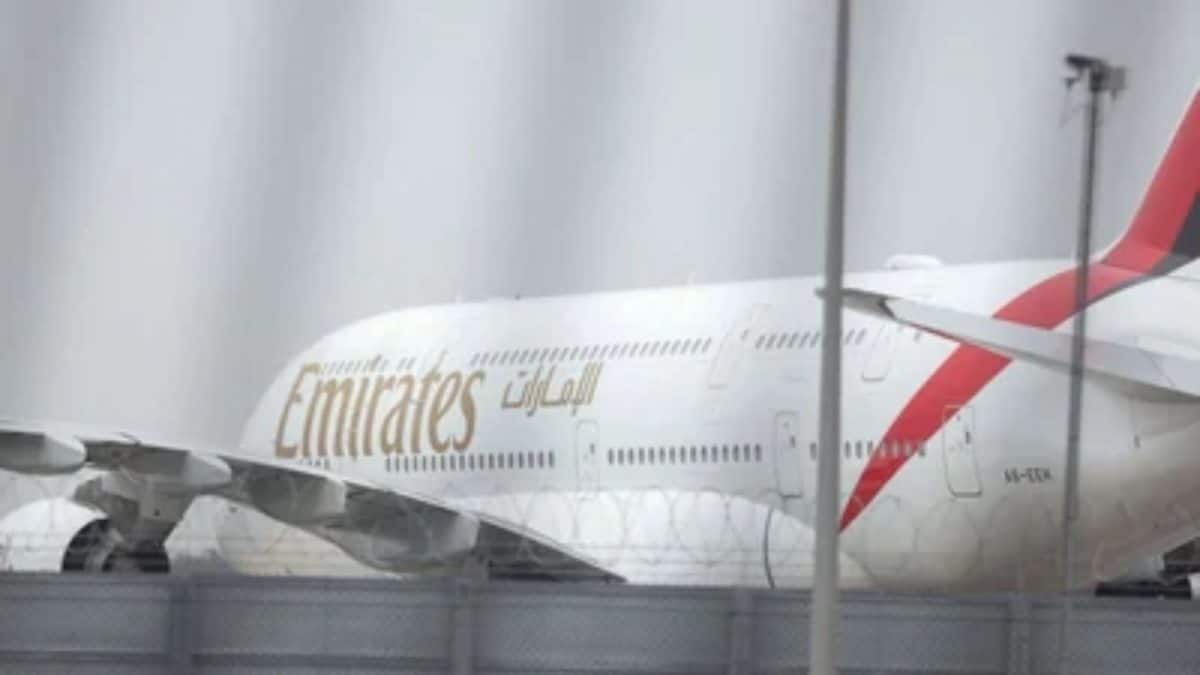
The myth of the unsinkable aviation hub died somewhere over the Persian Gulf this week. For decades, Dubai International Airport (DXB) has marketed itself as the indestructible bridge between hemispheres, a 24-hour neon oasis that never sleeps because the world’s supply chains and vacation plans depend on its pulse. As of March 5, 2026, that pulse is thready.
While skeletal updates from airline PR departments mention "limited schedules" and "regional tensions," the reality on the tarmac is far more severe. The massive 2.8 million square kilometer hole currently punched into Middle Eastern airspace has effectively severed the world's most critical transit artery. This isn't just a localized delay; it is a structural collapse of the East-West flight corridor that may take weeks to untangle even if the missiles stop flying tomorrow.
The Mirage of Reopening
Official statements suggest a gradual resumption of services, but the numbers tell a different story. Emirates has officially extended its suspension of all scheduled flights until at least 11:59 PM on March 7. Etihad is holding a similar line in Abu Dhabi, and Air Arabia has pushed its restart date to March 9.
When an airline of Emirates’ scale "suspends scheduled operations," it is an admission of logistical defeat. The carrier isn't just waiting for the sky to clear; it is grappling with a shattered network where crews are out of position, aircraft are in the wrong hangars, and the very corridors they rely on—the flight information regions (FIRs) of Iraq, Iran, and the UAE itself—are either closed or restricted.
The "limited flights" currently departing are not for the general public. They are high-priority rescue operations and repatriation services, such as the one-off flight to São Paulo on March 4. If you do not have a direct notification from the airline, showing up at DXB is a futile exercise. Security is turning away anyone without a confirmed seat on these rare "ghost" schedules to prevent the terminals from becoming permanent refugee camps for the 17,000-plus passengers already displaced this week.
A Geopolitical Chokepoint Exposed
The aviation industry has long ignored the "single point of failure" risk inherent in Gulf hubs. By funneling millions of passengers through a narrow corridor between Tehran and Riyadh, the global travel industry gambled on regional stability. That gamble has failed.
The current conflict involving the US, Israel, and Iran hasn't just closed airspace; it has forced a radical redrawing of the global flight map. European and Asian carriers are now performing massive, fuel-heavy detours. Flights that once cruised over the Gulf are now swinging as far south as Addis Ababa or as far north as the polar routes.
- Fuel Burn: Rerouting adds three to five hours to a standard London-to-Singapore leg.
- Crew Time: These detours often exceed legal flying hours, requiring extra crew members and driving up ticket prices.
- Infrastructure Stress: Secondary hubs in Cairo and Istanbul are buckling under the weight of diverted traffic they were never designed to handle.
The Damage to the Ground
Reports of damage to airport infrastructure, though downplayed by state media, have added a layer of fear that "operational updates" won't solve. When reports emerged of strikes near DXB and Zayed International, the calculus for international insurers changed instantly. No commercial pilot is going to nose a $400 million jet into an active combat zone, regardless of what the departure boards say.
Even if the "partial closure" of UAE airspace is lifted by the weekend, the ripple effect will be felt through the end of the month. The industry uses a metric called "hub recovery time," which suggests that for every day a major hub is fully closed, it takes three days of perfect conditions to return to a normal rhythm. Dubai has been effectively dark for five days.
The Hard Truth for Travelers
If you are holding a ticket for travel through the Gulf before March 15, your seat likely doesn't exist. Airlines are offering rebooking windows into late March, a silent acknowledgment that the "limited resumption" is a placeholder for a much longer disruption.
The industry is currently in a state of triage. Priority is being given to those stranded in transit—passengers who have been sleeping on terminal floors in Dubai or Doha since Sunday. If you are still at home, you are at the back of the line.
The Middle East aviation model was built on the premise that geography is destiny. Being in the center of the world is a goldmine during peace, but it is a bullseye during war. For the first time in the jet age, the world is learning how to bypass the Gulf. The question isn't when the flights will resume, but whether the global trust in these hubs will ever fully return.
Check your flight status, but do not trust the "Scheduled" tag on your app. Until the Notams (Notice to Air Missions) are officially rescinded across the entire region, those flights are nothing more than digital hopeful thinking.
Would you like me to track the specific rerouting paths and additional flight times for your specific route to see if it bypasses the affected zones?