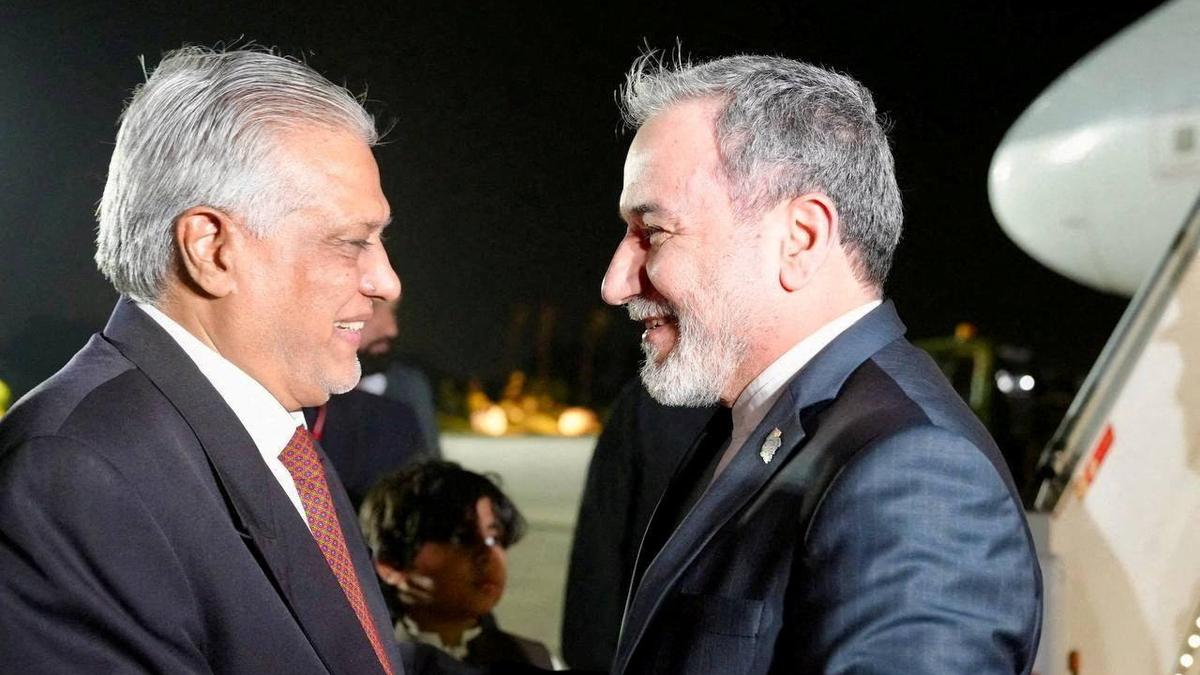
The air in the high-ceilinged halls of international diplomacy smells of expensive cologne and cooling tea. In these rooms, words are the currency. A handshake between an Iranian official and an American envoy, facilitated by a Pakistani mediator, carries the weight of global oil prices and regional stability. It is a triumph of soft power. It is a masterclass in geopolitical maneuvering. It is also a world away from the dust-choked plains of Sindh, where a father named Rahim watches his children share a single piece of dry bread.
Rahim is a hypothetical man, but his hunger is a verified national statistic. While Pakistan’s diplomats are busy mending the fractured relationship between Washington and Tehran, the ground beneath their feet is literally and figuratively eroding. This is the paradox of a nation that can bridge the gap between nuclear-armed superpowers but cannot bridge the gap between a farmer’s harvest and his family’s dinner table.
The Cost of Peace on an Empty Stomach
Success in foreign policy usually signals a nation’s strength. When Pakistan stepped into the middle of the simmering tension between the U.S. and Iran, it solidified its role as a vital strategic player. To the world, this looks like stability. To the financial markets, it looks like a reduction in risk. But back in the local markets of Lahore and Karachi, the price of flour tells a different story.
The "economic fragility" cited by analysts isn't a spreadsheet error. It is a slow-motion collapse of purchasing power. Imagine working ten hours a day in the scorching heat, only to find that your wages, which bought five kilos of wheat last month, now only buy three. The currency loses its breath, sprinting to keep up with inflation that refuses to peak. When a country spends its energy and political capital on the global stage, the domestic infrastructure often pays the price through neglect.
Pakistan has become an expert at managing external crises while the internal ones rot. The debt-to-GDP ratio isn't just a number; it is a weight that prevents the government from subsidizing the very food its people grow.
When the Sky Breaks
Then there is the water. In 2022, the sky didn't just rain; it broke. The floods that submerged a third of the country weren't a one-time disaster; they were a preview of a permanent shift in reality. These "climate shocks" are the ultimate disruptors of diplomacy. You cannot negotiate with a melting glacier. You cannot broker a peace deal with a heatwave.
Consider the journey of a single grain of rice. It requires predictable seasons, consistent irrigation, and a stable soil pH. When the floods hit, they didn't just wash away the crops; they stripped the topsoil and destroyed the seed banks. Farmers like Rahim found themselves standing in water that reached their chests, watching their entire year’s income float toward the Arabian Sea.
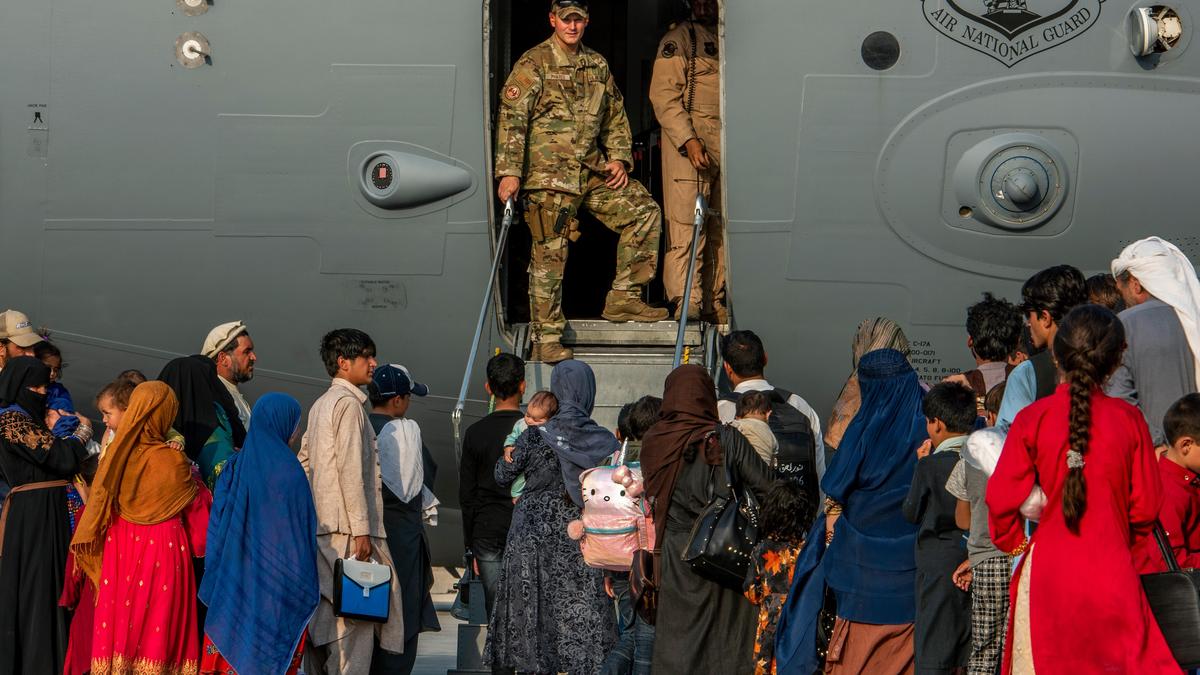
This is where the narrative of "national security" fails the individual. Usually, we define security by the strength of a border or the reach of a missile. But for 40% of Pakistan's population, security is the certainty that the next meal exists. When climate change destroys the harvest, the resulting food insecurity creates a domestic instability that no amount of international prestige can fix.
The Invisible Stakes of the Middleman
Why does it matter if Pakistan fixes the U.S.-Iran rift? On paper, it prevents a regional war. It keeps trade routes open. It ensures that the Middle East doesn't descend into a spiral of kinetic conflict. These are noble goals. They are necessary goals. But there is an invisible cost to being the world’s middleman.
While the state focuses on the "macro," the "micro" is screaming. The resources required to maintain a massive military and a high-functioning diplomatic corps are pulled from the same pool as the resources needed to build silos, improve irrigation, and provide social safety nets. It is a choice between being a global actor or a local provider. Currently, the actor is winning, and the provider is starving.
The logic of the state dictates that international standing leads to investment, which eventually leads to prosperity. It’s a trickle-down theory applied to geopolitics. But the hunger is faster than the investment. The "economic fragility" mentioned in headlines is actually a state of exhaustion. The people are tired of being resilient.
The Anatomy of a Fragile Economy
To understand why a country with such fertile land struggles to feed itself, you have to look at the mechanics of its debt. Pakistan is caught in a cycle of borrowing to pay off previous borrows. This creates a situation where the government’s hands are tied by international lenders who demand austerity.
Austerity is a polite word for cutting off the oxygen.
When the IMF or other global bodies insist on removing fuel subsidies or increasing taxes to balance the books, the person at the end of the chain—the laborer, the teacher, the small-scale farmer—is the one who stops eating. The "economic fragility" is not about a lack of resources; it is about the inability to keep those resources within the borders.
Statistics show that malnutrition rates in certain provinces are comparable to those in war zones. Yet, there is no war on Pakistani soil. There is only the quiet, grinding friction of an economy that is being pulled in two directions. One direction leads to the glittering summits of the UN and regional peace talks. The other leads to the empty shelves of a corner grocery store.
The Ghost of the Green Revolution
There was a time when Pakistan was the breadbasket of the region. The Green Revolution of the 1960s promised a future of abundance. We were told that technology and chemistry would end hunger forever. For a few decades, it seemed to work. But that progress was built on a foundation of heavy water usage and chemical dependency that the current climate can no longer support.
The soil is tired. The aquifers are receding. The heat is becoming "wet-bulb," a terrifying meteorological term where the human body can no longer cool itself through sweat. In this environment, traditional farming isn't just difficult; it’s lethal.
When the government celebrates a diplomatic win, it is often a distraction from the fact that they have no answer for the heat. They have no answer for the salt-crusted fields where wheat used to grow. They have no answer for the fact that a nation of 240 million people is increasingly dependent on imported grain—grain that they must buy with a currency that is losing value every hour.
The Bridge and the Abyss
Imagine a bridge. One side of the bridge is the United States, wealthy and distant. The other side is Iran, defiant and sanctioned. Pakistan is the bridge itself. It allows the two sides to communicate, to de-escalate, to avoid catastrophe.
But look closely at the bridge. The pillars are cracking. The asphalt is crumbling. The people who live under the bridge are scavenging for scraps.
Is the bridge successful if it facilitates a conversation between giants while it collapses into the river?
The international community praises the bridge. They send thank-you notes and invitations to state dinners. They acknowledge the "pivotal" role Pakistan plays in global security. But they don't send bread. They don't send climate technology that isn't tied to a high-interest loan. They don't address the fact that a "stable" regional partner is built on a foundation of millions of people who are one bad harvest away from total ruin.
The Hunger of the Strategic Asset
There is a specific kind of bitterness that comes from being told you are a "strategic asset" when you can't afford milk. This is the emotional core of the Pakistani crisis. It is the disconnect between the national ego and the individual reality.
The narrative of the "warrior-diplomat" nation is a powerful one. It provides a sense of pride. It suggests that despite all the problems, Pakistan still matters on the global stage. But pride is not a macronutrient. You cannot fry it. You cannot boil it. You cannot feed it to a crying toddler at three in the morning.
The "invisible stakes" of this situation are the hearts and minds of a generation. When the state succeeds abroad but fails at home, the social contract dissolves. The people stop looking at the government as a protector and start looking at it as a landlord that keeps raising the rent while the roof leaks.
A Harvest of Dust
The sun sets over a field in Punjab. The sky is a beautiful, bruised purple, the kind of sunset that travel magazines love to photograph. But the farmer standing in that field isn't looking at the sky. He is looking at the stalks of wheat that have shriveled before they could grain. He is thinking about the debt he owes to the middleman. He is thinking about the fact that the price of cooking oil has doubled in six months.
Thousands of miles away, a diplomat in a crisp suit walks out of a meeting. He checks his phone. The news reports a breakthrough. A "de-escalation" has been reached. The world is a slightly safer place tonight. He feels a surge of professional pride. He has served his country. He has served the cause of peace.
Both men are part of the same story. One is the face the world sees; the other is the reality the world ignores.
The tragedy of modern Pakistan is not that it lacks talent, or resources, or the will to lead. The tragedy is that it has been forced to choose between being a global peacekeeper and a provider for its own people. And in the high-stakes game of international relations, the people are always the first piece sacrificed on the board.
The peace brokered in the gilded rooms of the elite is a fragile thing, held together by whispers and promises. But the hunger in the gut of the nation is solid. It is heavy. It is real. And unlike a diplomatic agreement, it cannot be renegotiated. It can only be fed, or it will eventually consume the very house that built it.
The bridge is still standing, for now. But the river is rising, and the people on the bridge have stopped looking at the horizon. They are looking down at their empty hands.