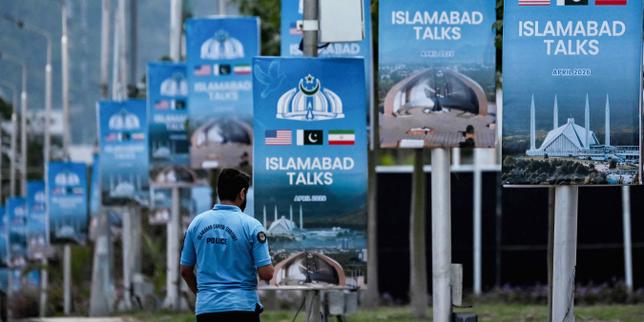
The media remains obsessed with the theater of "stalled negotiations" and the supposed tragedy of "missed diplomatic opportunities." They treat the exchange of accusations between Washington and Tehran as a failure of the system.
They are wrong.
The system is working exactly as intended, just not for the reasons you think. What the mainstream press identifies as a breakdown in communication is actually a highly sophisticated, high-stakes tactical maneuver. In the Middle East, "diplomatic engagement" isn't a bridge to peace; it is a mechanism for delay, a tool for domestic consolidation, and a shield against kinetic consequences.
Stop mourning the lack of a deal. Start watching how the absence of one serves everyone at the table.
The Myth of the "Sincere" Negotiator
Mainstream outlets are currently echoing Tehran’s complaints about a lack of "serious engagement" from the United States. This narrative suggests that there is a magical baseline of sincerity that, if reached, would lead to a stable region.
This is a fundamental misunderstanding of geopolitical physics.
State actors do not trade in sincerity; they trade in leverage. When Tehran denounces Washington’s lack of commitment, they aren't expressing hurt feelings. They are executing a classic PR pivot designed to achieve three specific goals:
- Shifting the Burden of Proof: By labeling the U.S. as the "unserious" party, Iran preemptively blames Washington for any future escalation. It creates a vacuum where Tehran can claim their hands were tied when they inevitably take the next step in their nuclear or regional programs.
- Domestic Distraction: Nothing unites a fractured domestic base like an external "Great Satan" who refuses to play fair. It turns economic hardship from a policy failure into a badge of national resistance.
- The "Slow-Walk" Strategy: Every week spent debating the format of a talk is a week where centrifuges spin and proxies entrench. Diplomacy is the best camouflage for progress on the ground.
The Sanctions Paradox
We are told sanctions are a tool to force a regime to the table. In reality, the persistent "threat" of negotiations makes sanctions less effective.
When a country is in a perpetual state of "almost negotiating," third-party trade partners (think gray-market oil buyers and regional middle-men) operate in a state of calculated risk. They don't pull out entirely; they just bake the risk into the price. A permanent state of diplomatic friction creates a shadow economy that is remarkably resilient.
If a deal were actually signed, the transparency requirements would ironically be more damaging to the elite power structures than the current status quo of "unserious" tension. The current friction is the profitable sweet spot.
Why Washington Prefers the Stalemate
The critique often leveled at the U.S. is that it lacks a coherent strategy. This assumes that "no deal" is a mistake.
Consider the alternative. A formal agreement requires the U.S. to expend massive political capital at home, alienate regional allies who fear Iranian hegemony, and provide tangible sanctions relief that might be used for military expansion.
Maintaining a posture of "we are ready if they are" allows Washington to:
- Keep the regional alliance (the "Abraham Accords" architecture) focused on a common threat.
- Avoid the political suicide of "funding" a revolutionary state during an election cycle.
- Keep the military option on the table without having to actually use it.
Washington isn't failing to find a solution; they have decided that the current problem is more manageable than any of the available solutions.
The Proxy Reality Check
While diplomats argue about seating charts and agendas, the real map of the Middle East is being redrawn by non-state actors. The idea that a piece of paper signed in Geneva or Doha would immediately halt the activities of Hezbollah, the Houthis, or various militias in Iraq is a fantasy.
These groups have reached a level of operational autonomy where they are no longer just "proxies"—they are stakeholders.
Tehran uses these groups as a pressure valve. When the diplomatic temperature gets too high, the proxies turn up the heat. When Tehran wants to look "serious," they signal a temporary de-escalation.
If you want to know the status of the talks, don't read the State Department press releases. Look at the shipping lanes in the Red Sea. The kinetic action is the real transcript. The official meetings are just the subtitles.
The Nuclear Clock is a Diversion
The biggest "lazy consensus" in modern reporting is that the nuclear program is the primary goal.
It’s not. The threat of the program is the goal.
A nuclear-armed Iran is a massive liability. It triggers a regional arms race, invites immediate Israeli strikes, and forces a level of global scrutiny that limits operational freedom. However, a "threshold" Iran—a state that is perpetually six months away from a bomb—is the ultimate diplomatic bargaining chip.
By staying in a state of "unserious" negotiations, Tehran maintains this threshold status indefinitely. They get the deterrent power of a nuke without the massive target on their back that comes with actually having one.
The New Rules of Engagement
If you’re waiting for a grand bargain, you’re looking at a 1990s playbook in a 2026 world. The future of this conflict isn't a treaty; it's a managed, low-intensity friction.
- Transactionalism over Treaties: Expect small, quiet swaps—prisoners for frozen funds, "de-escalation" for "non-enforcement" of specific shipping lanes. This is the new diplomacy. It’s ugly, it’s unprincipled, and it’s remarkably stable.
- The Rise of the Middleman: Nations like Qatar and Oman are no longer just "hosts." They are the essential buffers that allow both sides to maintain their public "uncompromising" stances while doing the dirty work of logistics in the back room.
- The Death of Multilateralism: The era of the P5+1 (the five permanent members of the UN Security Council plus Germany) is over. This is now a direct, brutal game of chicken between two main players, with everyone else just trying to avoid the debris.
The "absence of a serious process" isn't a bug in the diplomatic software. It is the feature that prevents the system from crashing. As long as both sides can claim the other is the obstacle, they can avoid the catastrophic consequences of either total war or total peace.
Stop asking when the talks will succeed. Start asking who profits from them never ending.
The status quo isn't a failure of diplomacy. It is the highest form of it.