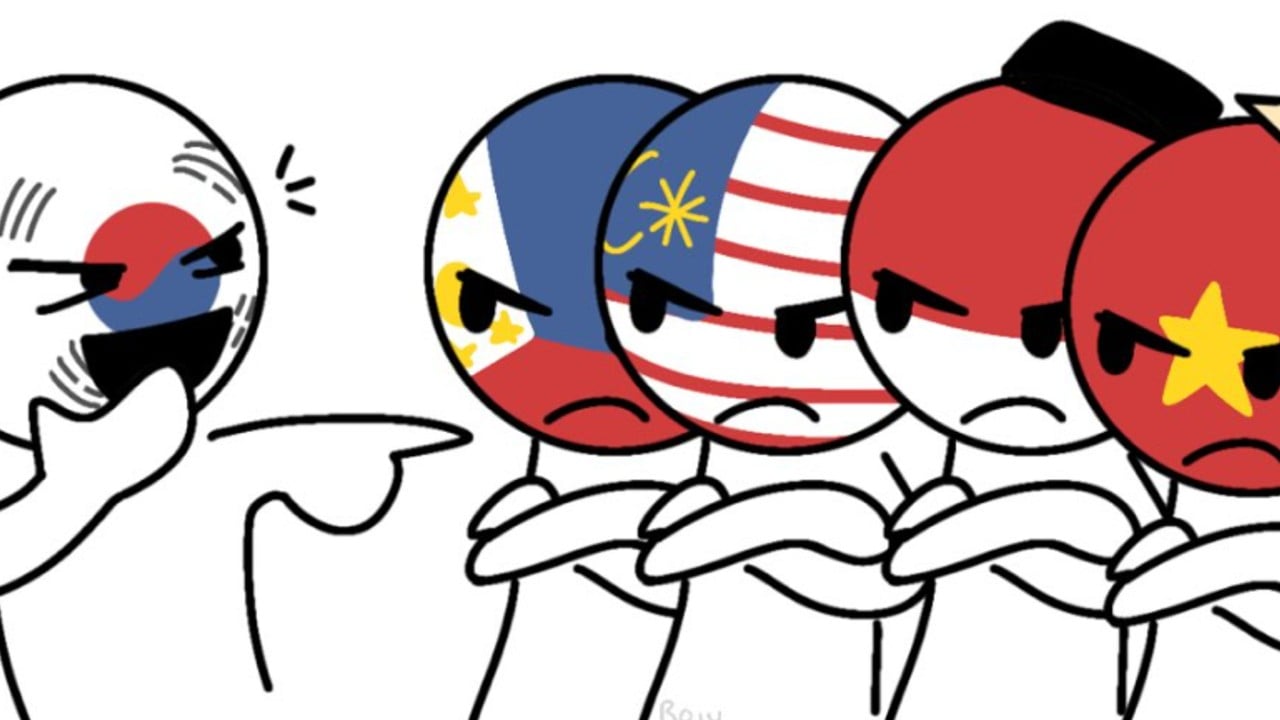
A single notification pings in the humid air of a bedroom in Bangkok. Then another in Manila. Then a thousand more in Jakarta. For most of the world, a hashtag is a filing cabinet—a way to sort wedding photos or political grievances. But in Southeast Asia, #SEAblings became something else entirely. It became a lifeline. It became a shield.
Consider a young designer in Taipei, we’ll call her Lin. She wakes up to find her social media feed flooded with coordinated attacks from nationalist bots. They aren't just arguing; they are attempting to erase her identity, her safety, and her digital footprint. In the old world of internet isolation, Lin would be silenced. She would delete her account and disappear.
But Lin isn't alone. Within minutes, users from Thailand and the Philippines—people she has never met, whose languages she doesn't speak—flood the comments with memes. They use humor as a high-frequency jammer. They mock the aggressors with images of milk tea and shared cultural inside jokes.
The bots don't know how to process a picture of a cat drinking boba. The algorithm stutters. The harassment campaign collapses.
This isn't just "internet culture." This is the birth of the Milk Tea Alliance, the backbone of the #SEAblings movement. It is a fundamental shift in how power is brokered in the most digitally active region on the planet.
The Architecture of a Shared Threat
The facts are cold, but the reality is searing. Southeast Asia contains some of the highest social media penetration rates in the world. In places like the Philippines, people spend an average of four hours a day on social platforms. For many, the "internet" isn't a browser; it's a Facebook or TikTok interface.
When your entire town square is owned by a corporation half a world away, you are vulnerable.
Governments in the region noticed this early. They realized that if you can control the feed, you can control the person. Over the last five years, we have seen a coordinated rise in "cyber-troopers"—state-sponsored troll farms paid to harass activists and spread disinformation.
It is a lonely feeling to realize your own government is gaslighting you through your smartphone.
The #SEAblings movement emerged as a biological response to this digital virus. It started as a recognition of shared trauma. Young people in Myanmar, Thailand, and Hong Kong realized they were all reading from the same manual of repression. Water cannons in the streets were met with the same hashtags online.
Why the "Sibling" Metaphor Stuck
We often think of neighboring countries as rivals. We talk about trade deficits, territorial disputes, and historical animosities. But the youth of Southeast Asia looked at each other and saw something different: siblings stuck in the same dysfunctional house.
The "SEA" in #SEAblings stands for Southeast Asia, but the "siblings" part is where the emotional gravity lies. It implies a duty. If your brother is being bullied in the yard, you don't ask about the geopolitical implications before you step in. You just act.
This solidarity isn't built on formal treaties. It's built on a shared aesthetic. It’s the "Milk Tea Alliance"—a whimsical name for a deadly serious coalition. Because they all love milk tea—whether it’s Thai tea, boba, or teh tarik—they found a common banner that censors couldn't easily ban without looking ridiculous.
Humor is the ultimate weapon against autocracy. You cannot effectively oppress someone who is laughing at you with ten million of their closest friends.
The Invisible Stakes of Digital Border-Crossing
There is a technical term for what is happening here: Transnational Digital Activism. But that sounds like a textbook. The reality is much more visceral.
When a protest breaks out in Bangkok, activists in Manila don't just "like" a post. They translate protest manuals. They share tips on how to neutralize tear gas. They use VPNs to bypass local censorship and mirror content so the world can't look away.
This creates a massive problem for local authorities. How do you shut down a movement that has no central office? How do you arrest a "sibling" who lives three borders away?
The stakes are the very survival of the open web. If #SEAblings fails, the internet in Southeast Asia risks becoming a series of "splinternets"—walled gardens where each population is fed a curated, state-approved version of reality.
The Logistics of Hope
It’s easy to be cynical. You might think a hashtag can't stop a bullet. And you’d be right. But a hashtag can stop a lie. And in the digital age, the lie always precedes the bullet.
The #SEAblings phenomenon works because it operates on a "distributed trust" model. We see this in the way information is verified. When a video of police brutality surfaces, the network doesn't wait for a news outlet to confirm it. They use geolocated data, cross-reference it with weather reports and street signs, and verify it through a chain of trusted users across the region.
They have turned the region into a giant, decentralized fact-checking machine.
But there is a cost. The people behind these screens are exhausted. They live in a constant state of "alert fatigue." Every vibration of their phone could be a call to action or a death threat.
I remember talking to an activist who spent eighteen hours a day monitoring feeds during the 2021 coup in Myanmar. She wasn't even in the country. She was in a quiet cafe in Kuala Lumpur, but her heart rate was synced to the streets of Yangon. She described the feeling as "digital phantom limb syndrome." She could feel the pain of a country that wasn't hers, because through the screen, it was.
The Myth of the Passive User
The old narrative said that social media made us lazy. They called it "slacktivism." They said that clicking a button was a poor substitute for real-world action.
#SEAblings proved them wrong.
In this part of the world, digital action is the precursor to physical safety. When the hashtag goes viral, the international eyes follow. When the eyes follow, the cost of violence for a regime goes up. It is a basic equation of light and shadow.
The movement has also forced a change in how Western tech giants behave. For years, Silicon Valley ignored the "rest of the world," failing to hire enough moderators who understood local dialects or political nuances. #SEAblings made it impossible to ignore the gaps. By tagging CEOs, flooding support channels, and documenting failures in real-time, these "siblings" forced a seat at the table.
A New Map of the World
If you look at a traditional map, Southeast Asia is a cluster of islands and peninsulas separated by vast stretches of water.
If you look at a digital map of the #SEAblings movement, the water disappears.
You see lines of light connecting Ho Chi Minh City to Jakarta. You see a dense web of communication between Taipei and Bangkok. The geography of the 21st century isn't defined by mountains or oceans, but by the bandwidth of our empathy.
This isn't a story with a neat ending. The "troll farms" are getting smarter. AI-generated deepfakes are making it harder to tell friend from foe. The "siblings" are tired, and the platforms they use are becoming increasingly volatile and profit-driven.
But something fundamental has shifted.
Once you realize that the person across the border is experiencing the exact same struggle as you, you can't go back to being a stranger. You can’t go back to being just a user.
The next time you see a strange hashtag trending—something that looks like a joke or a menu item—look closer. It might be the only thing keeping a voice from being silenced. It might be the sound of a million people refusing to let their siblings walk alone in the dark.
The screen glows. The notification pings. Somewhere, a sibling is watching.
Would you like me to analyze the specific digital tactics used by the Milk Tea Alliance to bypass regional firewalls?