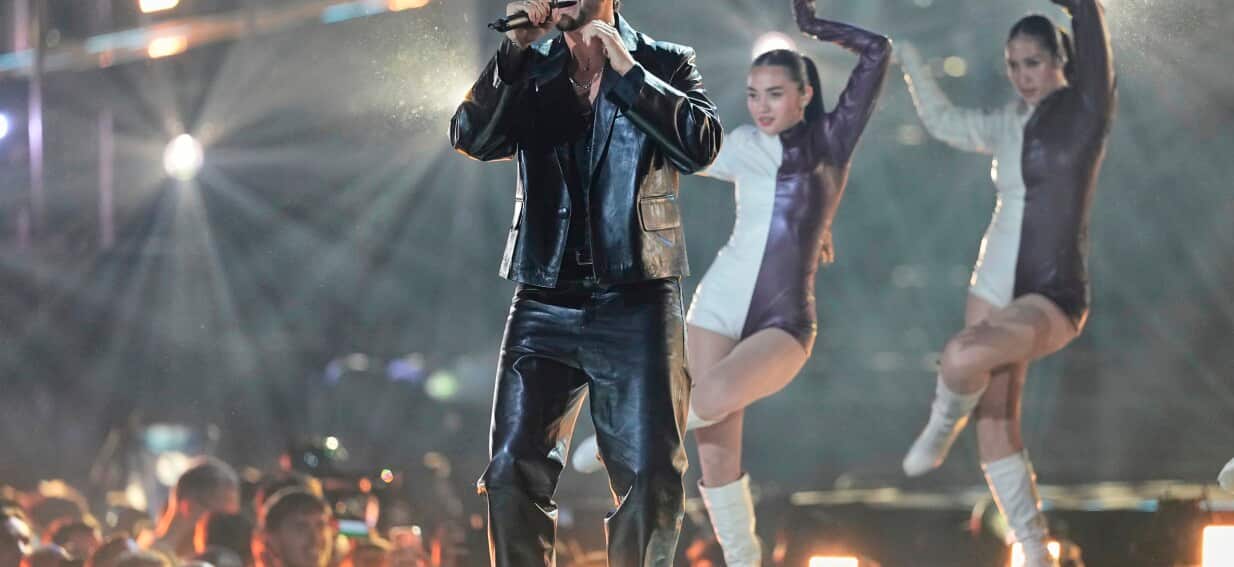
The air inside the arena is always different during the voting sequence. It is a thick, humid soup of adrenaline, hairspray, and the sharp, metallic tang of anxiety. For the artists huddled on those velvet sofas in the Green Room, the three minutes of their performance are a blur. The real heart-stopping terror lives in the scoreboard. It is a giant, glowing spreadsheet that decides which dreams are validated and which are quietly extinguished in front of two hundred million people.
But during Eurovision 2025, the glow of that scoreboard felt different. It wasn't just reflecting the will of the people. It was reflecting a data anomaly that has sent shockwaves through the European Broadcasting Union and into the frantic offices of data analysts from Basel to Tel Aviv.
Beneath the sequins and the pyrotechnics, a silent war was waged via SIM cards and automated scripts. The question isn't just whether Israel "tipped" the results. The question is whether the very idea of a "public vote" still exists in an era of digital ghost-armies.
The Girl in the Rhinestone Mask
To understand the weight of a single vote, consider a hypothetical fan named Eleni. She is sitting in a café in Nicosia, clutching a smartphone. For Eleni, the Eurovision Song Contest is a secular holiday. She saves her money to cast the maximum twenty votes for her favorite act. In her mind, she is participating in a democratic celebration of art. She believes her small contribution, multiplied by millions of others, creates a genuine pulse of European sentiment.
Now, imagine a server farm. It is windowless, climate-controlled, and utterly devoid of music. There is no Eleni. There are only rows of blinking lights and thousands of virtual phone numbers. With a single command, this room can generate the voting power of ten thousand Elenis in the span of thirty seconds.
The New York Times report on the 2025 data suggests that the line between Eleni and the server farm has blurred into total obscurity. The report identifies a massive surge in "non-traditional" voting patterns—specifically concentrated spikes that propelled the Israeli entry far beyond the projections of bookmakers and exit polls. This wasn't just a popular song overperforming. This was a statistical impossibility masquerading as a fan favorite.
The Geometry of the Surge
Data is rarely poetic, but it is honest. When analysts look at the Eurovision 2025 televote, they don't see a bell curve. They see a series of "chimneys"—vertical lines of data that represent thousands of votes hitting the system from specific localized nodes within seconds of the lines opening.
The Israeli entry, performed against a backdrop of intense geopolitical friction, became a lightning rod. In several European markets, the jury—the professional musicians and producers who judge based on vocal technique and composition—placed the song near the bottom of the pack. They heard a standard pop song. But when the televote came in, the results were a unanimous twelve points.
This disconnect between the experts and the "crowd" is a Eurovision staple. It’s the "people’s choice" versus the "ivory tower." However, the 2025 data shows that the "crowd" in this instance behaved with the synchronized precision of a Swiss watch. Humans are messy. They get distracted. They vote at different times. They drop their phones. Machines, however, are punctual. The surge was too clean. Too perfect.
The Ghost in the Machine
We often talk about "bots" as if they are a science fiction trope, but in the context of a televised contest, they are a terrifyingly cheap commodity. For the price of a mid-range luxury car, an interested party can purchase enough digital influence to sway a mid-sized European country’s televote.
The investigation points to a sophisticated operation involving "SIM farms"—physical racks of thousands of SIM cards connected to computers that can bypass the EBU’s basic anti-fraud filters. These filters are designed to stop a single person from voting fifty times. They are not designed to stop a single entity from appearing as ten thousand different people, each voting from a unique, verified number.
Consider the psychological cost of this. When the results were announced, the performers on stage reacted with genuine tears. They believed they were being embraced by a continent. If those votes were generated by a script in a basement, that embrace is a lie. It turns the world’s largest musical celebration into a stress test for cyber-security.
The Weight of a Digital Thumb
Why does it matter? It’s just a song contest, after all. There are no borders being redrawn, no laws being passed.
But Eurovision has always been the "canary in the coal mine" for European sentiment. It was the first place where the fractures of the Cold War began to heal on screen. It was the place where the LGBT+ community found a televised sanctuary long before it was fashionable. If you can hack the sentiment of Eurovision, you can hack the sentiment of a culture.
The Israeli delegation has consistently maintained that their success is a testament to the "silent majority" supporting them despite a hostile media environment. It is a compelling narrative. It speaks to the underdog, the persecuted artist, the power of a song to transcend a protest. But the NYT report suggests that the "silent majority" might actually be a "loud algorithm."
The tragedy here isn't necessarily about which country won or lost. The tragedy is the erosion of trust. When Eleni in Nicosia sees the results, and she sees that her twenty votes were neutralized by a millisecond of code, she stops voting. She stops caring. The "human-centric" heart of the contest stops beating because it’s been replaced by a mechanical pulse.
The Invisible Stakes
Behind the scenes in Geneva, the EBU is reportedly scrambling to redesign the entire voting architecture for 2026. There is talk of "verified identity" voting, requiring a passport or a national ID linked to a digital wallet.
Imagine the friction that creates. To vote for a singer in a sparkly suit, you have to hand over your most private data to a central server. This is the hidden cost of the 2025 anomaly. To save the integrity of the vote, we have to kill the spontaneity of the fun. We are trading our privacy for protection against a phantom.
The 2025 results have left a bitter aftertaste because they suggest that nothing is "organic" anymore. We live in a world where our trends, our likes, and now our musical tastes are being curated by forces we cannot see and cannot hold accountable.
The scoreboard in the arena still glows. The lights still flash. But the data tells a story of a contest that is losing its soul to the highest bidder. If we can't trust the results of a song contest, how can we trust the digital fabric of anything else?
The sequins are falling off. Beneath them, we’re finding wires.
Next year, when the presenters look into the camera and say, "Europe, start voting now," the silence that follows will be heavier than ever before. It will be the silence of millions of people wondering if their thumb on the screen actually counts for anything at all, or if the winner has already been decided by a server that never heard a single note of the music.
The neon lights of the Eurovision stage have always been bright enough to hide a multitude of sins, but they are finally meeting a shadow they cannot wash away. It is the shadow of a digital thumb, pressing down on the scale, waiting for the world to notice the tilt.
The music has stopped, but the machines are still running.