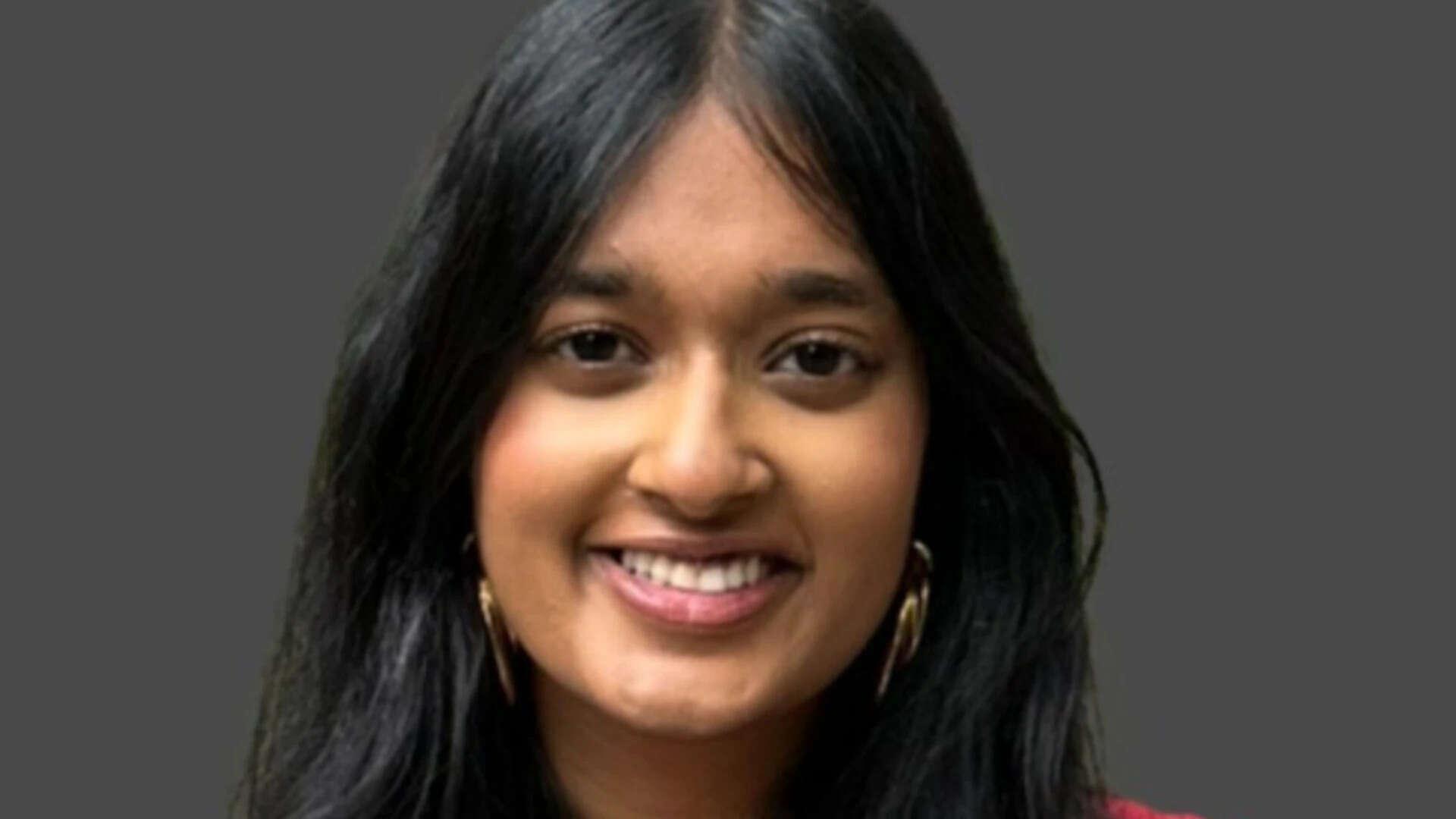
Savitha Shan did everything right. She followed the blueprint for the modern American dream, a path paved with grueling exams, visa interviews, and the quiet courage of leaving home to build something better. She was 31 years old, an engineer, and a resident of Frisco, Texas. By all accounts, she was the success story that both India and the United States claim to want.
Then came the white sedan.
On a quiet evening in late February, while Savitha was out for a walk in her suburban neighborhood, a car veered off the road. It struck her with a force that ended her life instantly. The driver, a 20-year-old, remained at the scene. In a local news cycle, it might have stayed a tragic accident—a woman in the wrong place at the wrong time, a family shattered, a community in mourning.
But as the news hit the digital bloodstream, Savitha Shan was killed a second time.
The comments sections and social media feeds didn't offer condolences. Instead, they became a theater of digital vitriol. "If only she stayed in the safety of India," one user sneered. Others were far more graphic, suggesting that her presence in America was an intrusion and that her death was a natural consequence of "invasion."
This wasn't just trolling. It was a window into a growing, jagged fracture in the American psyche.
The Geography of Hate
To understand why a dead woman becomes a target for strangers, you have to look at the numbers. Texas has become a lightning rod for the complexities of the Indian-American experience. The state has the second-largest Indian population in the U.S., with over 450,000 residents. In North Texas cities like Frisco and Plano, the community isn't just growing; it is the engine of the economy.
Indian Americans currently make up about 1.35% of the U.S. population but pay roughly 6% of all individual income taxes. They lead Fortune 500 companies and staff the hospitals that keep the suburbs running. Yet, the higher the visibility, the sharper the target becomes.
When Savitha’s story went viral, it collided with a specific brand of xenophobia that weaponizes tragedy. The "safety of India" comment is a calculated irony. It ignores the fact that the U.S. remains the top destination for Indian students and professionals because of its perceived safety and opportunity. To tell a victim she should have stayed home is to revoke her right to belong in the space where she lived, worked, and paid taxes.
The Invisible Stakes of Being a Model Minority
The "Model Minority" myth has always been a double-edged sword. It suggests that if you work hard enough, remain quiet enough, and contribute enough to the GDP, you are protected.
Savitha Shan was the embodiment of that myth. She was an engineer. She was "legal." She was a contributor.
But the digital reaction to her death proves that the myth is a lie. For a vocal segment of the internet, no amount of professional achievement grants an immigrant the right to be a victim worthy of sympathy. When an immigrant dies, the "meritocracy" argument vanishes, replaced by a raw, territorial anger.
Imagine her parents. They are thousands of miles away, navigating the bureaucratic nightmare of repatriating their daughter's remains. They are grieving a child who was their pride. Now, they must also process the fact that thousands of people in the country she called home are celebrating her demise.
The cruelty is the point. It is meant to signal to everyone who looks like Savitha that they are guests—tenants whose lease can be terminated by a car or a comment at any moment.
The Echo Chamber of the Algorithm
Why does this happen now? Why is the hate so much louder than the grief?
The answer lies in the way we consume tragedy. Algorithms don't prioritize empathy; they prioritize engagement. A post expressing "Rest in Peace" garners a few likes. A post blaming a victim for her own death through the lens of racial replacement theory sparks a firestorm of "quote-tweets" and "angry" reactions.
This creates a distorted reality. It makes the fringes feel like the majority. In 2023, the FBI reported that hate crimes against South Asians rose significantly, part of a broader 7% increase in total reported hate crime incidents. While Savitha’s death was ruled an accident, the response to it was a targeted act of psychological violence.
We are living through a period where the digital world has stripped away the social cost of cruelty. In a physical town square, few would stand over a mourning family and scream that their daughter deserved to die for moving to Texas. Behind a profile picture of a flag or a cartoon, that barrier dissolves.
The Human Cost of Data
Statistics are cold. They tell us that the Indian diaspora is the highest-earning ethnic group in America, with a median household income of roughly $120,000. They tell us about H-1B visas and green card backlogs.
But statistics don't feel the Texas sun on a late afternoon walk. They don't hear the sound of a car engine revving where it shouldn't be.
When we reduce people like Savitha to "the Indian origin victim," we participate in the same dehumanization the trolls do, just more politely. She was a daughter. She likely had a favorite coffee shop in Frisco, a project at work she was stressed about, and a flight home she was planning to book.
Her death is a tragedy of physics and bad luck. The reaction to her death is a tragedy of character.
The Border That Follows You
There is a specific kind of anxiety that comes with being an immigrant in a polarized climate. It is the feeling that you are constantly on trial. You must be the best student, the most efficient worker, the most law-abiding neighbor. You carry the weight of being an ambassador for an entire subcontinent.
But Savitha Shan shows us that even being "perfect" isn't a shield. The border isn't just a line in the sand at the Rio Grande; for many, it is a digital fence that follows them into their suburban neighborhoods. It is a fence that says: You are only welcome here as long as you are useful. Once you are broken, you are a nuisance.
We have to ask ourselves what kind of society we are building when the death of a young woman becomes an opportunity for a "gotcha" moment about immigration. The "safety" the trolls spoke of wasn't about her physical well-being. It was a demand for segregation.
Beyond the Screen
The silence from the community at large can be just as deafening as the noise from the trolls. When these incidents happen, there is often a rush to move on. We categorize it as "internet being the internet" and turn our heads.
But the people reading those comments aren't just bots. They are our neighbors. They are the people sitting next to us in traffic. They are the people who see a 31-year-old woman in a ditch and think of a political talking point instead of a human soul.
The real danger isn't the white sedan that veered off the road. The danger is the hardening of the heart that follows. If we cannot find it in ourselves to mourn a life cut short without checking the victim's passport or skin color first, then we have lost more than just a sense of civility.
We have lost the ability to see ourselves in the stranger.
Savitha Shan’s journey ended on a Texas roadside. Her legacy shouldn't be a footnote in a culture war. It should be a mirror. Look into it. See the grief of a family in India. See the fear of a community in Frisco.
And see the faces of those who feel emboldened to laugh at a funeral.
The digital border is open, and the cruelty is crossing over into the real world. We can continue to scroll past, or we can recognize that a society that fails to protect the dignity of its dead will eventually fail to protect the lives of the living.
The white sedan is still out there. And the keyboard is just as fast.
The road doesn't care who you are. The question is, do we?