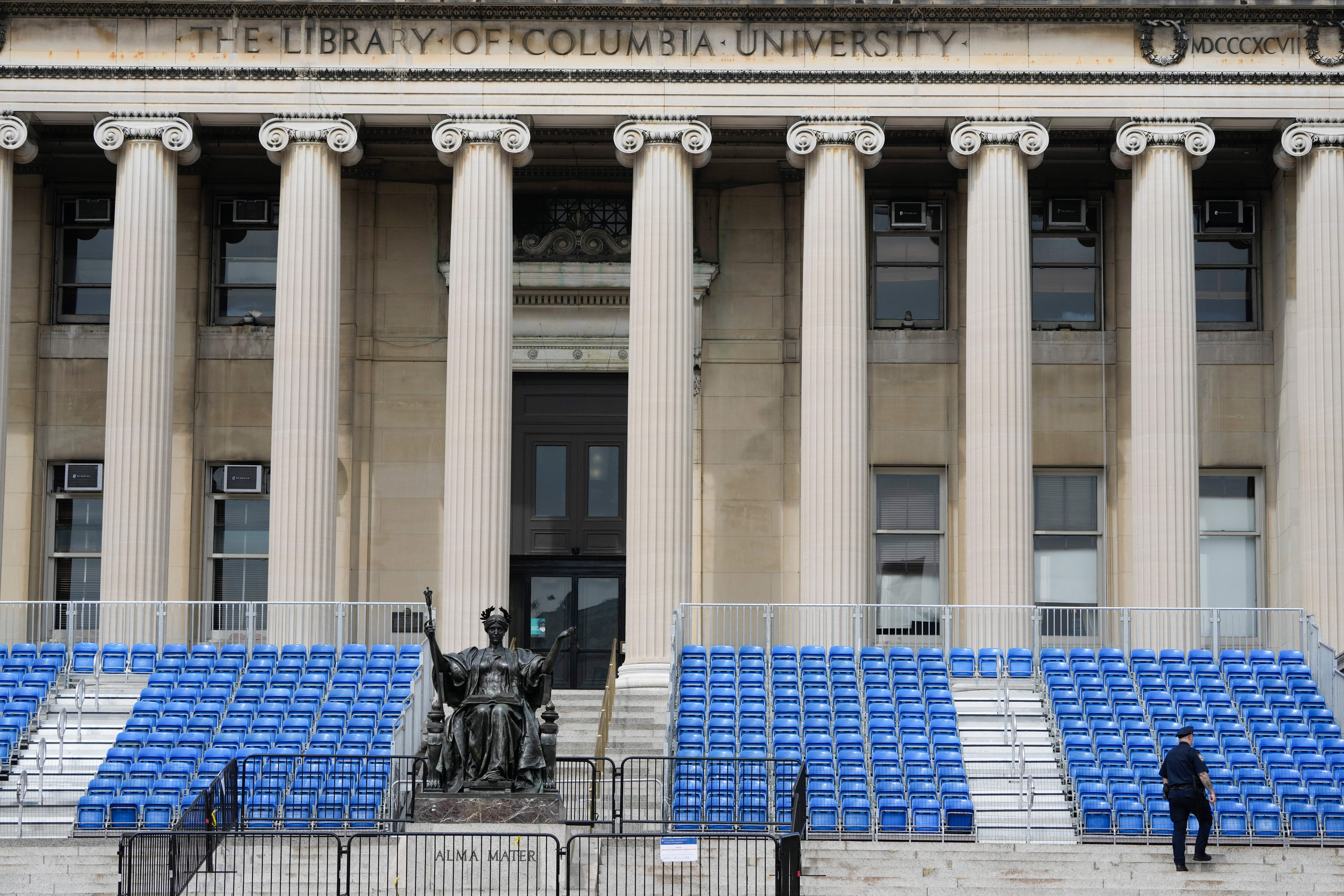
The headlines are predictable. They scream about "federal overreach" and "threats to student safety" when a Columbia University student gets picked up by federal agents. The collective gasp from the Ivy League echo chamber is almost rhythmic. But the outrage machine is missing the point because it's operating on a 20th-century definition of "student."
If you believe a university ID card functions as a digital invisibility cloak, you aren’t paying attention to how modern federal surveillance or international data pipelines actually function. The "lazy consensus" here is that this was an isolated incident of heavy-handed policing. It wasn't. It was the logical conclusion of a system where academic credentials and high-level national security risks now share the same Venn diagram.
The Ivory Tower is a Glass House
The media wants to frame this as a story about a kid and a backpack. In reality, it’s a story about the death of the "safe harbor" myth in academia. For decades, universities functioned as sovereign states where the outside world stopped at the gates of Morningside Heights. That era is dead.
Federal agencies don't burn resources detaining Ivy League students for "activism" alone—they do it because the data trail led them to a specific intersection of foreign influence, encrypted communication, or intellectual property movement. I’ve seen departments turn a blind eye to researchers who are essentially working for two masters. When the feds finally knock, the university acts shocked. It’s a performance.
- The Misconception: Students are targeted for their beliefs.
- The Reality: Metadata doesn't care about your beliefs; it cares about your connections.
The Sovereignty Fallacy
Most people asking "How could this happen on a campus?" are asking the wrong question. The right question is: "Why did we ever assume a campus was exempt from the legal reality of the Patriot Act and its descendants?"
The "sovereignty" of a university is a social construct, not a legal one. When federal agents move in, they aren't "invading" a campus; they are executing a mandate that the university—via federal funding and research grants—has already signed off on. If you take the King’s shilling, you play by the King’s rules. Columbia, like every other Tier-1 research institution, is effectively a federal contractor.
The Math of Risk Assessment
Federal agencies use a specific internal logic for these interventions. It isn't a whim. It’s a calculation of $R = P \times V \times C$, where:
- $R$ (Risk): The total threat level.
- $P$ (Probability): The likelihood of a specific action or leak.
- $V$ (Vulnerability): The holes in the institution's security.
- $C$ (Consequence): The damage to national interests.
When that equation tips, the "student" label becomes irrelevant. You are a node in a network. Nothing more.
Your Privacy is an Academic Theory
We need to stop pretending that campus networks are private. I’ve watched institutions hand over server logs faster than a student can say "First Amendment." The irony is that the very people crying about "surveillance" are usually the ones broadcasting their entire lives over university-managed Wi-Fi.
If you are using a university-issued email or a campus VPN to coordinate anything that sits in a legal grey area, you are essentially CC’ing the Department of Justice. The "detention" is just the physical manifestation of a digital process that started months ago.
The Hidden Cost of the "Released" Narrative
The competitor articles love the "released" part of the headline. It implies a mistake was made. It suggests the system "worked" because the student is back in their dorm.
This is a dangerous misunderstanding of federal strategy. Release does not equal innocence; it equals "we have what we need for now." In the world of high-stakes federal investigations, the initial detention is often a "shake the tree" tactic. It’s a stress test to see who else calls, who gets nervous, and what encrypted channels suddenly light up.
By focusing on the release, the media reinforces the idea that there are no consequences. They provide a false sense of security to other students who think they can play at the edges of federal law without leaving a footprint.
How to Actually Navigate the New Reality
If you’re a student, a researcher, or an administrator, stop reading the op-eds about "campus freedom" and start reading the fine print of your data privacy agreements.
- Assume Zero Privacy: Treat every campus-provided resource as a public forum.
- Understand the Nexus: If your research involves dual-use technology (AI, biotech, quantum), you are already on a list. Act accordingly.
- Ditch the Victim Narrative: The "outraged student" trope is a losing strategy. It doesn't stop a subpoena, and it certainly doesn't stop an interrogation.
The truth is that the line between "academic exploration" and "national security concern" has blurred to the point of extinction. You can complain about the ethics of it all day, but the feds aren't interested in your ethics. They’re interested in your hard drive.
Stop expecting the university to protect you. They are a multi-billion dollar corporation with a reputation to manage and federal grants to protect. When forced to choose between a single student and their $1.5 billion in annual research funding, they will choose the money every single time. They’ll issue a sternly worded press release about "values" while handing the feds the keys to your locker.
The detention wasn't an anomaly. It was a demo.
Get used to it.