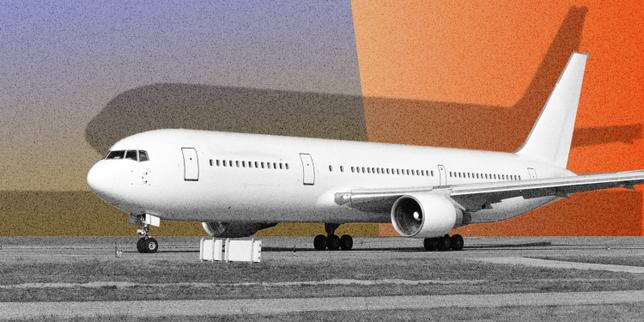
The headlines are predictable. They focus on the shock, the gore, and the "bizarre" nature of an Airbus A321 striking a person during its takeoff roll at Denver International Airport (DEN). The media treats this like a lightning strike—a tragic, one-in-a-billion anomaly.
They are wrong.
Calling this a "freak accident" is the lazy way out for regulators and airport authorities. It shields them from the reality that our ground detection systems are aging, our perimeter security is often theater, and the "sterile" environment of an active runway is a myth we’ve all agreed to believe. When a 90-ton aircraft traveling at 150 knots hits a human being, the failure isn't the pilot's, and it isn't "bad luck." It is a systemic collapse of the very technology we trust to keep the most dangerous part of flight—the takeoff and landing—controlled.
The Myth of the Impenetrable Airside
Every traveler assumes that once they pass through the gauntlet of TSA, they are entering a fortress. In reality, the "Airside" of a major international hub like Denver is a sieve.
We pour billions into scanning shoes and water bottles at the gate, yet the perimeter fences of most major U.S. airports are monitored by outdated vibration sensors and cameras that require a human eye to actually notice a breach. If a person can find their way onto a live runway at one of the busiest airports in the world, the security apparatus hasn't just blinked; it has fundamentally failed its primary objective.
I’ve spent years looking at hangar logistics and ground flow. The focus is always on preventing a "bad actor" from getting on a plane. We’ve ignored the simpler, more chaotic variable: the "unauthorized person" who wanders into the path of a departing jet. Whether it’s a security breach or a massive internal lapse in ground crew communication, a human being on a runway is the aviation equivalent of a catastrophic server failure.
ASDE-X is Not a Magic Bullet
The industry likes to talk about ASDE-X (Airport Surface Detection Equipment, Model X). It’s the high-tech surveillance system designed to prevent ground collisions by integrating radar, multilateration, and ADS-B data. It’s supposed to give controllers a "god view" of every moving piece on the tarmac.
Here is the inconvenient truth: ASDE-X and its successor, ASSC (Airport Surface Surveillance Capability), are optimized to detect planes and transponder-equipped vehicles. They are not built to detect a lone person. A human body has a negligible radar cross-section compared to an A321. If you aren't a giant hunk of aluminum or a vehicle pinging a transponder, you are essentially invisible to the primary safety nets designed to prevent runway incursions.
The aviation industry is obsessed with "see and avoid," a principle that works great at 30,000 feet with clear skies. It is useless during a V1 takeoff roll. Once that Airbus starts its sprint down the concrete, the pilots are committed. Their eyes are on their instruments and the horizon, not scanning for a pedestrian who shouldn't exist. By the time a human figure is visible to a crew traveling at 250 feet per second, the physics of momentum have already sealed the outcome.
The High Cost of the "Safe" Consensus
We prioritize efficiency over absolute isolation. Denver is a massive facility, sprawling over 33,000 acres. Managing that much territory requires a level of surveillance that most airports simply won't pay for. They rely on "compliance" and "standard operating procedures."
But SOPs don't stop a person in crisis or a confused contractor from walking into a death trap.
The industry’s "lazy consensus" is that current security levels are "adequate" because these events are rare. This is the same logic that led to the stagnation of cockpit safety before the 1990s. We wait for a body count to justify the upgrade. We shouldn't be asking "how did this happen?" We should be asking why we still use 20th-century fencing and passive radar to protect 21st-century flight paths.
Stop Blaming the "Unpredictable"
When an incident like this occurs, the immediate reaction from airport PR is to highlight the "unauthorized" nature of the individual. This is a diversion. It frames the victim as the sole variable.
Imagine a scenario where a drone of similar size had been the culprit. The outcry for immediate technological intervention—signal jamming, geofencing, automated kinetic interceptors—would be deafening. But because it was a human, we chalk it up to a tragic lapse in judgment or a "security breach" to be investigated by a committee for the next eighteen months.
The technology to prevent this exists. FLIR (Forward Looking Infrared) and AI-driven optical analytics can identify a human-sized heat signature or skeletal movement pattern in real-time, even in the "clutter" of a busy airport. These systems can be integrated into the control tower’s alert hierarchy. Yet, we don't see them implemented at scale because the ROI isn't there for the bean counters. A fatality once every few years is apparently a "tolerable" cost compared to the price tag of a total thermal perimeter.
The Brutal Reality of Physics
Standard aviation reporting sanitizes these events. They use words like "struck" or "impact."
Let’s be precise. An Airbus A321 at takeoff thrust is a vacuum-and-pressure machine. The CFM56 or LEAP engines on those wings are processing massive amounts of air. If the impact didn't kill the individual, the vortex turbulence or the sheer blunt-force trauma of a landing gear assembly moving at highway speeds certainly did.
The pilots often don't even feel the hit. That is the most terrifying part of this "nuance" the media misses. A pilot can fly a hundred people to their destination, land safely, and only find out during the post-flight walkaround that they became an unwitting executioner. The psychological toll on the crew is a secondary casualty of the airport's failure to secure the pavement.
Denver is a Warning, Not an Outlier
Denver’s layout is modern, yet even here, the system broke. This isn't a "Denver problem." This is an "Aviation Infrastructure" problem. We have built-in tolerances for error in the engines, the wings, and the software. We have zero tolerance for error on the runway surface, yet we treat the security of that surface as a secondary concern to baggage throughput.
If we want to stop people from dying on runways, we have to stop pretending that fences and "authorized access" badges are enough. We need to automate the detection of life on the tarmac with the same rigor we use to automate the flight deck.
Until then, every takeoff is a gamble that the "sterile" zone is actually sterile. Denver just lost the bet.
Fix the perimeter. Automate the watch. Stop calling it an accident.



