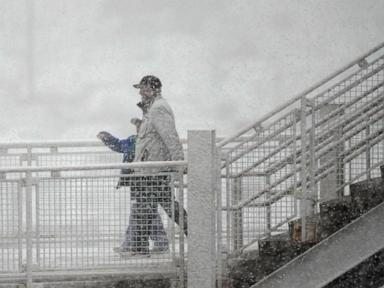
The shift from seventy-degree afternoons to whiteout conditions is not a failure of forecasting. It is a defining characteristic of life along the Colorado Front Range. When May brings a snowstorm that dumps inches of heavy, wet slush onto blooming crabapples and budding maples, the collective public reaction often mirrors shock. Residents pull out winter coats they had packed away, businesses scramble to adjust, and school districts activate emergency closure protocols. Yet, meteorologically, this is not an anomaly. It is the predictable outcome of atmospheric mechanics colliding with high-altitude geography.
The event of May 6, 2026, serves as a sharp reminder that safety in the American West is often predicated on the false assumption that seasons function in linear, predictable blocks. In reality, the environment here operates on a chaotic, moisture-driven cycle that frequently ignores the calendar. Understanding this requires moving past the frustration of a disrupted commute and looking at the atmospheric engine that drives these late-season events.
The Mechanics of Weather Whiplash
At the heart of these late spring storms lies a specific atmospheric configuration. Warm, moist air from the south is pulled into the region by upper-atmosphere disturbances. Simultaneously, freezing air funnels down the spine of the Rocky Mountains. When these two air masses meet, the result is not a light, powdery dusting but a heavy, water-laden snow.
This density is the primary culprit behind the damage reported across communities. A few inches of light, dry winter powder might cause minor traffic slowdowns, but an equal accumulation of "heart-attack snow"—the industry term for heavy, wet precipitation—exerts significant structural pressure. Trees, which have already begun to leaf out, act like sails, catching the weight of the snow until branches snap and power lines fail.
The process is accelerated by orographic lift. As air is forced up the eastern slopes of the Rockies, it cools, condenses, and dumps its moisture. This is why towns along the foothills and the I-25 corridor often see double the accumulation of areas further out on the plains. It is a fundamental feature of the terrain, yet the societal response remains reactive rather than adaptive.
The Economic Price of Seasonal Denial
While the public laments the ruined gardens and icy roads, a distinct sector of the economy experiences a different set of consequences. Weather-dependent businesses navigate a narrow margin of profitability that hinges on the timing of these events. For companies providing snow removal services, a late May storm is an unexpected fiscal lifeline in a season that typically sees revenue drop off as the ground thaws.
Conversely, for the outdoor recreation and tourism sector, the impact is more complex. Ski resorts, which rely on consistent, manageable snowfall throughout the winter, view these late-season events with a mix of resignation and necessity. While the moisture is vital for the long-term health of the water supply—essential for summer rafting, fishing, and agriculture—the disruption to the spring transition can be costly.
Retail and hospitality businesses face the most direct strain. When a storm shuts down schools and keeps residents indoors, commerce slows. The "weather whiplash" effect ripples through local budgets, as maintenance costs for municipal snow clearing exceed anticipated seasonal allocations. The municipal response to these storms highlights a recurring tension between the need to manage infrastructure and the desire to minimize expenditures once the primary winter season has passed.
Why Schools Close when the Sun Returns
The decision to close school districts during a late spring storm is often met with criticism from observers who believe the snow will melt within hours. However, this perspective overlooks the logistical reality of transportation safety. The primary hazard is not the accumulation on the main thoroughfares, but the condition of secondary roads, side streets, and the sheer weight of the precipitation.
School districts must manage the safety of buses navigating hilly terrain, often in the early morning hours when temperatures are at their lowest. If a storm hits overnight, the combination of slushy roads and the threat of falling branches creates a liability that most superintendents are unwilling to assume. Furthermore, the decision is rarely based solely on the current depth of the snow, but on the projected traffic impact and the capability of the district to maintain transport routes as the storm evolves.
Public frustration often stems from the gap between the forecast and the observed reality. A model might predict four inches, and the actual accumulation might be half that, leading some to label the closures as an overreaction. Yet, the margin for error in transit safety is thin. One downed line or a single slide on a critical route can paralyze entire neighborhoods, making the conservative approach the only viable option for large districts.
Agriculture and the Drought Paradox
Perhaps the most significant, and frequently overlooked, aspect of these storms is the agricultural benefit. Colorado has spent the better part of the decade grappling with persistent drought and low snowpack levels. For farmers and gardeners, the moisture provided by a May storm is worth far more than the temporary inconvenience of a cold snap.
The snow acts as a slow-release watering system, penetrating the soil more effectively than a quick spring rain. While sensitive crops may suffer from the sudden drop in temperature, requiring farmers to move delicate starts indoors or cover them with protective tarps, the long-term gain for soil moisture is undeniable. This tension between immediate damage to landscaping and the vital need for long-term water storage illustrates the complex relationship Coloradans have with their climate.
The dependency on mountain snowpack for 90 percent of the water supply means that these late-season events are, in the aggregate, beneficial. A spring devoid of this moisture would exacerbate the ongoing water crisis, potentially leading to strict usage mandates in the summer months. The narrative of the storm as a purely disruptive force ignores the hydrological necessity that allows the state to function through the drier months.
Human Adaptation vs Environmental Reality
The persistent struggle to adapt to Colorado’s climate stems from a culture that prioritizes seasonal milestones over environmental observation. We categorize winter as ending in March or April, and we adjust our behaviors, budgets, and expectations accordingly. When the environment deviates from this schedule, we perceive it as a disruption rather than a standard seasonal fluctuation.
Effective preparation for these events requires a shift in mindset. It involves maintaining a baseline level of readiness for winter driving well into May, accepting that municipal snow removal is an ongoing service rather than a seasonal one, and recognizing that infrastructure in the high plains must be built to withstand high-moisture events regardless of the date.
Instead of treating the May snowstorm as a unique, unexpected event that forces a halt to daily life, communities might eventually treat it as a routine operational consideration. This would mean better tree management to prevent power outages, updated municipal policies regarding school closures that account for the unique nature of wet snow, and a societal acceptance that in the high-altitude interior, the threat of winter never truly leaves.
The current approach is defined by reaction. We wait for the forecast, we acknowledge the storm, we close the schools, and then we return to normal as if the event was an outlier. The reality of the region is that these shifts are baked into the geography. As long as the mountains stand and the moisture flows from the south, the late-spring blizzard will remain a standard, if occasionally inconvenient, participant in the calendar. The goal should not be to prevent the disruption but to build a system that remains functional when the sky turns white, even in the middle of May.
The storm will pass, the snow will melt, and the cycle will reset. The only variable that truly changes is the collective realization that we are still trying to force a predictable, orderly rhythm onto a landscape that has always demanded something else. The next time the clouds gather and the temperature plummets, the response should not be surprise, but a quiet, prepared recognition of the environment as it exists, not as we wish it to be.