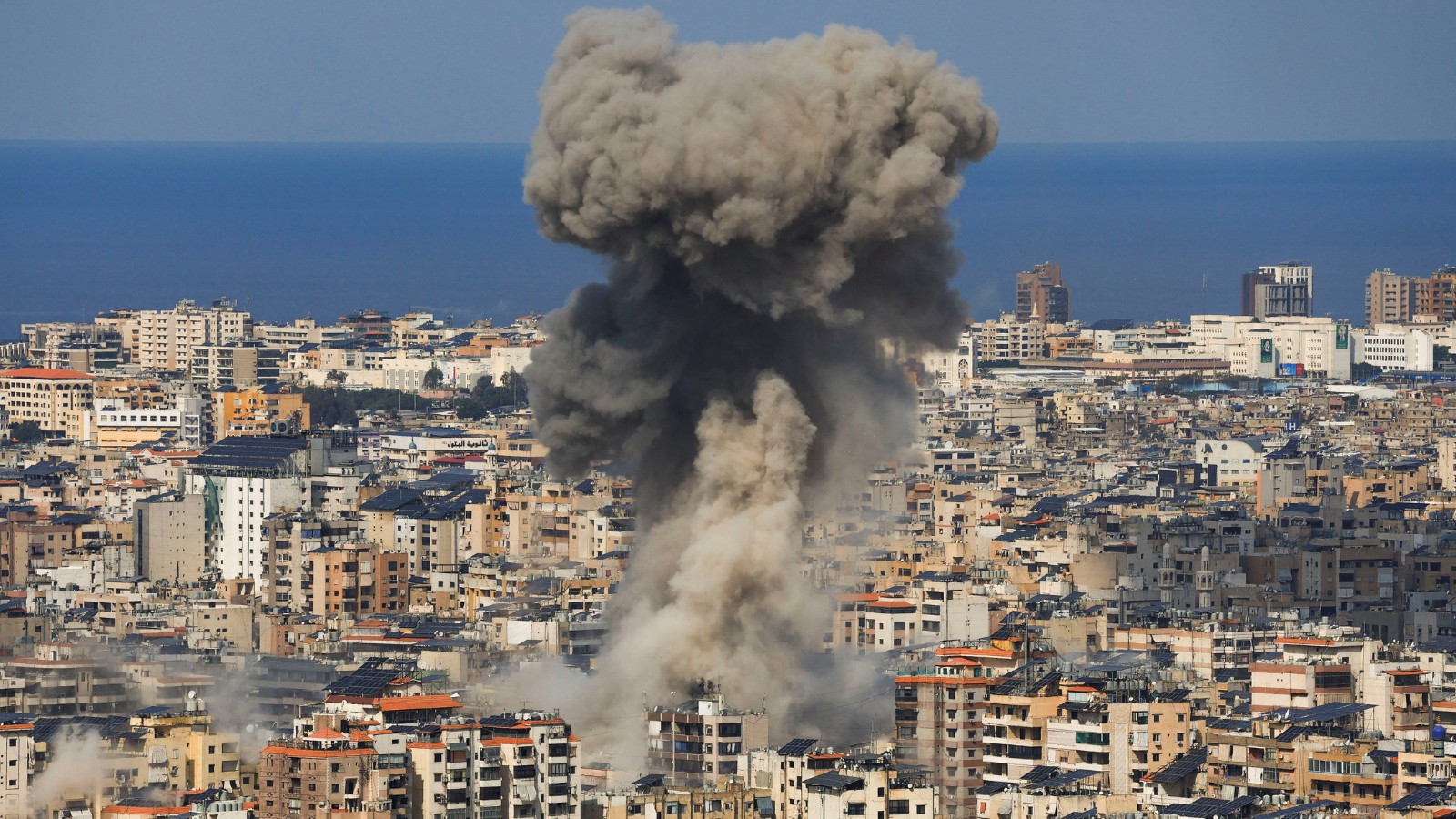
The United Nations has finally broken its silence on the recent escalation of hostilities against Iran, issuing a report that characterizes the opening salvos of the conflict as a fundamental breach of the UN Charter. Central to the findings is the targeted strike on a civilian educational facility, an event the probe describes as a blatant violation of the principles of distinction and proportionality. While the geopolitical machinery of the West has largely framed these maneuvers as preemptive defense, the UN Human Rights Council’s investigative body argues that the legal threshold for "imminent threat" was never met. This creates a dangerous precedent where the rules of global engagement are not just bent, but discarded entirely.
For decades, the UN Charter has served as the shaky floorboard of global stability. Article 2(4) explicitly prohibits the threat or use of force against the territorial integrity or political independence of any state. By bypassing the Security Council to launch strikes on Iranian soil, the coalition forces have effectively signaled that the post-WWII order is a relic. The report focuses heavily on a specific strike on a secondary school in the outskirts of Karaj, which resulted in significant civilian casualties. The justification provided by military intelligence—that the site served as a dual-use command node—is dismissed by the UN investigators for lack of verifiable evidence.
The Myth of Precision and the Reality of Ruins
Military briefings often use sterilized language to describe the mechanics of modern warfare. We hear about "surgical strikes" and "low collateral yield." However, the ground reality in Iran tells a different story. The investigation into the school bombing reveals that the munitions used were high-yield explosives, ill-suited for a densely populated urban area regardless of the intended target. When a missile hits a classroom, the distinction between a combatant and a civilian becomes a theoretical exercise for lawyers in Geneva, while the physical reality is one of charred textbooks and shattered lives.
The coalition’s reliance on "algorithmic targeting" is under intense scrutiny. The probe suggests that the data sets used to identify targets in the Karaj district were outdated, failing to account for the seasonal migration of civilians or the repurposing of buildings. This isn't just a technical glitch. It is a systemic failure of accountability. If a machine makes a target selection that results in a war crime, who stands trial? The commander? The programmer? The lack of a clear answer to this question allows for a convenient diffusion of responsibility that the UN report identifies as a "black hole of international law."
The Strategic Failure of Preemption
Beyond the moral and legal wreckage, the strike on the school and the broader campaign against Iranian infrastructure represent a massive strategic miscalculation. The stated goal of these operations was to "degrade the capability" of Iranian proxies and prevent a wider regional war. Instead, the visual evidence of a destroyed school has become a potent recruitment tool.
In Tehran and across the Middle East, the narrative has shifted. It is no longer about the intricacies of nuclear enrichment or maritime shipping lanes. It is about a perceived crusade against the Iranian people. By violating the UN Charter so publicly, the coalition has granted the Iranian leadership a degree of domestic legitimacy they haven't enjoyed in years. Fear has been replaced by a hardened, collective resentment. This shift makes any future diplomatic resolution nearly impossible, as the Iranian public now views international law as a tool used exclusively by the powerful against the defiant.
A Selective Application of Justice
The UN report points out a glaring double standard in how international law is enforced. When smaller nations or non-state actors violate sovereignty, the response is swift and often includes crippling sanctions or military intervention authorized by the Security Council. Yet, when a global superpower or its direct allies determine that their national interests are at stake, the Charter is treated as a set of non-binding suggestions.
- Article 51 Misuse: The report argues that the "self-defense" clause of the UN Charter is being stretched to a breaking point. To claim self-defense, a state must show that an armed attack has occurred or is truly imminent. "Imminence" in this context has historically meant a matter of minutes or hours, not a general sense of future hostility.
- The Intelligence Gap: Much of the justification for the strike on the school relied on "classified intelligence" that was never shared with the UN investigative team. The report notes that without transparency, the claim of military necessity is indistinguishable from a war crime.
- The Silence of the Security Council: The paralysis of the UN Security Council, where veto powers ensure that no meaningful resolution can be passed against major players, has rendered the organization's primary enforcement mechanism toothless.
This selective application of the law creates a vacuum. In that vacuum, other nations observe that the most effective way to ensure security is not through treaties or international cooperation, but through the rapid acquisition of advanced weaponry. If the law doesn't protect the weak, the weak will find other ways to protect themselves.
The Economic Aftermath of Legal Erosion
The fallout of the Iran strikes extends into the global markets, but not in the way many expected. It isn't just about the price of Brent crude. It is about the risk premium now attached to international investment in regions where the "rule of law" is subject to change without notice. When the UN Charter is ignored, the predictability required for global commerce evaporates.
Insurance companies are already rewriting policies for maritime trade in the Strait of Hormuz and the Gulf of Oman. The UN's finding that the strikes were illegal means that many of the damages incurred may not be covered under standard "war risk" clauses, leading to a massive legal battle between state-owned enterprises and private insurers. This friction in the global supply chain is a direct consequence of the breakdown in the international legal order. Investors hate uncertainty, and there is nothing more uncertain than a world where the highest legal authority is ignored by its own architects.
The Educational Vacuum
The destruction of the school in Karaj is a microcosm of a larger tragedy. Beyond the immediate loss of life, the strike has paralyzed the local educational system. Thousands of students are now without a place to learn, and the psychological impact on the survivors is immeasurable. The UN report emphasizes that schools are "protected objects" under the Geneva Conventions. Attacking them is not just a tactical choice; it is a direct assault on the future of a society.
Local witnesses interviewed by the UN team describe a scene of chaos. There were no sirens, no warnings, and no chance for evacuation. The "shocking" nature of the strike, as the UN puts it, stems from the total lack of regard for human life in the pursuit of a perceived military advantage that, in the end, yielded no tangible change in Iran's military posture.
The End of the Post-War Consensus
We are witnessing the final gasps of the era that began in 1945. The UN Charter was written in the shadow of a world that had nearly destroyed itself, designed specifically to prevent the kind of unilateral military action we are seeing today. By dismissing the UN's findings as "politically motivated," the coalition isn't just defending a specific military action; it is rejecting the framework of global governance itself.
The report by the UN probe isn't just a list of grievances. It is a warning. When the institutions designed to prevent war are ignored by the very people who created them, those institutions cease to function as anything more than a debating club. The strike on a school in Iran is a tragedy for the families involved, but the death of the UN Charter is a catastrophe for everyone else.
The next time a nation-state decides to settle a score with a missile, they won't look to Geneva or New York for permission. They will look at the precedent set in Karaj. They will see that if the cause is framed correctly and the power behind the trigger is sufficient, the law is irrelevant. This is the new reality of the 21st century—a world of total force where the only real crime is being too weak to strike back.
Stop looking for a diplomatic exit ramp that no longer exists. The bridge has been bombed.