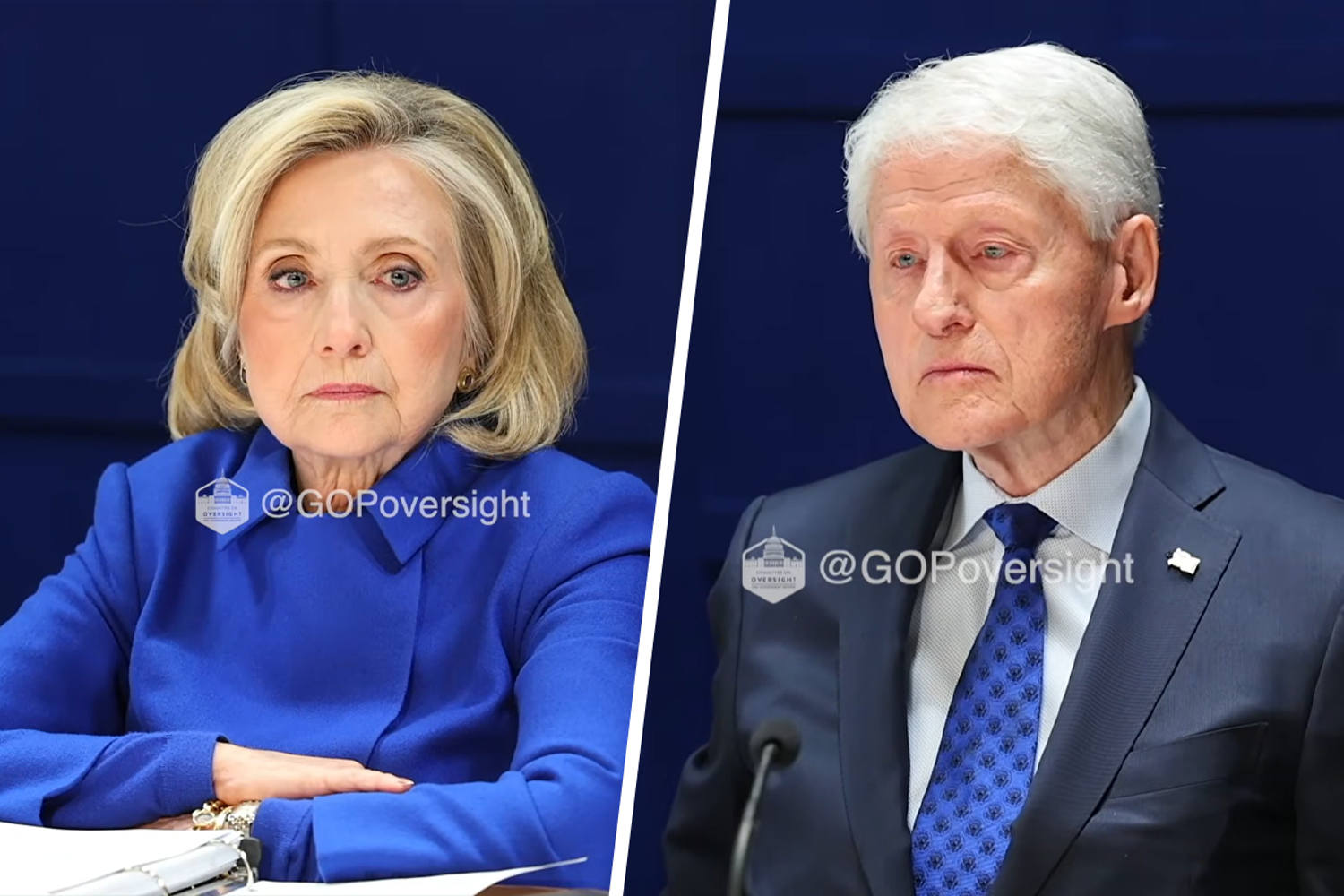
The House Oversight Committee just dropped a stack of video depositions featuring the Clintons, and the internet is doing exactly what it was programmed to do: salivating over grainy footage and hunting for a "smoking gun" that doesn't exist. If you think these videos represent a breakthrough in the Jeffrey Epstein investigation, you’ve already lost. You’re playing a game designed to keep you busy while the actual mechanics of power remain untouched.
The lazy consensus among the pundit class is that "transparency" is always a win. They argue that by forcing these depositions into the public eye, we are finally getting accountability. That is a lie. Transparency, in this specific political context, is often used as a high-definition filter to obscure the truth. We are being fed a meal of procedural theater while the kitchen is on fire.
The Deposition as a Performance Art Form
I have sat in rooms where high-stakes depositions occur. I have seen how the most powerful people in the world are coached to breathe, blink, and stall. A deposition is not a search for truth; it is a tactical exercise in information containment.
When a figure like Bill Clinton sits for a deposition regarding his ties to Epstein, he isn't there to reveal. He is there to survive. The lawyers involved have mapped out every possible conversational pivot weeks in advance. What you are watching in these "newly released" videos is not a raw moment of history. It is a highly choreographed dance where "I don't recall" functions as a shield, not a lapse in memory.
By focusing on the optics of the deposition—the facial twitches, the tone of voice, the long pauses—the public misses the actual tragedy: the legal framework itself is designed to protect the deponent. If the House Oversight Committee actually wanted to move the needle, they would be chasing the money trails and flight logs that the Department of Justice has sat on for years. Instead, they give you a video of a former president looking annoyed. It’s cheap bait.
The Myth of the Epstein "Inner Circle"
The media loves the phrase "inner circle." It implies a small, manageable group of villains we can eventually round up. This narrative suggests that if we just get enough testimony from the Clintons, or the Trumps, or the princes, the whole thing unravels.
This is a fundamental misunderstanding of how Epstein operated. He didn't have an "inner circle." He had a global infrastructure. Epstein was a broker of human capital and social leverage. To fixate on whether Bill Clinton visited the island 26 times or 27 times is to miss the point of how systemic institutional failure allowed a monster to operate in broad daylight for decades.
The release of these videos serves a specific purpose: partisan confirmation bias. * If you hate the Clintons, you see guilt in every shadow.
- If you defend them, you see a nothingburger.
Both sides are right, and both sides are wrong. The videos provide just enough "content" to keep the outrage cycle spinning without actually providing the evidence required for a criminal indictment. This is how the status quo survives—by giving the mob a bone to chew on so they don't look at the gate.
Why the Oversight Committee is Failing You
The House Oversight Committee has become a content production house. Their job used to be checking the power of the executive branch through rigorous investigation and legislative reform. Now, their job is to generate clips for social media.
Consider the timing. Why release these specific videos now? It’s not because of a sudden breakthrough in the case. It’s because the political calendar demands a distraction. When the public starts asking questions about the current economy, the crumbling infrastructure, or failing foreign policy, the "Epstein Vault" is the ultimate emergency glass to break.
I’ve watched committees blow millions of taxpayer dollars on these televised hunts. They hire consultants to polish the presentation of "evidence" that has been sitting in a file cabinet for five years. It’s a sunk-cost fallacy on a national scale. We keep investing our attention in these hearings because we’ve been told they matter, even though they have a 0% track record of actually putting the high-level beneficiaries of Epstein’s network behind bars.
The Counter-Intuitive Truth About "Hidden" Footage
There is a psychological phenomenon where people believe that if something was previously "secret," it must be "important." The Oversight Committee relies on this. By labeling these videos as "released" or "uncovered," they imbue them with an unearned sense of gravity.
In reality, the most damning information regarding the Epstein saga isn't in a video of Bill Clinton being asked about a massage. It’s in the dry, boring, non-visual documents:
- The non-prosecution agreements signed in Florida.
- The offshore wire transfers that funded the operation.
- The intelligence agency ties that provided the initial cover.
None of those things make for good television. You can’t put a thumbnail of a wire transfer on a YouTube video and get a million clicks. So, the committee gives you the deposition. They give you the personality. They give you the drama. And they successfully steer the conversation away from the structural rot that allowed Epstein to exist in the first place.
Stop Asking if They’re Lying
People often ask: "Is Clinton lying in these videos?"
You’re asking the wrong question. In a deposition, "truth" is a relative term defined by the narrowest possible interpretation of the words used. If you ask a man if he was "at a party" and he defines a "party" as a gathering of more than twenty people, he can say "No" with a straight face even if he was in the room with fifteen others.
The focus shouldn't be on the veracity of the individual deponent. It should be on the utility of the testimony. What does this video actually change? Does it provide a new name? Does it reveal a new location? Does it link a specific crime to a specific date?
If the answer is no—and in the case of these House Oversight releases, it almost always is—then the video is noise. It is a distraction. It is a way to make the public feel like something is happening when, in reality, the wheels of justice have been locked in place by the very people filming the video.
The Actionable Reality
If you want to actually understand the Epstein network, stop watching the depositions. The "clues" aren't in the way a politician adjusted his tie or wiped his brow.
Instead, look at the financial institutions that handled the money after Epstein was a convicted sex offender. Look at the educational institutions that took the "donations" to look the other way. Look at the legal teams that move between government service and defending the world's most predatory billionaires.
The House Oversight Committee isn't going to show you those things because many of the people sitting on that committee rely on those same systems for their own power. They would rather you argue about Bill Clinton’s memory than ask why the banking system is still rigged to protect the ultra-wealthy from the consequences of their associations.
The release of these videos is an admission of defeat. It’s the committee saying, "We can't actually fix the system, so here’s some footage of a guy you already don't like."
Don't take the bait. The real story isn't in the deposition. It's in the fact that, years after Epstein's death, we are still being sold "transparency" as a substitute for justice.
Stop looking at the screen. Look at who’s holding the camera.