Western hawks and Iranian hardliners often share a common delusion: they both think Beijing is ready to jump into the fire for Tehran. It isn't. Despite the 25-year cooperation agreement signed in 2021 and the rhetoric about a "comprehensive strategic partnership," China is playing a game that's much colder and more calculating than most realize.
If you're looking for a savior for the Islamic Republic, don't look East. Look at the numbers instead. China’s primary interest in the Middle East isn't revolution or resistance; it’s the quiet flow of oil and the preservation of its own economic ascent. When push comes to shove, Beijing chooses its own stability every single time.
The Asymmetry of Need
The relationship between Beijing and Tehran is fundamentally lopsided. For Iran, China is a literal lifeline. Since the U.S. ramped up "maximum pressure" and Israel began direct strikes on Iranian soil, Tehran has had nowhere else to turn. In 2025, Iran exported more than 80% of its oil to China. Without that revenue, the Iranian state doesn't just struggle—it collapses.
But flip the script and the "strategic" importance of Iran starts to look much smaller. Iranian crude only makes up about 13% of China's total seaborne oil imports. If Iran's supply were wiped off the map tomorrow, Beijing could—and would—simply pick up the phone to Riyadh, Abu Dhabi, or Moscow. They have the reserves and the alternative suppliers to weather a total Iranian shutdown. Iran needs China to survive; China only needs Iran if it's convenient.
Rhetoric vs Reality in the Middle East War
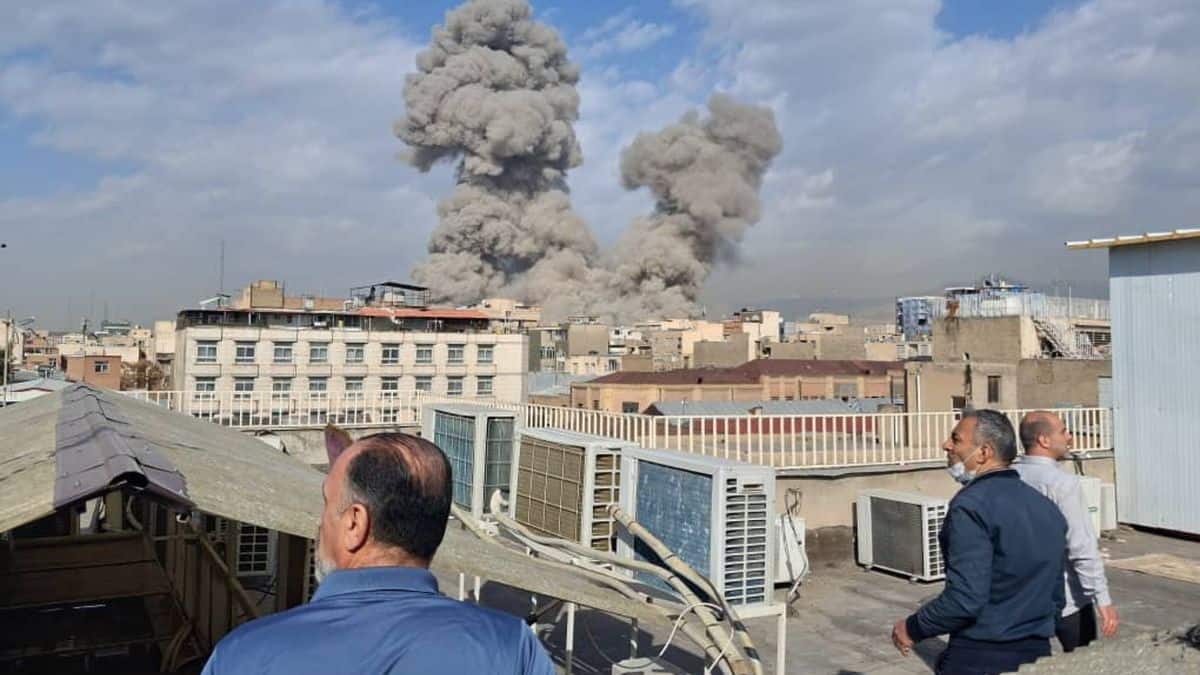
The events of early 2026 have laid bare the limits of Chinese support. Following the assassination of Supreme Leader Ayatollah Ali Khamenei and the "Operation Epic Fury" strikes by the U.S. and Israel, Beijing’s response was exactly what you’d expect from a country that doesn't want to get its hands dirty.
Foreign Minister Wang Yi condemned the "blatant assassination" and called for an immediate ceasefire. He talked about sovereignty and dignity. But did he offer military aid? No. Did he send the People's Liberation Army Navy (PLAN) to escort Iranian tankers? Hardly. Instead, he announced the dispatch of a "special envoy" for mediation.
In diplomacy, "sending an envoy" is often code for "we're going to talk while you get hit." China is happy to let the U.S. get bogged down in another Middle Eastern quagmire because it diverts American resources away from the South China Sea. However, they're not going to spend their own blood or treasure to keep a teetering regime in Tehran on life support.
Strategic Opportunism and the 25 Year Deal
Many analysts point to the $400 billion investment promise in the 2021 deal as proof of a deep bond. Look closer. Most of that money hasn't actually materialized. Beijing has been incredibly slow to move on infrastructure and energy projects inside Iran. Why? Because Chinese companies are terrified of U.S. secondary sanctions.
Chinese state-owned enterprises (SOEs) aren't ideological; they're profit-driven. They won't risk their access to the global financial system—and the $3 trillion in trade they do with the West—for a few projects in a war zone.
What China actually practices is "strategic opportunism." They take advantage of Iran’s isolation to buy oil at massive discounts—sometimes 20% to 30% below market rates. They're not helping a friend; they're vulture investing in a state that has no other options.
The Nuclear Red Line
There’s another reason Beijing won't go all-in for Tehran: the nuclear issue. While China opposes unilateral U.S. sanctions, it also fears a nuclear-armed Iran. A nuclear Iran would likely trigger a domino effect across the region. Saudi Arabia, Turkey, and Egypt might follow suit.
Even worse for Beijing, it would give Japan and South Korea a perfect excuse to go nuclear. That is China's ultimate nightmare. Beijing prefers a weakened, non-nuclear Iran that remains a thorn in America's side but never becomes a regional hegemon that could disrupt the status quo.
The Pragmatic Pivot
As the Iranian regime faces its most significant internal and external threats since 1979, Beijing is already looking past the current leadership. They are "hedging" their bets. You can see this in how they've cultivated ties with the Gulf Cooperation Council (GCC) states.
- Energy Security: Saudi Arabia and the UAE are more reliable partners with more sophisticated infrastructure.
- Trade Volume: China's trade with the Arab world dwarfs its trade with Iran.
- Regional Stability: China needs the Strait of Hormuz open. If Iran tries to close it as a last-ditch effort, Beijing might be the first to tell them to back off.
What Happens if the Regime Falls
If the Islamic Republic were to collapse, Beijing wouldn't mourn. They'd manage. Their priority would be ensuring that whatever comes next doesn't immediately become a U.S. satellite. They’d likely use their "non-interference" policy to quickly recognize any new government that guarantees the safety of Chinese investments and the continued flow of oil.
Honestly, a more "normal" Iran might actually suit China better. It would mean fewer sanctions to navigate and a more stable environment for those $400 billion in potential investments to finally start moving.
Practical Steps for Observers
If you're tracking this geopolitical shift, don't watch the official readouts from the Chinese Foreign Ministry. They'll always sound supportive. Instead, watch these three indicators:
- The "Teapot" Refineries: Watch the data on independent Chinese refineries. If they stop buying Iranian "discount" crude, it’s a sign Beijing thinks the risk has finally outweighed the reward.
- The Mediation Game: If China starts coordinating more with Saudi Arabia than with Iran during "peace talks," they've effectively abandoned Tehran.
- Military Drills: Pay attention to the Gulf of Oman. Joint exercises are one thing; actual hardware transfers (like HQ-9 air defense systems) are another. Until you see the latter, the support is just theater.
Keep your eyes on the oil tankers and the bank accounts. Everything else is just noise. Beijing isn't looking for an ally to fight with; it's looking for a gas station that stays open and doesn't charge too much. If the station starts burning down, they'll just drive to the one across the street.
Monitor the next round of Shanghai Cooperation Organization (SCO) meetings to see if China offers any tangible security guarantees or remains strictly focused on "economic cooperation."


