China doesn't do "surprise" politics. If you're looking for the chaotic floor debates seen in the UK Parliament or the high-stakes filibusters of the US Senate, you won't find them in Beijing. Instead, the annual "Two Sessions" or Lianghui serves as a massive, synchronized reveal of where the world’s second-largest economy is heading. It’s the moment the Chinese government stops hinting at its plans and starts putting them into law.
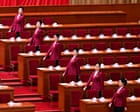
Every March, thousands of delegates descend on the Great Hall of the People. They represent two distinct bodies that, on paper, look like a bicameral legislature but actually function as a grand political theater for policy signaling. Understanding these meetings is the only way to cut through the noise of speculative financial reporting and see what the CCP actually prioritizes for the coming twelve months.
The Two Halves of the Whole
The term "Two Sessions" refers to the concurrent meetings of the National People’s Congress (NPC) and the Chinese People’s Political Consultative Conference (CPPCC). They aren't the same, and they don't have the same power.
The NPC is the big one. It's technically the highest organ of state power in China. While it’s often dismissed as a rubber-stamp parliament because it rarely votes down a proposal, it remains the venue where the national budget is approved and where major legislative changes—like the Foreign Investment Law or updates to the Civil Code—are finalized.
Then there's the CPPCC. Think of it as a high-level advisory body. It’s a mix of party officials, business titans like Robin Li of Baidu, and even celebrities or scientists. They don't pass laws. They "consult." They offer suggestions that might eventually find their way into the NPC’s legislative pipeline. It’s basically a massive networking and brainstorming event for the country’s elite to align with the Party’s vision.
Watching the GDP Target
The most scrutinized moment of the Two Sessions is the Government Work Report. Usually delivered by the Premier, this speech sets the tone for everything else. It’s where the GDP growth target is announced.
In recent years, this number has become more than just a stat. It’s a signal of confidence. If the target is "around 5%," the government is telling the world it's focused on stability. If they omit a hard number, like they did during the height of the pandemic, it’s a sign of extreme caution. You have to look at the phrasing. Terms like "high-quality development" mean the government is willing to sacrifice raw speed for technological self-reliance and green energy.
Don't just look at the GDP, though. The fiscal deficit target and the unemployment rate goals for urban areas tell a much grittier story. Those numbers reveal how much the government is worried about social stability. If the deficit target creeps up, expect more infrastructure spending. If it stays tight, Beijing is trying to rein in the massive debt bubbles in the property sector.
The Push for New Quality Productive Forces
There’s a new buzzphrase you’ll hear constantly during the 2026 sessions: "new quality productive forces." It sounds like dry Marxist theory, but it’s actually a roadmap for survival. It refers to a shift away from old-school growth drivers—like building endless apartment blocks—and toward advanced manufacturing, AI, and the "green trio" of electric vehicles, lithium-ion batteries, and solar products.
China is currently stuck in a middle-income trap. To get out, they need to dominate the next generation of tech. During the Two Sessions, watch for specific subsidies or tax breaks targeting semiconductors and quantum computing. This isn't just about business. It's about national security. The more the US restricts chip exports, the more the Two Sessions will focus on "indigenous innovation."
Why the Property Sector Isn't the Main Event Anymore
For a decade, the Two Sessions were dominated by talk of "houses are for living in, not for speculation." That era is mostly over because the bubble already popped. Now, the focus has shifted to managing the aftermath.
You won't see a massive, 2008-style bailout announced at these meetings. That’s not how Beijing operates now. Instead, you’ll see incremental policies aimed at "guaranteeing the delivery of homes." The goal is to keep the peace among the middle class who have their life savings tied up in unfinished apartments. If you're an investor waiting for a return to the glory days of Chinese real estate, these meetings will likely be a cold shower.
The Role of the Private Sector
One of the biggest tensions in modern China is the balance between state-owned enterprises (SOEs) and private firms. Private companies provide about 80% of urban jobs. Yet, they've been battered by regulatory crackdowns over the last few years.
During the Two Sessions, pay attention to the rhetoric regarding "unswervingly supporting" the private sector. If the Premier spends a lot of time praising entrepreneurs, it's a sign that the government is desperate to jumpstart domestic consumption. If the focus remains purely on SOEs, expect a more rigid, state-led investment environment.
Security vs Economy
There’s a visible shift in the DNA of these meetings. In the 2000s, it was all about the economy. Today, security is the lens through which everything is viewed. Food security, energy security, and data security are now baked into every work report.
This means the Two Sessions now act as a defensive huddle. The delegates discuss how to make China "invulnerable" to external shocks. This is why you'll see huge blocks of time dedicated to grain production targets and the expansion of domestic coal and renewable energy. They want to ensure that even if global trade fractures further, the lights stay on and the people stay fed.
How to Read Between the Lines
To get the most out of the Two Sessions, you have to ignore the "unanimous" votes and look at the side-line press conferences. While the main speeches are scripted, the ministerial briefings—where heads of the central bank or the Ministry of Foreign Affairs speak—can be quite revealing.
If the central bank chief mentions "structural tools," he’s saying they’ll print money for specific industries but not for everyone. If the Foreign Minister takes a particularly sharp tone regarding "hegemonism," expect trade relations with the West to remain icy.
The Two Sessions aren't about debate; they're about deployment. By the time the delegates leave Beijing, every province, every city, and every state-owned bank knows exactly what their quota is for the year.
If you want to understand where the global supply chain is moving or which industries will see a surge in demand, stop watching the daily stock fluctuations and start reading the Government Work Report. It’s the most honest look you’ll get at the Party’s true anxieties and ambitions. Take the data at face value but read the priorities as a survival guide. Monitor the specific language used around "self-reliance" in the final communique to gauge just how fast the decoupling from Western tech will accelerate this year.