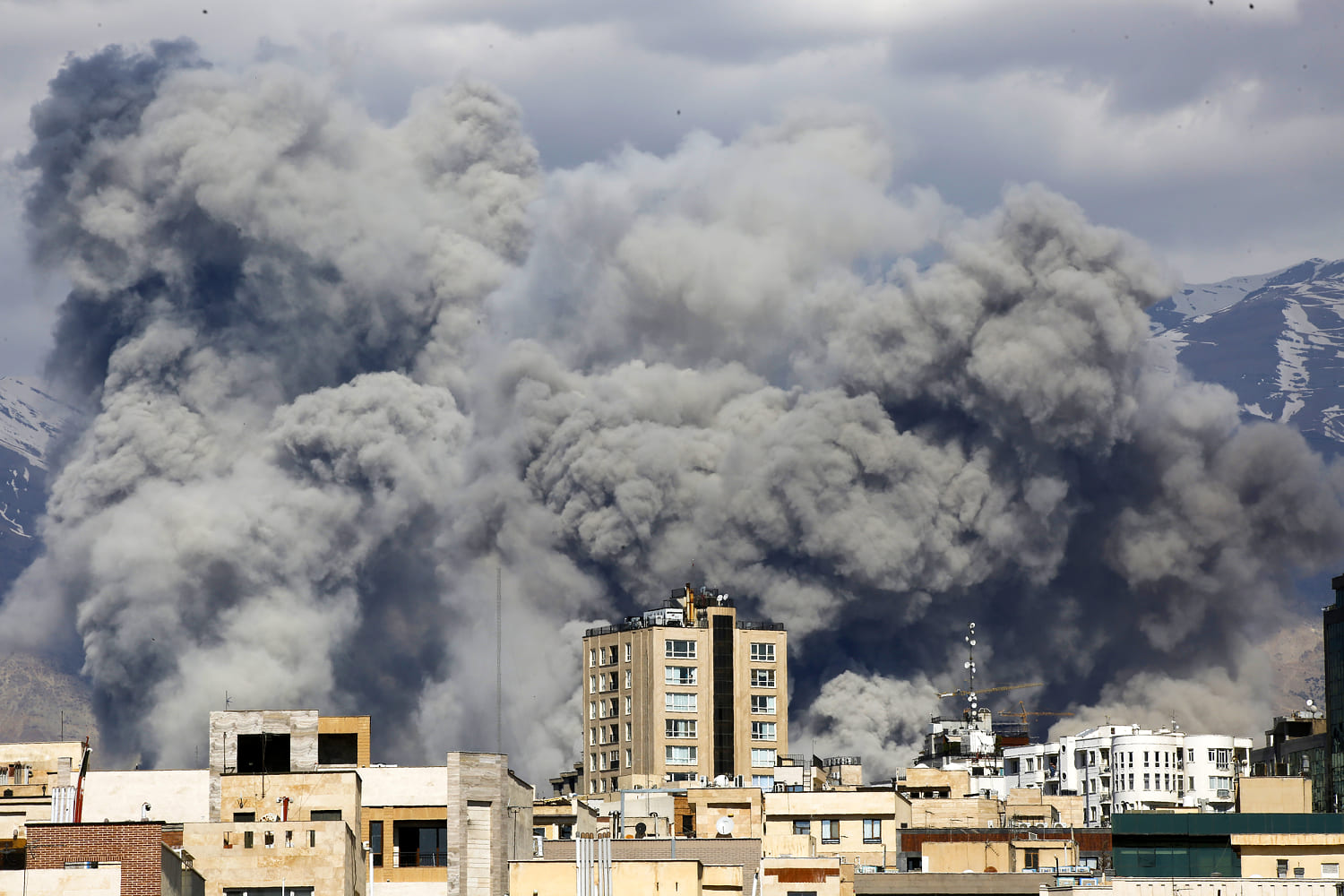
Beijing has officially dropped the pretense of neutral observation. By explicitly demanding that Israel cease military operations against Iranian interests, China is no longer just protecting its oil supply; it is attempting to seize the moral and diplomatic high ground from a distracted Washington. This shift is not about humanitarian concern. It is a calculated move to secure the "Belt and Road" infrastructure that keeps the Chinese economy breathing.
The tension between Israel and Iran has reached a threshold where traditional diplomacy fails. Israel views Iran’s nuclear ambitions and regional proxies as an existential threat that requires a kinetic response. China, conversely, sees a regional war as a wrecking ball aimed at its primary source of energy. Roughly 40% of China’s oil imports pass through the Strait of Hormuz. If that chokepoint closes or becomes a combat zone, the factory of the world grinds to a halt.
The Crude Reality of Beijing’s Diplomacy
Beijing’s call for restraint is rooted in the balance sheet. For decades, China has played both sides of the Persian Gulf, signed a 25-year strategic pact with Tehran, and maintained a massive trade surplus with Riyadh. They have managed this by staying out of the "security business," leaving the heavy lifting and the dirty work to the United States.
That era has ended. As the U.S. shifts its focus to the Pacific and Ukraine, a vacuum has emerged. China is filling it with rhetoric that positions itself as the "adult in the room." By telling Israel to stop, China is signaling to the Arab world that it is the only superpower willing to challenge the status quo without demanding democratic reforms or human rights concessions in return.
However, there is a fundamental flaw in this strategy. China lacks the "hard power" projection to actually stop an Israeli F-35 wing. They can talk at the UN, and they can sign trade deals, but they cannot provide the security guarantees that Israel requires to feel safe from Iranian-backed groups like Hezbollah or the Houthis. This creates a dangerous disconnect between Beijing’s ambitions and its actual influence on the ground.
Why the Red Sea Crisis Changed Everything
Before the current escalation, China believed it could insulate its trade routes from regional volatility. The Houthi attacks in the Red Sea shattered that illusion. Despite China’s supposedly close ties with Iran—the Houthis' primary benefactor—Chinese shipping has not been immune to the chaos.
- Freight rates have tripled for routes between Shanghai and Rotterdam.
- Insurance premiums for vessels entering the Gulf of Aden have soared to prohibitive levels.
- Transit times have increased by 10 to 14 days as ships divert around the Cape of Good Hope.
This economic pain is what forced Beijing to step up its rhetoric. They are realizing that "soft power" and checkbook diplomacy are useless when missiles start flying. If Israel strikes Iranian nuclear or energy facilities, the retaliatory spiral will make the current Red Sea disruptions look like a minor inconvenience. China is terrified of a $150-per-barrel oil world, and its current "urging" of Israel is a desperate attempt to keep the price of gas down at home.
The Limits of the Beijing-Tehran Alliance
The relationship between China and Iran is often portrayed as a solid "Axis of Resistance." In reality, it is a marriage of convenience defined by mutual suspicion. Iran needs China to buy its sanctioned oil; China needs Iran to provide that oil at a steep discount.
When Beijing urges Israel to end the "war" in Iran—a conflict that is currently being fought through intelligence operations and targeted strikes—it is also sending a message to Tehran. China is telling the Ayatollahs that they will not be bailed out if they provoke a full-scale conflict that ruins Chinese economic targets. It is a two-way street of pressure, even if the public statements only name Israel.
The American Absence and the New Neutrality
For the last fifty years, the U.S. was the undisputed arbiter of Middle Eastern security. That certainty is gone. The Biden administration’s attempt to balance support for Israel with a desire to avoid a wider war has left a space that China is eager to occupy.
China’s strategy is to offer a "New Neutrality." Unlike the U.S., which provides billions in military aid to one side, China offers infrastructure and 5G networks to everyone. They are betting that the leaders in Cairo, Riyadh, and Abu Dhabi are tired of American moralizing and would prefer a partner that only cares about the bottom line.
But can you build a regional order on trade alone? History suggests the answer is no. Security requires the credible threat of force. While China has a naval base in Djibouti, it does not have a carrier strike group permanently stationed in the region to enforce the peace. They are trying to run a superpower's foreign policy on a merchant's budget.
Calculated Risks and the Nuclear Shadow
The most overlooked factor in this escalation is the Iranian nuclear program. Israel has signaled repeatedly that it will not allow Iran to cross the threshold of weaponization. China, meanwhile, has been lukewarm on enforcing sanctions that would actually slow that progress.
If Israel decides that a preemptive strike on Natanz or Fordow is necessary, China’s "urging" will be ignored. At that point, Beijing faces a choice:
- Double down on Iran and risk a complete breakdown in relations with the West.
- Pivot to the Gulf States and leave Tehran to fend for itself.
Most analysts who have watched the CCP for years know they will choose the path that preserves their domestic stability. They will complain loudly at the UN, they will offer to host "peace talks" in Beijing, but they will not fire a shot to protect the Islamic Republic.
The High Cost of the Status Quo
The current situation is unsustainable for all parties. Israel cannot tolerate a multi-front war of attrition. Iran cannot survive a direct hit to its oil infrastructure. China cannot afford the death of its trade routes.
We are seeing a shift in the global order where the "Economic Superpower" is finding out that it cannot control the "Security Reality." China’s demands for an end to the war are a recognition of their own vulnerability. They have built a global empire on the assumption that the seas would always be safe and the oil would always flow. That assumption is currently being tested by a few hundred miles of desert and a few decades of religious and political animosity.
The next time a Chinese spokesperson calls for "restraint," look at the oil futures market. Look at the shipping schedules in Ningbo and Shenzhen. The concern isn't for the lives lost in the Middle East; it's for the stability of the Yuan.
Beijing's biggest fear isn't a war in Iran; it's a world where they have to pay the full price for the chaos they failed to prevent. They are realizing that being a global leader requires more than just signing checks—it requires the ability to stop the bleeding when the checks start bouncing.
Check the shipping manifests of the next three vessels passing through the Suez. If they are flying the Chinese flag and carrying no additional security, Beijing still thinks they can talk their way out of this. If they start hiring private maritime security in droves, the talking is over.