China’s economic stability is tethered to a Middle Eastern security architecture it does not control. While Western discourse often focuses on the geopolitical alignment between Beijing and Tehran as a "counter-hegemonic" partnership, a cold-eyed audit of the data reveals a profound asymmetry. For China, Iran is not a strategic peer but a high-risk, indispensable node in an energy procurement system that is increasingly susceptible to kinetic and financial shocks. The fragility of this relationship is defined by three structural pillars: the failure of the "Petroyuan" to insulate trade from the US dollar, the physical vulnerability of the Strait of Hormuz, and the domestic cost of inflationary energy spikes on Chinese industrial output.
The Hydrocarbon Asymmetry: Quantifying the Reliance
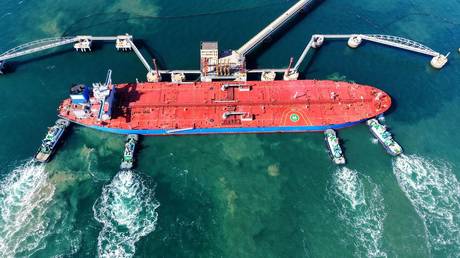
China is the world's largest importer of crude oil, and Iran represents a critical, albeit volatile, portion of its diversified supply. However, the nature of this "diversification" is deceptive. Unlike imports from Saudi Arabia or the UAE, which are integrated into the formal global financial system, Iranian oil flows through a "shadow" market. This market operates on deep discounts—often 10% to 15% below Brent benchmarks—which provides a massive subsidy to Chinese independent refiners, known as "teapots," located primarily in Shandong province.
This reliance creates a specific cost function. If a crisis in the Persian Gulf halts Iranian exports, China loses more than just volume; it loses its primary hedge against high global oil prices. The "teapot" refiners, which account for approximately 20% of China’s total refining capacity, lack the capital buffers of state-owned enterprises (SOEs) like Sinopec. A sudden shift to more expensive, transparently priced barrels would lead to a widespread insolvency crisis within China’s independent refining sector, rippling through the domestic chemical and plastics industries.
The Hormuz Bottleneck and the Malacca Dilemma
The logistics of an Iran crisis reveal a geographic trap. Approximately 80% of China’s oil imports pass through the Strait of Malacca, but the origin of that flow is even more concentrated. A conflict involving Iran immediately jeopardizes the Strait of Hormuz, through which 30% of global seaborne-traded oil passes.
- The Kinetic Risk: Iran’s "Anti-Access/Area Denial" (A2/AD) capabilities are designed to close the Strait of Hormuz. For China, this is a catastrophic scenario because it lacks the blue-water navy presence required to escort its tankers in the Gulf.
- The Insurance Escalation: Even if the Strait remains physically open, maritime insurance premiums (War Risk Surcharges) would skyrocket. This adds an invisible "security tax" to every barrel, eroding the profit margins of Chinese manufacturing, which operates on razor-thin spreads.
- The Diversification Myth: While China has invested in pipelines from Russia and Central Asia, these currently lack the throughput capacity to replace a sustained loss of Middle Eastern maritime supply. The infrastructure is a supplement, not a substitute.
The Failure of Financial Circuit Breakers
A core objective of the 25-year Comprehensive Strategic Partnership between China and Iran was the de-dollarization of bilateral trade. In theory, using the RMB (Renminbi) for oil purchases should shield both nations from US Treasury department interference. In practice, the "Petroyuan" remains an incomplete project.
The mechanism fails because the RMB is not fully convertible. Iran can receive RMB for its oil, but it has limited options for spending those reserves outside of buying Chinese-manufactured goods. This creates a closed-loop barter system rather than a functional financial shield. If the US escalates secondary sanctions during an Iran crisis, the Chinese banks facilitating these trades—typically smaller regional banks with no US exposure—will find their liquidity dried up. The larger Chinese "Big Four" banks remain terrified of losing access to the SWIFT system, meaning they will not step in to bridge the gap.
The structural result is that in a high-intensity crisis, the financial plumbing of the China-Iran oil trade is likely to seize up exactly when it is needed most.
The Inflationary Transmission Mechanism
China’s sensitivity to an Iran crisis is amplified by its role as the "world's factory." Unlike the United States, which is a net exporter of energy, China is a price-taker.
When energy costs rise, the impact on the Chinese economy follows a specific transmission path:
- Producer Price Index (PPI) Surge: Rising crude prices immediately inflate the cost of electricity and raw materials for factories.
- Export Competitiveness Erosion: Because China competes on cost in global markets, it cannot always pass these increases on to international consumers without losing market share to Southeast Asian or Indian competitors.
- Internal Social Stability: Higher energy costs inevitably lead to food and transportation inflation. For a government that stakes its legitimacy on constant economic growth and price stability, a 50% spike in oil prices is a direct threat to domestic harmony.
Strategic Infrastructure Limitations
China’s Strategic Petroleum Reserve (SPR) is a black box, but estimates suggest it holds between 60 and 90 days of net imports. While this sounds substantial, a crisis involving Iran is rarely a short-term event. If Iranian supply is taken offline and regional instability spreads to neighboring producers like Iraq or Kuwait, China’s SPR would be depleted at an alarming rate.
Furthermore, the physical location of the SPR sites—mostly along the eastern coast—makes them vulnerable to the same maritime blockades or logistical disruptions that would affect commercial shipments. China’s energy security is not just a matter of "how much" oil is in the tanks, but "how" that oil reaches the industrial heartland when the primary sea lanes are contested.
The Geopolitical Liability of "Neutrality"
Beijing’s preferred foreign policy is one of "non-interference," which allows it to trade with Iran, Saudi Arabia, and Israel simultaneously. However, an Iran crisis forces a choice that China is structurally unprepared to make.
If China supports Iran, it risks a total decoupling from the Western financial system and a trade war with the G7 that would dwarf current tensions. If it remains neutral or aligns with international pressure to stabilize energy markets, it loses its "reliable partner" status in Tehran and potentially forfeits its long-term investments in Iranian infrastructure. This "strategic ambiguity" works during periods of low tension but becomes a liability when the cost of inaction exceeds the cost of commitment.
The Military Capability Gap
To secure its interests in an Iran crisis, China would need to project power far beyond the "First Island Chain." Currently, the People's Liberation Army Navy (PLAN) is a formidable regional force but lacks the global logistics network—specifically overseas bases and carrier strike group experience—to secure the North Arabian Sea.
The base in Djibouti is a logistical outpost, not a combat hub. In a scenario where Iranian or proxy forces utilize sea mines or drone swarms to disrupt shipping, China remains entirely dependent on the United States Navy to "clear the lanes." This creates a humiliating strategic paradox: China’s economic survival depends on the military of its primary geopolitical rival.
Structural Response Requirements
The volatility of the Iran-China nexus demands a shift from reactive procurement to structural insulation. For China to mitigate the risks of a localized Persian Gulf crisis, it must accelerate specific industrial transitions.
- Coal-to-X Conversion: Leveraging its massive domestic coal reserves to produce synthetic fuels and chemicals, reducing the marginal utility of the imported Iranian barrel.
- Grid Electrification: Moving the transport sector toward EVs powered by nuclear and renewable energy is not just an environmental goal; it is a tactical necessity to lower the oil-to-GDP correlation.
- The Land-Bridge Priority: Accelerated investment in the China-Central Asia-West Asia Economic Corridor to bypass the sea lanes entirely.
The ultimate strategic play for Beijing is not a deeper military alliance with Tehran, but a rapid, forced decoupling of its industrial growth from Middle Eastern maritime energy flows. Until that transition is complete, any escalation in the Persian Gulf acts as a direct tax on the Chinese Dream, with the "invoice" being settled in Washington or Tehran, rather than Beijing.