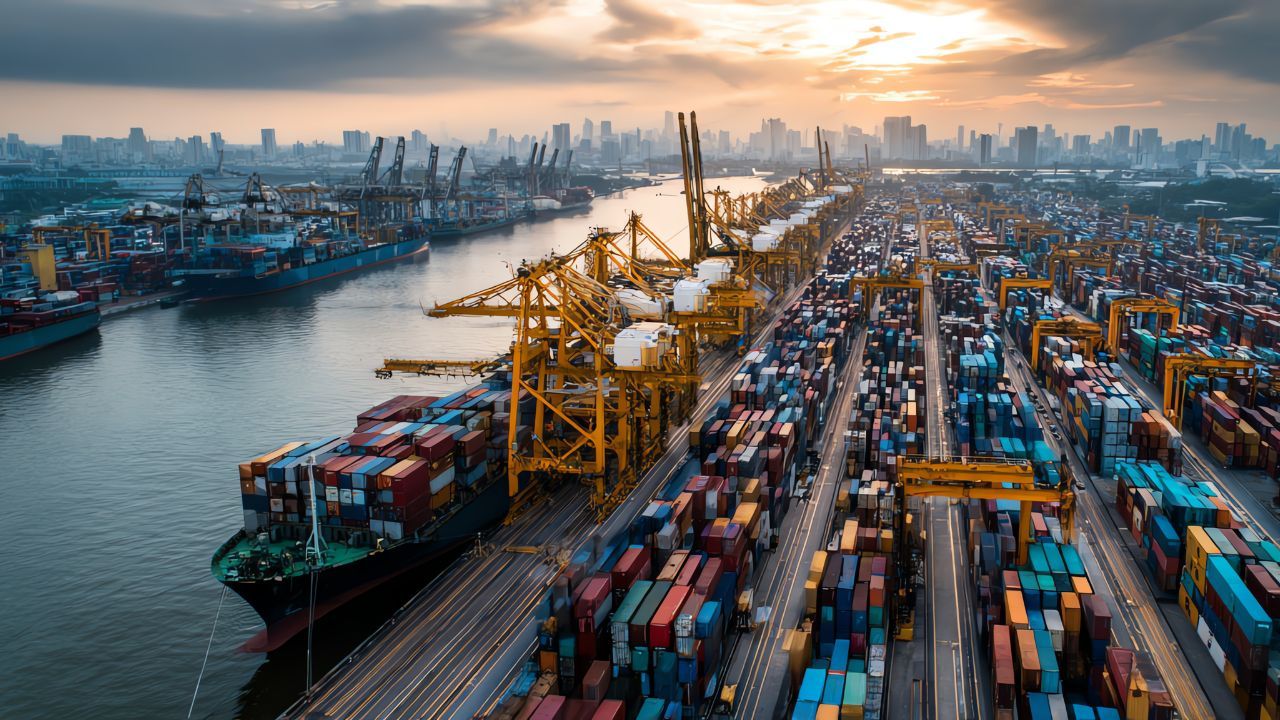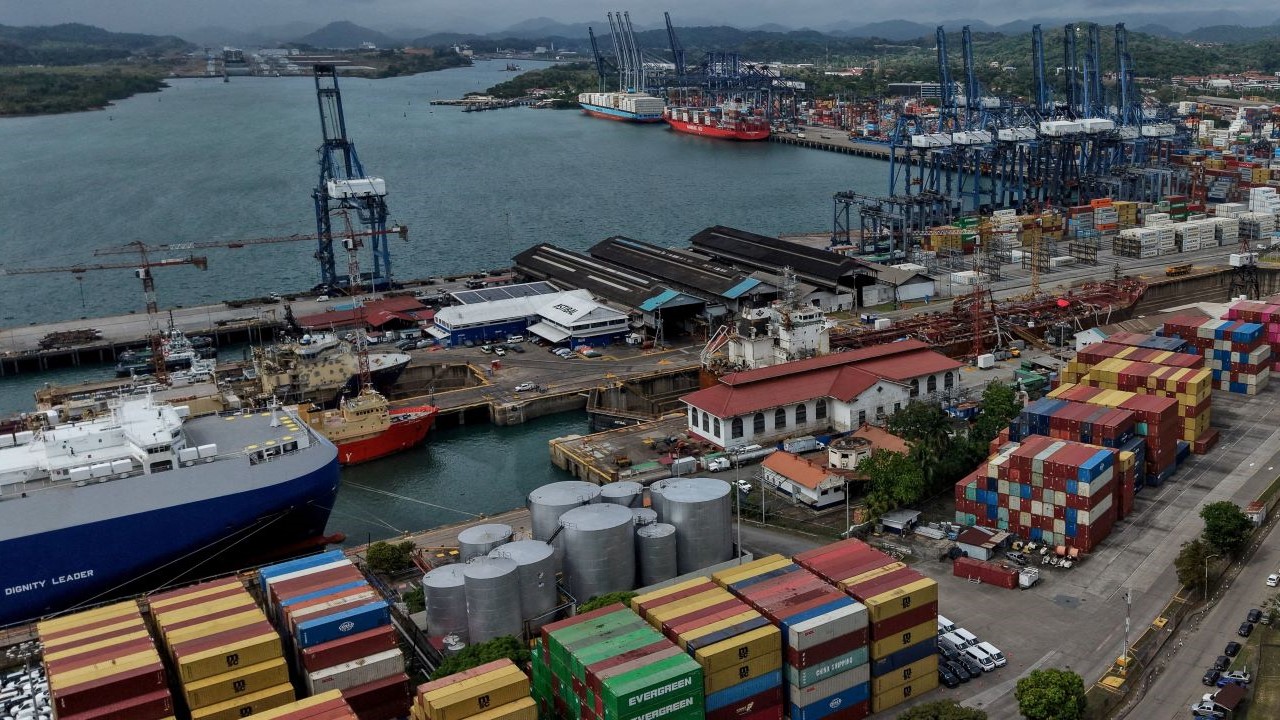
The salt air in Balboa doesn’t just smell of the ocean. It smells of grease, rusted iron, and the heavy, invisible weight of global debt. For decades, if you stood on the edge of the Panama Canal, you were looking at a map of the world drawn in shipping containers. But maps change. Sometimes, they change because of a war. Other times, they change because a bureaucrat in a quiet office in Panama City picks up a pen and decides that the old locks no longer fit the new keys.
Panama has just torn up the script. By scrapping the long-standing port contracts with the Hong Kong-based giant CK Hutchison and handing the keys to the European titans Maersk and Mediterranean Shipping Company (MSC), the country hasn't just swapped logos on a crane. It has signaled the end of an era.
To understand why this matters, you have to look past the spreadsheets. Think of a crane operator named Mateo. Mateo has spent twenty years watching the world drift past his cabin, three hundred feet above the concrete. For a generation, those ships largely spoke one language: the language of rapid Asian expansion, anchored by the massive investments of Hutchison Ports. When Mateo looked down, he saw the physical manifestation of Hong Kong’s grip on global logistics. Now, the view is shifting. The colors are changing from the familiar branding of the East to the deep blues and yellows of the North.
This isn't just a business deal. It is a divorce.
The Ghost in the Harbor
The relationship between Panama and CK Hutchison wasn't just about moving boxes. It was a symbol of the "Bridge of the World" leaning toward the "Pearl of the Orient." But symbols are fragile things. As tensions flared in Hong Kong—as the protests turned the streets of Kowloon into a mosaic of umbrellas and tear gas—the ripple effects traveled six thousand miles across the Pacific.
Panama’s decision-makers began to look at their most valuable asset, the thin strip of water that connects two oceans, and saw a vulnerability. Dependency is a dangerous drug. When your ports are controlled by a company deeply intertwined with a city in political upheaval, the "neutrality" of the Canal starts to feel like a polite fiction.
The government didn't frame it as a political snub. They talked about efficiency. They talked about "modernization." But the subtext was written in neon: the era of the monolithic Asian port operator in the Americas is facing a cold front. By shifting the terminals to Maersk (APM Terminals) and MSC, Panama is pivoting toward the European giants who currently dictate the tempo of the Atlantic and the Mediterranean.
The Calculus of the Concrete
Why Maersk? Why MSC?
Imagine you own a toll road. For years, you’ve let a single trucking company manage the rest stops. They’ve done a fine job, but they’re just managers. Now, imagine the people who actually own the trucks—the people who decide which roads to take in the first place—offer to buy the rest stops.
That is what is happening here. Maersk and MSC aren't just terminal operators; they are the carriers. They own the ships. They own the logistics chains. They own the data. By bringing the carriers into the heart of the Canal, Panama is betting on integration. They are betting that if the people who own the ships also run the ports, the ships will never stop coming.
It is a play for survival in a world where supply chains are becoming fractured. We saw what happened when the world’s logistical arteries clogged during the pandemic. We saw the "Just-in-Time" dream turn into a "Never-on-Time" nightmare. Panama is trying to ensure that it remains the most reliable heartbeat in the global body.
A Silent Departure
There is a specific kind of silence that follows a broken contract. It’s the sound of lawyers packing briefcases and engineers looking at blueprints that will never be built. For CK Hutchison, the loss of these terminals is a stinging rebuke. It’s a message that their historical dominance is no longer a guarantee of future tenure.
The move reflects a broader, grittier reality of 2026: the world is "de-risking." Countries are looking at their infrastructure and asking, "Who holds the kill switch?" In the case of the Panama Canal, the answer needs to be someone whose interests align perfectly with the flow of Western trade. MSC and Maersk, with their deep European roots and their aggressive push into green energy and digital tracking, fit the new mold of the "responsible" partner.
Consider the sheer scale of the mechanics involved. Moving a terminal operation isn't like moving a retail store. You are recalibrating thousands of tons of machinery, rewriting the software that tracks millions of data points, and reshuffling a labor force that has its own rhythms and loyalties.
The Human Toll of Efficiency
But what about the people?
In the neighborhoods of Colón and Panama City, a port contract is more than a headline. It’s a mortgage. It’s a school tuition. When the government "shifts" a terminal, the anxiety on the ground is palpable. Will the new masters honor the old ways? Or will the drive for European-style automation mean fewer hands on the deck?
Maersk and MSC are known for their obsession with the "Smart Port." This means drones for hull inspections, AI for berth planning, and autonomous vehicles for moving containers. For the workers, the arrival of the European giants is a double-edged sword. It brings the promise of being the most advanced hub in the Western Hemisphere, but it also brings the specter of the algorithm.
The transition is a friction point. It's a moment where the grand strategy of geopolitical "pivot" meets the grit of a dock worker’s daily life. We often talk about these shifts as if they are moves on a chessboard, forgetting that the pawns are made of flesh and blood.
The Atlantic Rebounds
There is a certain irony in this reversal. For years, we were told the future was entirely Pacific. The "Century of the Pacific" was the mantra. Yet, here is the most vital chokepoint in the Americas turning its back on a Hong Kong giant to embrace the old powers of the Atlantic.
This suggests that the global economy isn't moving in one direction. It’s splintering. We are seeing the rise of regional fortresses. Panama, by aligning with MSC and Maersk, is reinforcing its status as the gatekeeper for the Americas, securing its flank by partnering with the companies that dominate the trade routes between Europe and the U.S. East Coast.
It’s a defensive move disguised as an expansion.
The Invisible Stakes
If you sit in a cafe in Panama City today, you might not see the change. The skyline is still a jagged line of glass and steel. The water in the bay is still a shimmering turquoise. But if you listen closely to the talk in the shipping offices, you realize the ground has shifted.
The "neutrality" of the Canal has always been its greatest asset and its biggest lie. Nothing that moves $270 billion worth of cargo a year can ever truly be neutral. It is a prize. And for a long time, the prize was being shared with the East in a way that felt permanent.
The scrapping of the Hutchison contracts proves that nothing is permanent. Not even the ownership of the ground beneath a crane.
As the sun sets over the Pacific entrance of the Canal, the silhouettes of the massive Neo-Panamax ships look like prehistoric beasts moving through the jungle. They carry the clothes we wear, the phones we hold, and the fuel that keeps our lights on. For a long time, those ships were handled by a company that represented the rise of the Asian century. Tomorrow, they will be handled by a new guard.
The cranes will still move. The water will still rise and fall in the locks. But the invisible threads of power have been re-spooled. Panama has made its choice, betting that the future of the world’s most important shortcut lies not in being a bridge between East and West, but in being a fortress for the trade that remains.
The gates are closing on one era and swinging wide for another, and the only certainty is that the water never stops flowing.