The chattering classes are clutching their pearls over the "friendly takeover" of Cuba. They call it neo-colonialism. They call it a violation of sovereignty. They call it a pipe dream. They are wrong on all counts. The actual tragedy isn't that the United States might buy a bankrupt island; the tragedy is that we’ve spent sixty years pretending Cuba is a country when it’s actually a decaying family estate held together by Soviet-era concrete and stubbornness.
Stop looking at the map through the lens of Cold War ideology. Start looking at it like a private equity vulture. When a company is mismanaged for six decades, defaults on every debt, and leaves its infrastructure to rot while the board of directors lives in luxury, you don’t "diplomatically engage" it. You liquidate it. You strip the assets. You install new management.
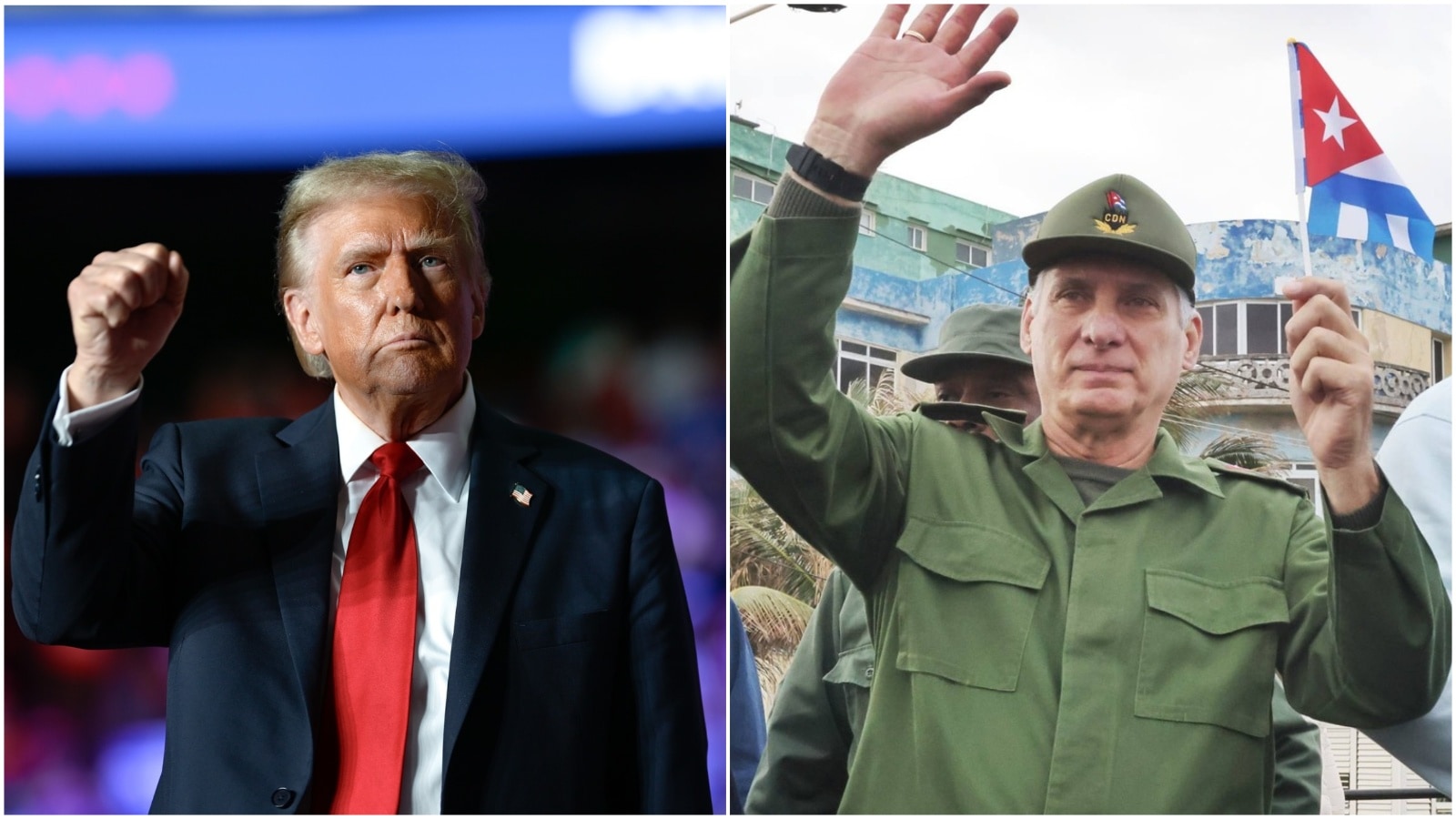
The media narrative suggests Trump is moving his "crosshairs" from Caracas to Havana as some sort of ideological crusade. That’s a fundamental misunderstanding of the math. This isn't about crushing communism; communism crushed itself years ago. This is about the inevitable bankruptcy of a Caribbean firm that has run out of other people’s money.
The Sovereign Debt Myth
Everyone asks, "How can you buy a country?" The question is flawed. Cuba isn't a country in the Westphalian sense; it is a distressed asset. Its current "leadership" is a collection of geriatric caretakers presiding over a blackout.
The "friendly takeover" isn't an invasion. It's a debt-for-equity swap. Cuba owes billions to Russia, China, and the Paris Club. They have no way to pay. In the corporate world, when you can’t pay the bills, the creditors take the keys. The only reason this hasn't happened yet is that nobody wanted the liability of 11 million hungry people and a power grid that belongs in a museum.
I’ve sat in rooms with emerging market analysts who talk about "thawing relations." They think a few more cruise ships and some artisanal cigar exports will save the Cuban peso. They are delusional. You cannot "fix" an economy where the state controls 80% of the activity and the official exchange rate is a work of fiction.
The Puerto Rico Blueprint
The skeptics point to Puerto Rico as a reason to avoid Cuba. They say, "Look at the Jones Act, look at the debt crisis, look at the hurricane response." Again, they are missing the point. Puerto Rico is a warning of what happens when you half-bake an integration.
A "takeover" of Cuba doesn't mean making it the 51st state—that’s a political nightmare no one wants. It means turning it into a Special Economic Zone (SEZ) on a national scale. Imagine a territory with Delaware’s corporate laws, Singapore’s tax brackets, and Caribbean geography.
If you want to see what actual growth looks like, look at the Shenzhen Economic Zone. It didn't thrive because of "democracy"; it thrived because the rules of the game were rewritten to favor capital over bureaucracy. Cuba is the most valuable piece of real estate in the Western Hemisphere currently being used as a parking lot for 1950s Chevrolets.
The Venezuela Distraction
The competitor piece argues that Trump is moving from Venezuela to Cuba as a secondary target. This is backwards. Cuba is the head of the snake. Venezuela’s intelligence apparatus, its internal security, and its tactical survival strategies were all exported from Havana.
You don't fix Venezuela by barking at Maduro. You fix it by cutting off the brain. The Cuban regime has survived by being the ultimate parasite—first on the Soviets, then on the Venezuelans, and now on the desperate hope of European tourists. A takeover isn't just a business move; it’s an act of regional hygiene.
By acquiring the "Cuba asset," the United States effectively closes the door on Russian and Chinese naval ambitions in the Caribbean. We aren't just buying beaches; we are buying the elimination of a permanent security threat. That has a value that doesn't show up on a standard P&L statement.
The Human Capital Arbitrage
Critics love to talk about the "cost" of absorbing Cuba. They see 11 million liabilities. I see 11 million of the most resilient, resourceful, and entrepreneurial people on the planet.
Have you ever seen a Cuban mechanic fix a tractor with a coat hanger and a prayer? That is the kind of grit that Silicon Valley tries to simulate with "hustle culture." When you marry that level of raw ingenuity with actual capital and enforceable property rights, the explosion of productivity will be unlike anything seen in the 21st century.
The "cost" of the takeover is a rounding error compared to the wealth generation potential. The real estate alone in Miramar and Vedado is worth more than the entire GDP of half the Caribbean. The moment those titles are cleared and backed by a legal system that isn't a kangaroo court, the biggest land rush in history begins.
The Liquidity Trap of Diplomacy
The status quo is a slow-motion collapse. The "lazy consensus" says we should wait for the Cuban people to rise up.
Newsflash: Starving people don’t start revolutions; they look for bread.
The Cuban military—the GAESA conglomerate—already runs the economy. They own the hotels. They own the retail. They are the board of directors. A "friendly takeover" is simply a buyout of the military elite. You offer them an exit ramp. You turn their "state-owned" shares into private equity, give them a villa in Marbella, and tell them to stay out of the way while the adults rebuild the country.
It's cynical. It's ugly. It’s also the only way it actually happens without a decade of civil war.
Stop Asking if it’s Moral—Ask if it’s Efficient
The moralists will cry about "cultural preservation." What culture are they preserving? The culture of standing in line for four hours for a gallon of milk? The culture of doctors driving taxis because it pays more than surgery?
The most "pro-Cuban" thing you can do is admit the current model is a corpse. You don't perform CPR on a corpse; you move on to the next venture.
The Caribbean is currently a fragmented mess of tax havens and tourist traps. A U.S.-managed Cuba becomes the logistical hub of the Americas. It becomes the bridge between North and South. It becomes the tech hub that Miami pretends to be but can't quite pull off because of Florida's soaring costs.
The Valuation Gap
Current estimates of Cuba's "worth" are based on junk data. They look at the current GDP of approximately $100 billion. This is like valuing a house based on the fact that it’s currently on fire and filled with squatters.
In a post-takeover scenario, the valuation of the Cuban "firm" isn't a linear growth curve; it's a vertical line. You aren't investing in a country; you are investing in the removal of a bottleneck.
The Real Risks Nobody Mentions
I won't lie to you—this isn't a risk-free flip.
- The Title Nightmare: There are hundreds of thousands of outstanding claims for confiscated property. Sorting this out requires a specialized court system, not a standard bureaucracy.
- Infrastructure Deficit: The power grid isn't just old; it’s non-existent in places. You aren't repairing it; you are building a new one from scratch.
- Institutional Inertia: You can’t teach a population that has been told "profit is theft" for 60 years to become day traders overnight.
But these aren't reasons to avoid the takeover. They are the reasons why the entry price is so low.
The Failed State Exit Strategy
The United States has spent trillions on "nation-building" in deserts halfway across the globe. It failed because there was no cultural or economic alignment. Cuba is 90 miles away. Half of its "real" population already lives in Florida. The synergy is so obvious it’s painful.
The competitor’s article treats this as a "threat" or a "mooted" possibility. I’m telling you it’s an inevitability. Either the U.S. initiates the takeover now, or we wait for the island to become a Chinese vassal state or a failed narco-state that makes Haiti look organized.
The era of "strategic patience" is over. We aren't waiting for the regime to change. We are waiting for the closing date.
Buy the dip.
Fire the board.
Rebuild the brand.