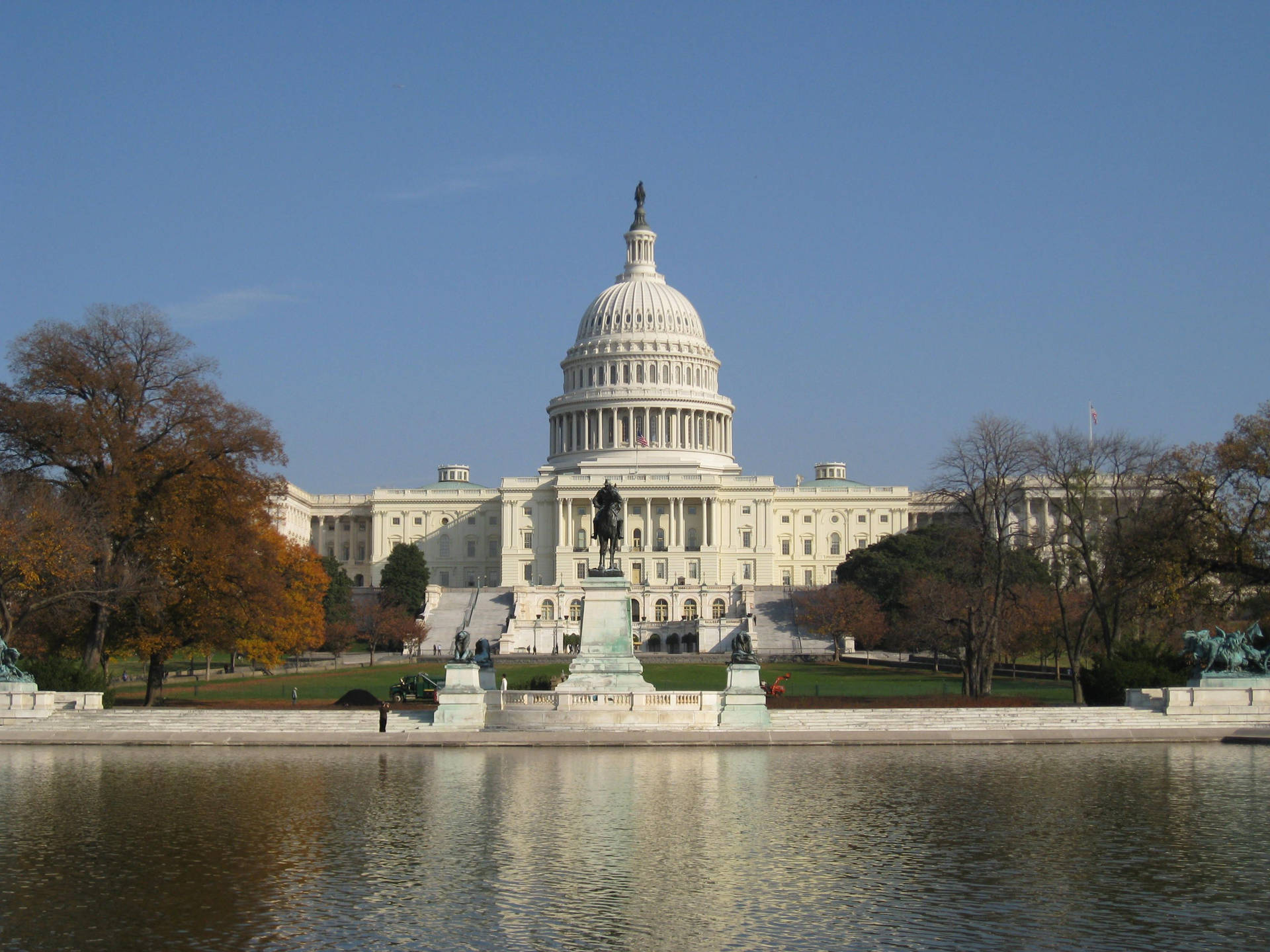
The halls of the Rayburn House Office Building are usually reserved for the mundane machinery of American domestic policy. However, the recent exhibition marking the anniversary of the Pahalgam attack transformed these corridors into a stark reminder of the global threat posed by radicalism. US lawmakers gathered not just to offer condolences, but to signal a hardening stance against cross-border violence. This event marks a shift where the geopolitical interests of Washington and New Delhi are no longer just aligned on paper but are actively converging in the face of persistent regional instability.
The gathering served as a focal point for a broader discussion on the "zero tolerance" policy towards terrorism. For years, the term was a diplomatic platitude. Now, it has become a strategic requirement. As lawmakers examined the photographic evidence of the Pahalgam tragedy, the conversation moved quickly from historical remembrance to the contemporary mechanics of how modern states fund and facilitate proxy wars. In similar news, take a look at: The Hormuz Hostage Myth and Why Tanker Seizures are a Sign of Weakness Not Power.
The Evolution of Proxy Warfare in South Asia
Terrorism in the 21st century has shed its amateur skin. What the Capitol Hill exhibition highlighted was not merely a random act of violence, but the culmination of a sophisticated logistical chain. When we look at the Pahalgam attack, we see a blueprint for how non-state actors utilize local grievances to mask broader geopolitical agendas.
The lawmakers present, representing various committees on foreign affairs and intelligence, are increasingly concerned with the technical sophistication of these groups. We are seeing a move away from crude devices toward encrypted communication channels and decentralized funding models. This makes the "zero tolerance" mantra more difficult to enforce than it was a decade ago. It requires a level of intelligence sharing that transcends traditional bureaucratic silos. TIME has provided coverage on this important issue in great detail.
The shift in rhetoric from US officials suggests a growing impatience with nations that provide safe havens. For too long, the international community played a game of "good terrorist vs. bad terrorist." That era is ending. The consensus in Washington is tilting toward the reality that any group using violence for political ends is a threat to the global financial and security architecture.
Washington and New Delhi A New Security Architecture
The relationship between the United States and India has historically been a dance of mutual hesitation. That hesitation is evaporating. The exhibition on the Hill was a public demonstration of a private reality: India is now viewed as the essential partner in the Indo-Pacific security framework.
This isn't just about sentiment. It is about data and geography. India sits at the nexus of several volatile regions, and its ability to maintain internal security is directly tied to American interests in the Middle East and Southeast Asia. When US lawmakers speak at an event like this, they are talking to their own constituents as much as they are to the Indian diaspora. They are justifying a deeper, more complex military and intelligence partnership.
Beyond the Photo Ops
While the exhibition featured poignant imagery of the victims and the aftermath, the real work happens in the classified briefings that follow such public displays. The "how" of counterterrorism is shifting toward financial transparency.
- Tracking the Money: Lawmakers are pushing for stricter oversight of informal banking systems that circumvent traditional monitoring.
- Tech-Enabled Surveillance: There is a push to provide India with more advanced reconnaissance tools to monitor rugged terrains like those found in Jammu and Kashmir.
- Diplomatic Pressure: Using the Financial Action Task Force (FATF) as a lever to ensure regional players are not subsidizing extremist elements.
This multi-pronged approach shows that the US is moving beyond simple condemnation. They are looking at the plumbing of the terror networks. If you can't cut off the ideology, you cut off the fuel—money and mobility.
The Gray Zone of Modern Conflict
One of the most overlooked factors in the discussion at Capitol Hill was the concept of "Gray Zone" warfare. This is conflict that falls below the threshold of open war but is far more destructive than simple criminal activity. The Pahalgam attack fits perfectly into this category. It was designed to provoke a state response while maintaining enough deniability for the sponsors to avoid international sanctions.
US lawmakers are beginning to realize that the traditional laws of war are ill-equipped for this. During the exhibition, several speakers touched on the need for a new international legal framework that holds state sponsors accountable for the actions of their proxies. This is a radical departure from the Cold War-era mindset. It acknowledges that the distinction between a rogue militant and a state-funded agent is often a distinction without a difference.
The Role of Technology in Countering Extremism
We cannot ignore the role of the digital landscape in these attacks. The radicalization process has moved from physical mosques and community centers to private Discord servers and Telegram channels.
Lawmakers at the event discussed the dual-use nature of modern technology. The same tools that allow for economic growth in rural India are being weaponized by extremist recruiters. The challenge for the US-India partnership is to build a "digital wall" without stifling the open internet. It is a delicate balance. If the surveillance becomes too heavy-handed, it feeds the very grievances that the extremists exploit. If it is too light, the next Pahalgam is already being planned in an encrypted chat room.
The Economic Cost of Inaction
Terrorism is often discussed in terms of human lives and political stability, but the economic dimension is equally vital. For India to reach its goal of a $5 trillion economy, it needs a stable security environment. Investors are notoriously allergic to volatility.
The US lawmakers emphasized that a "zero tolerance" approach is also an economic policy. By securing the region, they are protecting American investments in India’s tech and manufacturing sectors. The exhibition served as a reminder that every bomb blast ripples through the stock exchanges in Mumbai and New York. It is a shared liability.
When a major supply chain hub is threatened by regional instability, the cost of insurance rises, the cost of shipping increases, and the overall pace of development slows. This is why we see such a strong bipartisan showing at these events. Republicans and Democrats might disagree on everything else, but they agree that a stable India is a prerequisite for a stable global economy.
Counter-Arguments and Diplomatic Friction
It would be a mistake to view this alignment as entirely seamless. There are still friction points. Some members of the US Congress remain critical of India's internal policies, arguing that heavy-handed security measures can sometimes exacerbate the problem.
This tension was present, albeit in the background, during the exhibition. The "zero tolerance" policy is easy to agree on in principle, but the execution remains a point of contention. How does a democracy fight a shadow war without losing its soul? This is the question that haunts the corridors of power in both countries.
The argument from the Indian side is clear: when dealing with an existential threat backed by a foreign power, the luxury of traditional policing is often unavailable. The US, having dealt with its own long wars in the Middle East, is beginning to view the Indian perspective with more empathy, if not total agreement.
The Blueprint for Future Cooperation
The Pahalgam anniversary exhibition was more than a memorial; it was a policy laboratory. We can expect to see several concrete developments emerging from this renewed focus.
First, expect an increase in joint special forces training. The terrain of the Himalayas and the dense urban centers of India provide a unique set of challenges that US forces are keen to master.
Second, there will be a push for integrated data sharing. The goal is a real-time database that tracks known militants across borders, using biometric data and facial recognition. This is where the technology ban list becomes relevant—the systems must be "robust" without being "invasive," a line that is increasingly hard to define.
Third, we will see a more aggressive use of targeted sanctions. Instead of sanctioning entire nations, which can be counterproductive, the US Treasury is looking at the specific individuals and front companies that manage the portfolios of militant organizations.
The Human Element
Amidst the talk of geopolitics and "zero tolerance" policies, the exhibition never lost sight of the individual stories. The photographs of the soldiers and civilians lost at Pahalgam serve as a grounding force. They remind us that policy is not just about lines on a map or numbers on a spreadsheet.
The veteran analysts watching these developments know that the window for action is narrow. Radicalization cycles are accelerating. The time between a grievance being formed and an attack being carried out is shrinking. The Capitol Hill event was a call to shorten the response time of the democratic world.
A New Era of Accountability
The message from the exhibition was unmistakable: the world is watching, and the patience for "strategic depth" through militancy has reached zero. This isn't just about India’s borders; it’s about the precedent it sets for the rest of the world. If a major power like India can be targeted with impunity, no nation is safe.
The lawmakers who spoke were clear that the US-India partnership is the cornerstone of a new global security order. This order is built on the premise that the cost of supporting terror must always outweigh the benefits. To achieve this, the international community must move beyond the "condemnation-only" phase of diplomacy.
We are entering a period where security cooperation will be the primary currency of international relations. The exhibition at Capitol Hill was the opening bell for this new era. The focus is no longer just on responding to attacks, but on dismantling the infrastructure that makes them possible.
This requires a level of persistence that is often lacking in Washington's short-term political cycles. However, the bipartisan nature of the support for India suggests that this is a long-term strategic pivot. The threat is seen as persistent, and therefore the response must be permanent.
The "zero tolerance" stance is now being baked into the very fabric of US-India trade and defense negotiations. It is the new baseline. Any future deals on jet engines, semiconductor plants, or space exploration will be viewed through the lens of this security partnership. The tragedy of Pahalgam has become a catalyst for a relationship that is redefining the power balance of the 21st century.
There is no room for ambiguity when the stakes involve the stability of the world's most populous nation and the global hegemon. The exhibition proved that the memory of the fallen is being used to build a future where such tragedies are no longer a recurring feature of the geopolitical landscape. The transition from grief to action is complete.