The federal government’s $12-million capital injection into the British Columbia forestry sector represents a targeted attempt to mitigate the structural decline of traditional timber processing by subsidizing the transition toward high-value bio-products. This capital deployment, distributed through the Investments in Forest Industry Transformation (IFIT) program, addresses a critical bottleneck in the sector: the "commercialization gap" where promising wood-fiber technologies fail to reach industrial scale due to high upfront capital expenditures and perceived risk profiles by private lenders.
This investment is not a subsidy for operational maintenance; it is a strategic bet on the shift from volume-based extraction to value-based manufacturing. The efficacy of these funds must be measured against three primary variables: fiber utilization efficiency, carbon sequestration longevity, and the economic multiplier effect of localized manufacturing.
The Tri-Pillar Framework of Forest Industry Transformation
To understand the mechanics of this $12-million allocation, one must view the B.C. forestry sector through a structural lens that prioritizes the optimization of "low-grade" residuals. The investment targets three specific technological pillars:
1. Advanced Mass Timber and Engineered Wood Products
Mass timber represents a shift in the cost function of construction. By bonding smaller wood pieces into large structural components (like Cross-Laminated Timber), the industry bypasses the need for old-growth, large-diameter logs. Federal funds aimed here reduce the cost of precision CNC machining and automated gluing lines. The economic logic is simple: converting a cubic meter of raw timber into a structural beam generates significantly higher margins than converting it into dimension lumber or pulp.
2. Bioproduct Diversification and Chemical Substitution
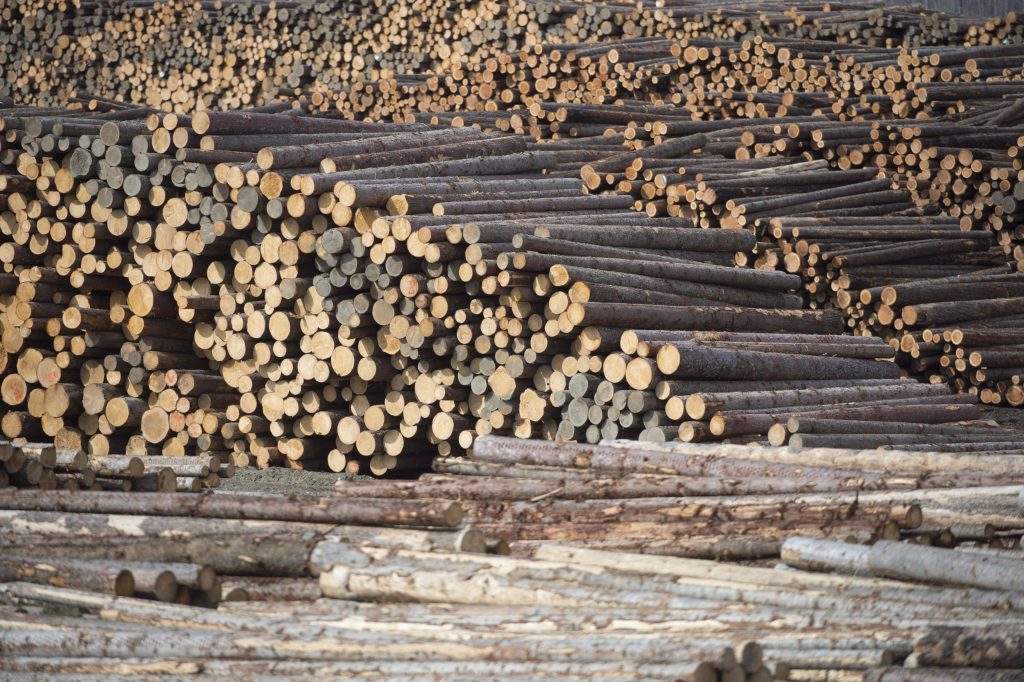
A significant portion of the B.C. interior's harvest currently results in waste or low-value chips. The IFIT-funded projects aim to utilize lignin and cellulose as precursors for industrial chemicals, adhesives, and even battery components. This creates a secondary revenue stream for mills that would otherwise be vulnerable to the price volatility of the global commodities market. By decoupling revenue from the housing starts index, these bioproducts provide a hedge against macroeconomic downturns.
3. Circularity in Residual Management
The "slash pile" problem—where unused harvest remains are burned on-site—represents a massive loss of potential energy and fiber. Strategic investment in mobile chipping or pelletization technology allows the industry to capture this value. This moves the sector toward a circular model where every gram of harvested fiber enters a value chain, either as a physical product or a carbon-neutral energy source.
The Mechanics of the Capital Gap
Private equity and traditional banking institutions often shy away from "first-of-kind" (FOAK) industrial facilities. The risk profile of a new lignin extraction plant is significantly higher than a standard sawmill because the technology is unproven at scale and the market for the end product is still maturing.
Federal intervention at the $12-million level acts as "de-risking" capital. By providing non-dilutive or low-interest funding, the government lowers the Weighted Average Cost of Capital (WACC) for the recipient firms. This often triggers a "crowding-in" effect, where private lenders become willing to fund the remaining 70-80% of a project once the federal government has signaled its technical and economic viability.
Evaluating the Economic Multiplier
The B.C. forestry sector supports over 50,000 direct jobs, but the nature of these jobs is changing. The $12-million investment is a defensive maneuver against the "hollowing out" of rural communities.
- Labor Specialization: Traditional logging requires physical labor and heavy equipment operation. Transformation projects require chemical engineers, automation technicians, and specialized supply chain managers.
- Geographic Stability: Unlike raw log exports, which ship value-added potential overseas, mass timber and bioproduct plants require proximity to the fiber source. This anchors the economic activity to the B.C. interior.
- Tax Base Resilience: Value-added manufacturing facilities possess higher assessed property values than vacant forest land or decommissioned mills, providing a more stable tax base for municipal governments.
The Carbon Sequestration Calculus
The climate-tech angle of this investment is rooted in the "substitution effect." When wood products replace steel or concrete in urban construction, the net carbon reduction is two-fold. First, the carbon stored in the wood is "locked in" for the life of the building. Second, the energy-intensive production of cement and steel is avoided.
However, the efficacy of this strategy depends on the "harvest-to-product" ratio. If the $12-million is spent on processes that result in short-lived products (like paper or fuel), the carbon benefits are fleeting. The strategic priority must be "long-lived" harvested wood products (HWP). Federal oversight of these grants must prioritize firms that can demonstrate a high percentage of fiber conversion into permanent structural materials.
Structural Constraints and Execution Risks
The success of this $12-million investment is not guaranteed. Several systemic bottlenecks could throttle the intended outcomes:
Fiber Security and Tenure Reform
A state-of-the-art bioproducts plant requires a consistent, 20-year supply of fiber to amortize its capital costs. In B.C., timber tenures are often held by large, traditional players. If the innovative firms receiving federal funding cannot secure long-term fiber contracts, the $12-million becomes a "stranded asset" investment. The lack of a competitive, open market for wood residuals in certain regions remains a primary barrier to entry for new players.
Regulatory Lag
The B.C. Building Code has made strides in allowing taller mass timber structures, but local municipal permitting often lags behind. If the demand for the products generated by these IFIT-funded projects is stifled by outdated building regulations, the supply-side stimulus will fail.
Global Commodity Pricing
The B.C. sector does not operate in a vacuum. High energy costs in Canada compared to the U.S. South or Scandinavia place B.C. manufacturers at a disadvantage. Federal investment must be coupled with provincial strategies to ensure that the operational costs (electricity, transportation, stumpage) do not offset the advantages gained through technological innovation.
The Strategic Path for B.C. Forestry
The current $12-million investment serves as a pilot for a broader industrial policy. To maximize the ROI on these public funds, the following strategic shifts must occur within the recipient organizations and the broader ecosystem:
- Shift from "Fiber as Waste" to "Fiber as Feedstock": Sawmills must be re-engineered as "biorefineries." The goal is not just to produce 2x4s, but to fractionate every log into its most valuable chemical and structural components.
- Standardization of Mass Timber Components: To drive down costs and compete with steel, B.C. producers must move toward standardized, interchangeable components. Federal funding should incentivize firms that adopt open-source or industry-wide specifications to allow for greater market liquidity.
- Aggressive Export of Intellectual Property: The long-term value for Canada is not just in shipping the physical wood, but in exporting the proprietary technology developed through these IFIT grants. The "transformation" is only complete when B.C. firms are licensing their bioproduct patents to the global market.
The $12-million federal investment is a necessary, though insufficient, catalyst for a sector in the midst of a painful structural realignment. The real metric of success will not be the number of press releases issued, but the delta in "value-added per cubic meter" achieved over the next five-year fiscal cycle. Industry leaders must now leverage this de-risking capital to secure the private investment required to move from pilot plants to industrial-scale dominance. Failure to do so will result in a managed decline of the sector rather than a technological rebirth.
Companies receiving these funds should immediately prioritize the integration of AI-driven sorting systems to maximize fiber recovery and reduce operational overhead, ensuring that the federal capital serves as a bridge to a self-sustaining, high-margin future.