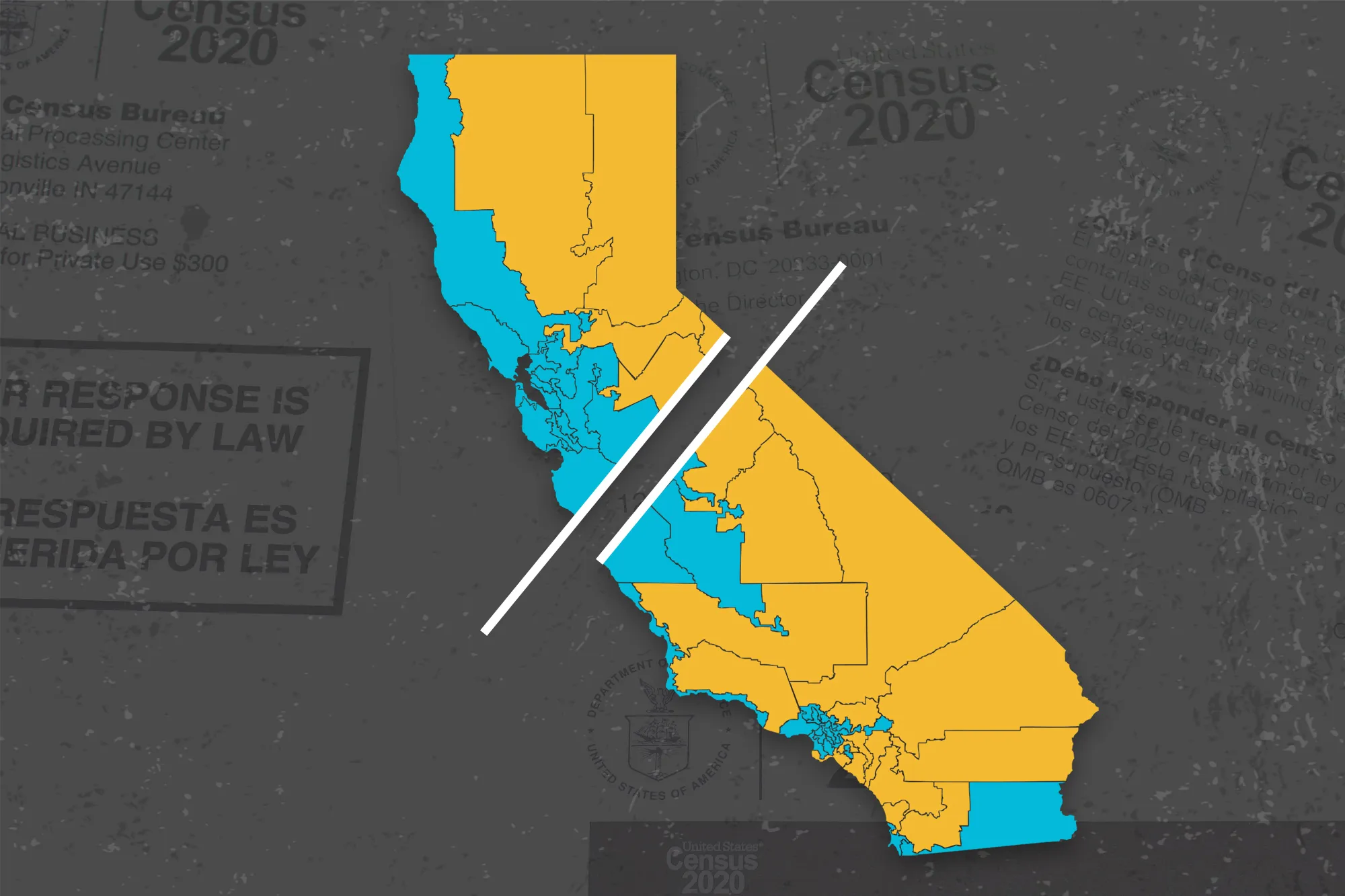
The national obsession with "fair maps" is a symptom of a deeper intellectual rot. We’ve been sold a fairytale: that if we just take the pencils out of the hands of greasy-palmed politicians and give them to a group of "independent" citizens, the maps will magically stop being weapons.
It’s a lie.
The common refrain—the one you’ll see in every tepid Letter to the Editor from the Midwest to the Pacific—is that California is the gold standard for redistricting because it uses an independent commission. Critics of gerrymandering in Texas or North Carolina often point to California as the promised land. They argue that because the California Citizens Redistricting Commission (CCRC) is "non-partisan," the results are inherently more democratic.
They are wrong. California didn't solve gerrymandering; it just outsourced it to a more expensive, less accountable bureaucracy.
The Myth of the Neutral Map
The fundamental flaw in the "independent commission" model is the belief that geography can ever be neutral. It can’t. Every line drawn on a map is a choice that prioritizes one group's power over another’s. There is no such thing as a "natural" district.
When you tell a commission to prioritize "communities of interest," you aren't removing politics; you’re inviting a different, more opaque kind of lobbying. In the 2010 and 2020 cycles, California’s "independent" process became a playground for sophisticated interest groups who knew how to game the public testimony system. While the politicians were officially locked out of the room, their consultants were busy coaching "ordinary citizens" on exactly what to say to the commission to ensure their preferred demographic splits remained intact.
The result? A "non-partisan" map that often looks exactly like what a partisan legislature would have produced, only with the added benefit of a $10 million price tag and a veneer of moral superiority.
The Data Trap: Why Algorithms Won’t Save Us
Tech-optimists love to suggest that we should just "let the computers do it." They argue that a shortest-splitline algorithm or a "Maximum Compactness" model would remove human bias entirely.
This is the peak of Silicon Valley arrogance.
If you use a purely geometric algorithm to draw districts, you ignore the very thing representative democracy is supposed to protect: people. A computer-generated map would likely obliterate minority representation by "compacting" communities that have nothing in common besides a zip code. It would create districts that are mathematically perfect and socially incoherent.
We see this in the push for "efficiency gaps" and other high-level metrics used to litigate maps in the Supreme Court. These metrics assume that the only goal of a district is to ensure the "correct" number of seats for a party based on their statewide vote share. But if that’s your goal, you don’t want redistricting—you want proportional representation. You’re asking a geographic system to solve a non-geographic problem.
The Secret Advantage of Partisan Gerrymandering
Here is the truth that will make your skin crawl: Partisan gerrymandering is at least honest.
When a Republican legislature in Ohio or a Democratic legislature in Illinois draws a map to screw the other side, we know exactly who to blame. The intent is transparent. The power is visible. We can vote them out (theoretically) or sue them in open court.
In California, the "independent" commissioners are effectively shielded from accountability. They aren't elected. They can't be fired for drawing a map that disenfranchises a specific neighborhood. They hide behind a cloud of "civic duty" while making decisions that dictate the political life of 40 million people for a decade.
By removing the "politician" from the process, we’ve removed the "representative" too. We have traded raw, visible political combat for a sanitized version of the same thing—one where the winners are decided by whoever has the best lawyers to present "public testimony" during commission hearings.
Stop Trying to "Fix" the Lines
If you want to fix the dysfunction in the American house, stop obsessing over where the walls are placed and start looking at the foundation.
The problem isn't that the maps are "unfair." The problem is that we are trying to force a 21st-century polarized electorate into an 18th-century geographic box. We have "Big Sort"-ed ourselves into deep blue cities and deep red rurals. No amount of "independent" line-drawing is going to create competitive districts in San Francisco or rural Alabama unless you draw "bacon-strip" districts that stretch 300 miles—the very thing gerrymandering critics claim to hate.
The Real Solutions Nobody Wants to Talk About:
- Multi-Member Districts: Instead of one winner per district, have three. This allows for ideological diversity without needing to draw "perfect" lines.
- Ranked Choice Voting: This breaks the duopoly’s stranglehold on the primary process, which is where the real "gerrymandering" of our minds happens.
- Expansion of the House: The U.S. House has been capped at 435 seats since 1929. We are trying to represent 330 million people with the same number of reps we used for 90 million.
The California Critique is Necessary
To the "Letters to the Editor" crowd: Yes, criticize California. Not because their maps are "just as bad" as Texas's—they aren't, from a partisan tilt perspective—but because the process is a placebo. It’s a way for voters to feel like they did something "good" for democracy without actually changing the power dynamics that make the system fail.
I’ve watched these commissions work. I’ve seen the backroom deals disguised as "data-driven adjustments." I’ve seen the way "independent" can just be a code word for "unaccountable."
The "fair map" movement is a distraction. It’s a bunch of people arguing over the color of the drapes while the house is on fire. If you want a representative democracy, you have to stop worrying about the shapes of the districts and start worrying about the people who are—and aren't—allowed to win in them.
California isn't the solution. It's just a more sophisticated version of the problem.
Stop asking for "independent" commissions. Start asking for a system that doesn't rely on lines in the first place.