When a company posts a sixty-eight-billion-dollar quarterly revenue record and the market responds by wiping hundreds of billions in valuation off the board, it is time to stop reading the headlines and start looking at the plumbing. Investors are not punishing Nvidia for missing targets; they are signaling that the era of blind faith in artificial intelligence infrastructure spending is meeting the hard wall of fiscal reality.
The core tension is not found in the income statement. It is hidden in the silence of the hyperscalers—the Amazons, Microsofts, and Alphabets of the world—who are bankrolling the current silicon gold rush. Nvidia continues to beat every expectation because they are the sole merchant selling shovels in a frantic mine. However, the market is beginning to calculate the return on investment for those shovels. If the software running on these processors does not start generating massive, tangible revenue for the buyers, the capital expenditure cycle will eventually break.
The recent five-percent slide in share price, despite guidance that blew past analyst consensus, reflects a growing fear of exhaustion. Wall Street is asking a question that management cannot answer with a slide deck: when does the massive spending on data centers shift from "capital investment" to "operational drag?"
The Efficiency Trap
Nvidia thrives on growth. The company’s financial model relies on the assumption that AI development is an exponential curve that never flattens. Yet, hardware manufacturers are limited by the physical constraints of cooling, power density, and the sheer cost of the next architecture iteration.
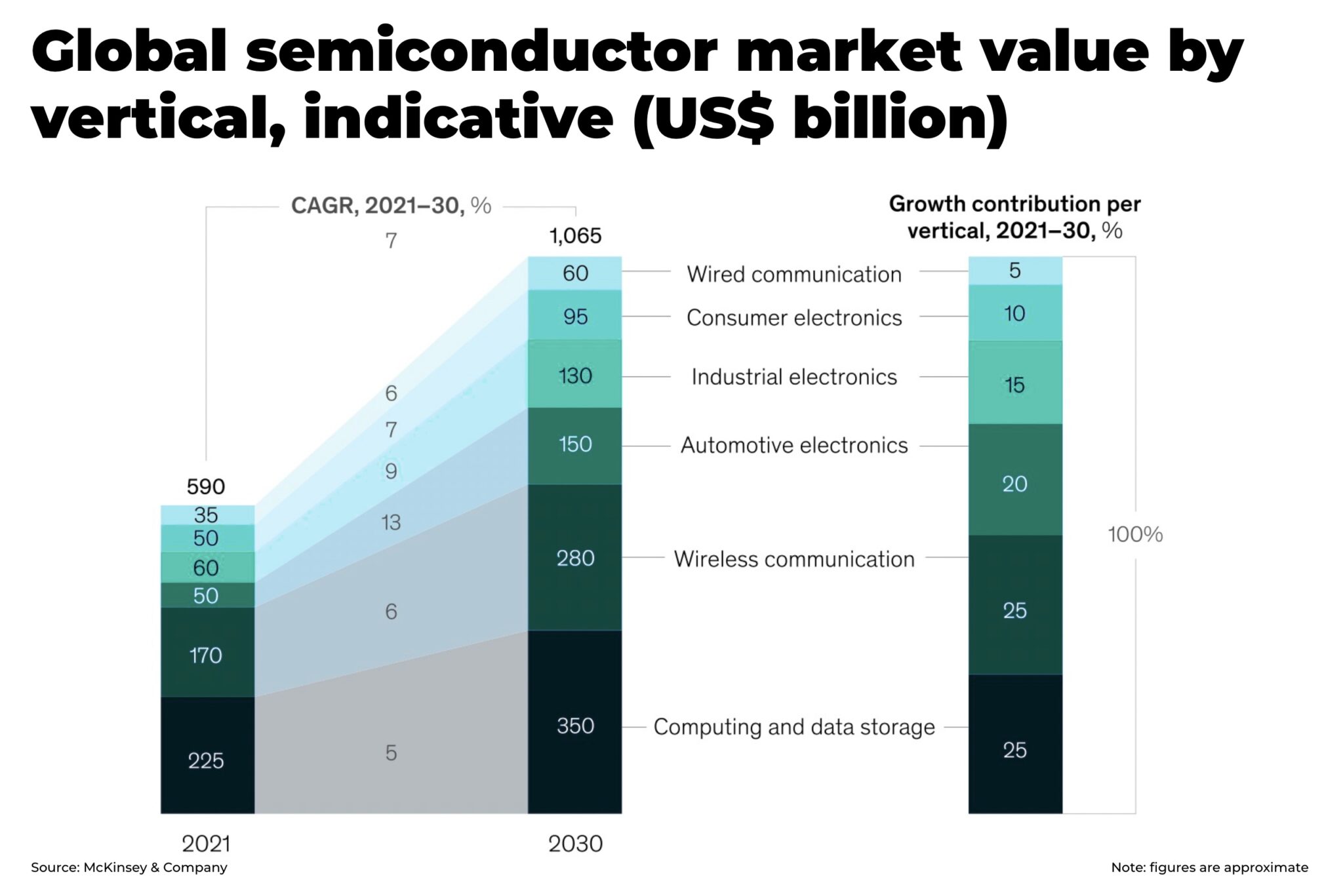
The recent quarterly report confirmed that demand for Blackwell and subsequent platforms remains insatiable. But look closer at the numbers for the gaming and professional visualization segments. While these are smaller slices of the total pie compared to data centers, they are the baseline indicators of consumer and enterprise sentiment. A thirteen-percent sequential drop in gaming hardware revenue, while dismissed by some as seasonal inventory adjustment, hints at a saturation point in traditional markets that AI cannot paper over forever.
When a company relies on a singular product vertical for the vast majority of its growth, it becomes hypersensitive to the health of its three or four biggest customers. Imagine a hypothetical scenario where one major cloud provider concludes that their data center occupancy rate is not justifying the staggering cost of electricity and specialized hardware. If that single customer throttles their orders, the ripple effect would be immediate and painful for Nvidia’s balance sheet.
The China Factor
The geopolitical dimension is the quiet killer of valuation stability. Nvidia has explicitly removed Chinese data center revenue from its outlook. This is not just a regulatory hurdle; it is a permanent structural change in the addressable market.
By stripping this region out of their projections, the company is attempting to prove that its growth is high-quality and sustainable without one of the world's largest semiconductor importers. It is a bold move. It also leaves no margin for error. Should supply chains tighten further, or if domestic competitors in emerging markets manage to replicate a fraction of the performance capabilities of the current high-end architecture, the investment case shifts from "unlimited growth" to "competitive intensity."
The ROI Calculation
The market is currently wrestling with the "SaaSpocalypse"—the widespread collapse of software valuations—and contrasting it with the ballooning price of the hardware that supposedly enables software's future.
If the software industry is struggling to prove its value, why should the hardware industry continue to command record-breaking multiples? This is the core cognitive dissonance currently driving volatility. Investors are not worried about Nvidia’s ability to deliver chips; they are worried that the software companies buying those chips will stop paying the bill.
The narrative that AI is a "job creator" and a productivity engine is strong, but capital markets eventually demand more than just corporate messaging. They demand clear, longitudinal proof of margin expansion at the end-user level. Without that, the current spending levels are viewed as a temporary bubble, not a new industrial foundation.
Looking at the Data
The disparity between Nvidia’s performance and its stock reaction is a classic case of the "sell the news" dynamic. After a long-term rally fueled by anticipation, institutional holders often trim their positions regardless of how strong the actual results are. The sheer volume of shares traded in the wake of the report indicates that major funds are rotating out of the semiconductor sector and into other areas of the market that may have been neglected during the fervor of the last twenty-four months.
The danger for retail investors is assuming that because the product is undeniably excellent, the stock will always trend upward. The market does not care about the excellence of the hardware; it cares about the trajectory of the spending.
For the moment, the supply of AI chips is the only bottleneck. As capacity increases and new production nodes come online, that supply constraint will evaporate. When the supply finally meets the demand, the pricing power that allowed for the current, eye-watering seventy-five-percent gross margins will inevitably face pressure. That is when the true stress test for the business model will arrive.
There is no cooling off in sight for the demand, but the market has started pricing in the possibility of a plateau. Watch the capital expenditure announcements from the hyperscalers in the coming months. If those numbers begin to decelerate, the current volatility will look like a mild tremor before the real shift. Prepare your positioning accordingly.