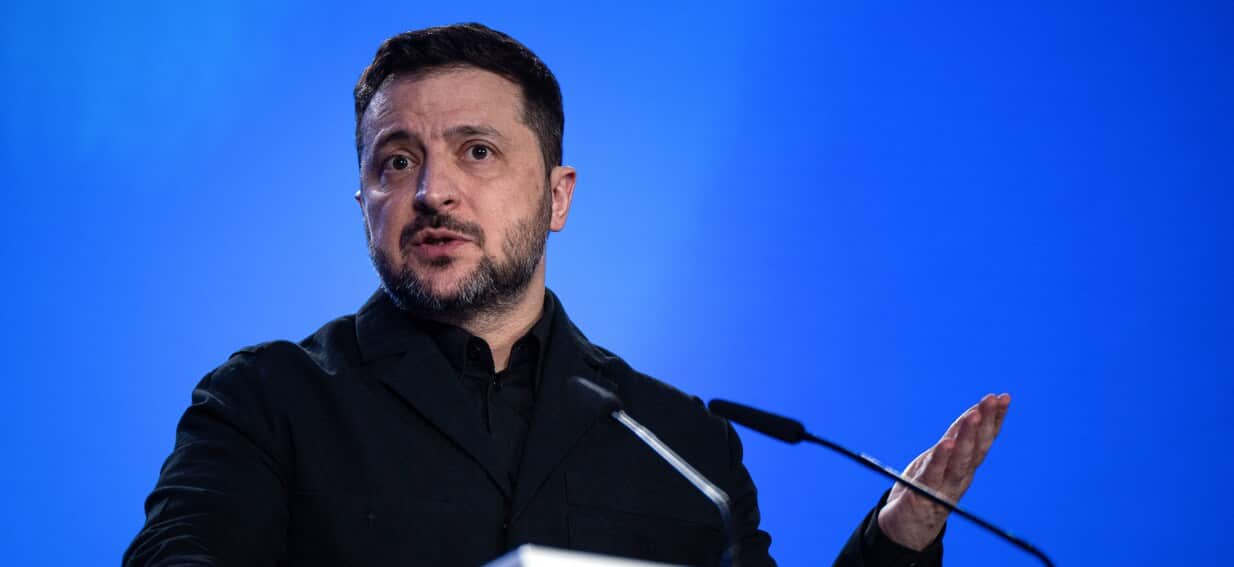
Four years ago, the conventional wisdom in Western intelligence circles gave Kyiv seventy-two hours. Today, Volodymyr Zelenskyy stands in a battered but defiant capital to declare that Vladimir Putin failed to break the Ukrainian spirit. While the rhetoric of resilience remains the bedrock of Ukrainian survival, the strategic reality entering 2026 is defined by a grueling shift from rapid maneuver to a primitive, industrial war of attrition. The conflict has moved beyond the simple narrative of "winning" or "losing" and into a cold calculation of caloric intake, shell counts, and demographic endurance.
Vladimir Putin’s original objective was the total erasure of Ukrainian sovereignty. By that metric, he has failed. Yet, the cost of that failure for Russia is being weighed against a devastating long-term price for Ukraine. To understand why this war persists four years after the first tanks crossed the border, one must look past the speeches and into the mechanics of a deadlocked front line that stretched over 1,000 kilometers.
The Shell Crisis and the Industrial Gap
The primary engine of this war is artillery. Despite the influx of high-tech Western drones and precision missiles, the conflict remains a contest of who can manufacture and deliver the most 155mm and 152mm shells. In the early stages of the invasion, Russia enjoyed a nearly ten-to-one advantage in fire frequency. While Western production lines in Scranton and across Europe have finally hummed into higher gear, they are still struggling to match a Russian economy that has been fully cannibalized for the war effort.
Russia’s transition to a total war economy has allowed it to circumvent sanctions through shadow fleets and third-party intermediaries. They are not making better weapons; they are making more weapons. This quantitative approach relies on a philosophy of "good enough" technology deployed in massive volumes. Ukraine, conversely, relies on a qualitative edge—using superior Western optics and GPS-guided munitions to make every shot count.
This creates a precarious equilibrium. If Western political will wavers for even a single fiscal quarter, the Ukrainian fire rate drops, and the Russian "meat grinder" tactics begin to shave off kilometers of territory. The territorial gains are marginal, but the cumulative damage to Ukraine's infrastructure and troop strength is profound.
The Demographic Time Bomb
While Zelenskyy emphasizes that the nation is not broken, the demographic data paints a more complex picture. Ukraine entered this war with one of the lowest birth rates in Europe and an aging population. Four years of high-intensity conflict have forced a mobilization that pulls the most productive members of the workforce out of the economy and into the trenches.
Russia has a significantly larger pool of "disposable" manpower. Moscow has successfully tapped into its impoverished peripheral regions, offering high salaries that many Russian provincial workers could never dream of earning in peacetime. This allows the Kremlin to absorb casualties that would cause a domestic revolt in almost any other country.
The Recruitment Struggle
Kyiv faces a much harder choice. Lowering the mobilization age is a political third rail because it risks the future of the nation’s genetic and economic pool. If you send the twenty-year-olds to the front today, who rebuilds the country in 2030? This tension between immediate survival and long-term viability is the quiet crisis behind every troop rotation.
The soldiers who defended Kyiv in February 2022 are exhausted. Many have been in combat for nearly 1,500 days with minimal respite. Mental health and physical fatigue are now as much a threat to the front line as Russian glide bombs.
The Drone Evolution and the End of Hiding
The battlefield of 2026 is unrecognizable compared to 2022. The sky is now a permanent web of First Person View (FPV) drones and thermal reconnaissance units. There is no such thing as a "blind" spot on the modern front. If a vehicle moves, it is spotted. If it is spotted, it is targeted within minutes.
This transparency has made large-scale breakthroughs nearly impossible. Any concentration of armor or infantry is detected and decimated before it can reach the breach point. This has forced both sides into a subterranean existence, where soldiers live in sophisticated trench networks reminiscent of the Western Front in 1916, but with the added terror of overhead precision strikes.
Ukraine has mastered the "mosquito fleet" approach, using cheap, off-the-shelf components to destroy multi-million dollar Russian tanks. However, Russia has scaled its own drone production to the point of saturation. We are seeing a shift where electronic warfare (EW)—the ability to jam signals and "blind" the enemy—is becoming the most critical asset on the field. The side that masters the local electromagnetic spectrum for even six hours can facilitate a local advance.
The Black Sea Paradox
One of the most overlooked successes of the Ukrainian effort is the neutralization of the Russian Black Sea Fleet. Without a conventional navy, Ukraine used sea drones and long-range missiles to force the Russian fleet to retreat from its historical base in Sevastopol. This reopened the grain corridors, which are the lifeblood of the Ukrainian treasury.
This success proves that asymmetric warfare can work against a larger power. By making the Black Sea too dangerous for Russian surface vessels, Ukraine secured a vital economic artery. However, this maritime victory does not translate to the mud-soaked plains of the Donbas, where progress is measured in meters and paid for in blood.
Sanctions and the Resilience of the Ruble
The Western strategy of "economic shock and awe" failed to produce a collapse of the Russian state. While the Russian middle class has lost access to luxury goods and travel, the core of the Russian economy—energy and minerals—found new buyers in the East and South. The "Fortress Russia" policy enacted by the Russian Central Bank before the invasion proved more durable than many analysts predicted.
This economic endurance means Putin is under no immediate pressure to negotiate. He views time as his greatest ally. If the war lasts another four years, he bets that Western voters will tire of the "forever war" narrative and demand a settlement that favors Moscow. Zelenskyy's task is to prove that Ukraine can not only survive but make the occupation so expensive that the Russian elite eventually decides the cost exceeds the benefit.
The Infrastructure War
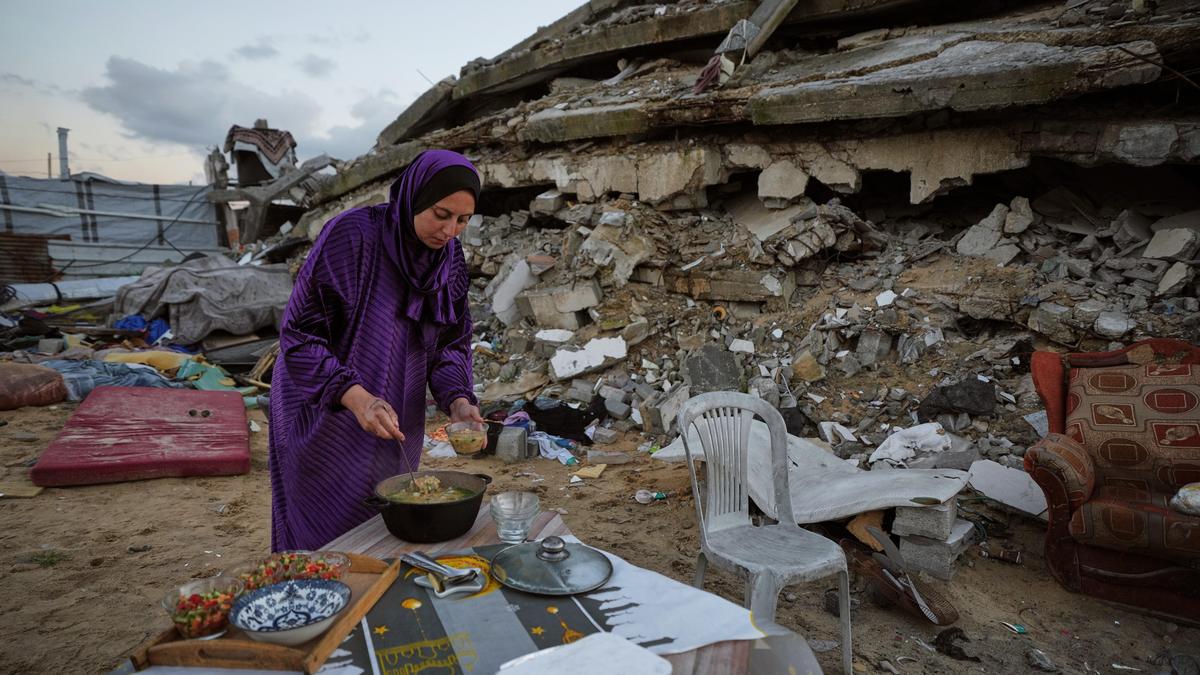
As we mark this fourth anniversary, the target has shifted from military units to the very fabric of civilian life. The systematic targeting of the Ukrainian power grid is a calculated attempt to make the country unlivable. By weaponizing winter, Russia hopes to trigger secondary waves of refugees, further draining Ukraine of its human capital and placing an unbearable social burden on European neighbors.
Ukraine’s air defense has become a patchwork of different systems—Patriots, IRIS-T, and older Soviet S-300s. While effective, the interceptors are expensive and finite. Each $20,000 "Shahed" drone sent by Russia requires an interceptor that might cost $2 million. The math of this exchange is unsustainable in the long run without a permanent, domestic production capability for air defense within Ukraine itself.
The Stalemate of Narratives
Zelenskyy’s claim that Putin "did not break" Ukraine is true in the sense that the national identity is more unified than ever. Before 2022, there were deep internal fissures regarding language and alignment with the West. Those gaps have largely been cauterized by the shared experience of bombardment.
But unity is not a strategy for kinetic victory. The international community is moving into a phase of "fatigue management." High-profile visits and emotional speeches are losing their efficacy. What Ukraine needs now is not just "support," but a fundamental shift in Western industrial policy that treats Ukrainian defense as a permanent fixture of European security rather than a temporary emergency.
The coming year will likely be the most dangerous yet. With elections in major Western powers and the looming possibility of shifting foreign policies, the window for Ukraine to reclaim significant territory is narrowing. The war has become a contest of wills between a dictator who cannot afford to lose and a nation that cannot afford to exist if it does not win.
Check your local embassy or verified non-profit registries to see how specific aid programs are currently being allocated toward medical supplies and power grid repair.