Arthur sits at a Formica table that has seen better decades, nursing a cup of coffee that has gone cold. He isn’t looking at the steam. He is looking at a pale blue envelope. For forty-four years, Arthur worked at a plant that manufactured specialized valves. He paid his dues. He paid his taxes. And every single two-week cycle, a chunk of his life was carved out and sent to Washington. It wasn't a gift. It wasn't a suggestion. It was a contract.
The problem with contracts is that they require two honest parties.
When we talk about Social Security, we often treat it like a math problem. We talk about "solvency," "cost-of-living adjustments," and "actuarial deficits." We bury the reality under a mountain of dry, gray terminology that makes the eyes glaze over. But for Arthur, and for the millions of people who see their reflection in his kitchen window, Social Security isn't a line item. It is the difference between dignity and desperation. It is the "social" part of the contract that we seem to have forgotten.
Ronald Reagan once spoke about this with a clarity that has been muddied by decades of political posturing. He understood a fundamental truth that today’s debates often ignore: Social Security is not a welfare program funded by the general treasury. It is a system funded by the direct contributions of the American worker. It is, or at least it was intended to be, a sacred trust.
The Great Misunderstanding of the National Wallet
Imagine you have two jars on your counter. One is for the mortgage, and the other is for your daughter’s college fund. Every month, you put a little bit into the college jar. But then, the car breaks down. Instead of finding another way to pay for the repair, you reach into the college jar, replace the cash with a handwritten IOU, and tell yourself you’ll fix it later.
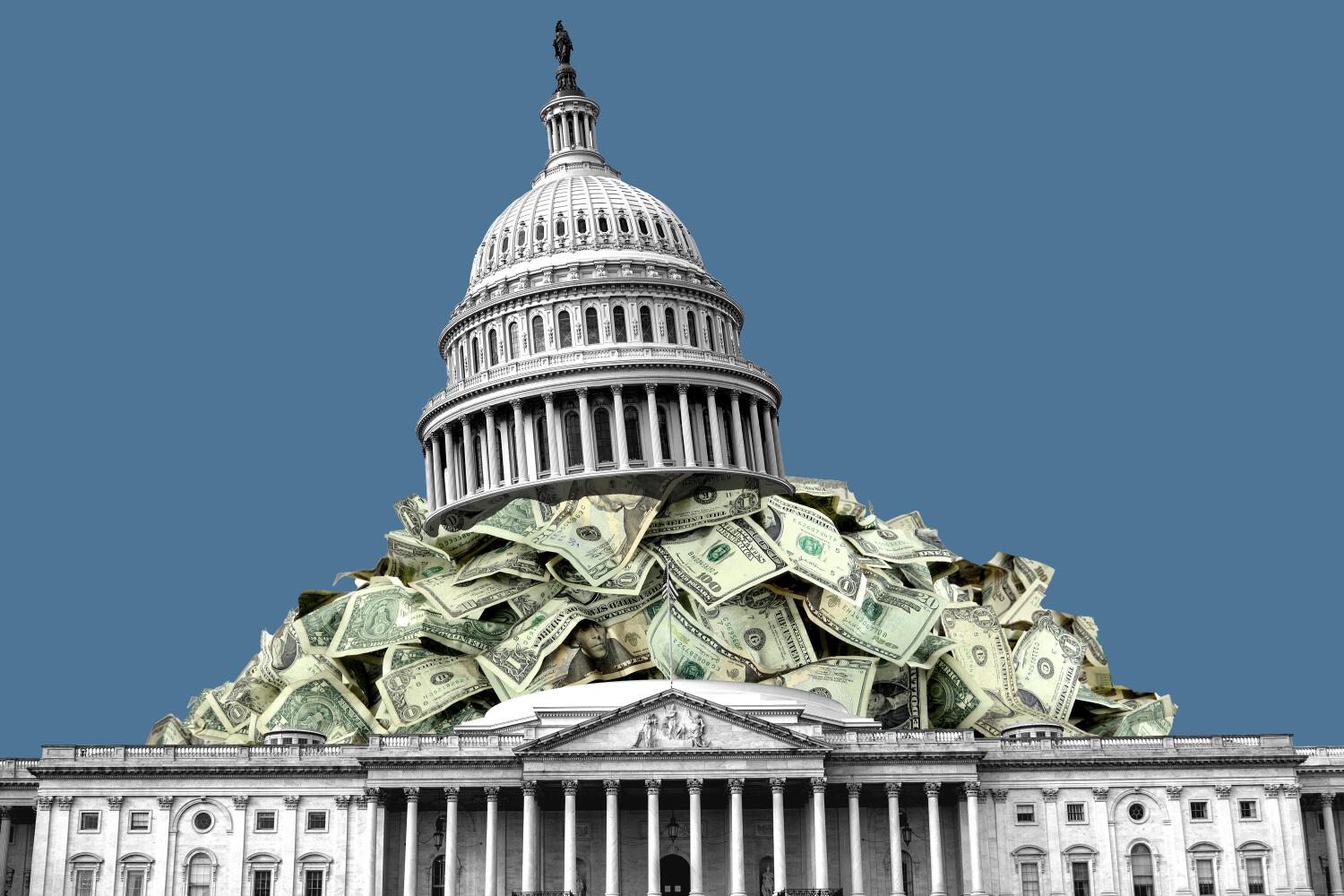
This is the simplified reality of how the government treats the Social Security Trust Fund. For years, the surplus—the extra money paid in by workers that wasn't immediately needed for retirees—was used to fund other government projects. It bought fighter jets. It paved highways. It paid for office furniture in federal buildings. In exchange, the Social Security Administration received special-issue Treasury bonds.
The government basically told itself, "Don't worry, I owe you."
The nuance here is critical. People often claim the money is "gone" or that the "trust fund is empty." That isn't factually accurate, but it feels true to the person holding the pale blue envelope. The money is backed by the "full faith and credit" of the United States. But as any historian or economist will tell you, "faith" is a fragile currency when the national debt is measured in trillions and the political will to honor old promises is flickering like a dying bulb.
The Ghost of 1983
We have been here before. In the early 1980s, the system was staring down a barrel. The checks were at risk of stopping. It was a moment of genuine crisis that forced a rare occurrence in Washington: actual compromise.
Reagan sat down with Tip O’Neill. They didn't like each other’s politics, but they respected the math. They moved the goalposts—raising the retirement age and increasing payroll taxes—to buy the system another half-century of life. They saved it, but they did so by asking the worker to carry a heavier pack.
The workers carried it. They worked the extra years. They paid the higher percentages. They held up their end of the bargain.
Now, we are approaching another cliff. The "Social Security is going bankrupt" headlines are everywhere, but they are misleading. The system won't just vanish into thin air. If nothing changes, the trust funds will eventually be depleted, and the system will only be able to pay out what it collects in current taxes. That translates to a roughly 20% to 25% cut in benefits.
A 20% cut sounds like a statistic. To Arthur, it’s the difference between keeping the heat at 68 degrees or dropping it to 60 and wearing a coat inside. It’s the difference between the "good" heart medication and the generic version that makes him feel dizzy. It’s the difference between being a grandfather who can buy a birthday gift and a grandfather who has to make an excuse for why he can't visit.
The Invisible Stakes of the Payroll Tax
There is a persistent myth that Social Security is a drain on the federal budget. You hear it in the way politicians talk about "entitlements," a word that has been twisted into a slur.
In reality, Social Security is a self-funded insurance program. It does not contribute a single penny to the federal deficit. In fact, for decades, it did the opposite—its surpluses helped mask the true size of the deficit. The "entitlement" isn't a handout; it's a legal right earned through decades of labor.
Consider the mechanics of the FICA tax. It’s a flat tax, but only up to a point. There is a "cap" on earnings subject to the tax. If you earn $160,000, you pay into the system all year. If you earn $16,000,000, you stop paying into the system somewhere around mid-January.
This creates a strange reality where the person cleaning the office pays a higher effective percentage of their income into the "locked box" than the CEO in the corner office. When we talk about "fixing" the system, we often jump straight to cutting benefits or raising the retirement age again. We rarely talk about the ceiling.
Why is the burden always shifted to the person at the Formica table?
The Human Cost of Uncertainty
Stress has a scent. It’s the smell of old paper and the metallic tang of a basement furnace that hasn't been serviced in three years. It’s the silence in a house when the television stays off to save on electricity.
The psychological toll of the "Social Security debate" is immense. For a generation that was told their entire lives that this was the bedrock of their retirement, the constant chatter about "reform" and "cuts" feels like a betrayal. It creates a state of perpetual anxiety.
If you are thirty years old today, you might be tempted to think this doesn't matter to you. You might think, "I'll never see that money anyway." That cynicism is exactly what allows the problem to fester. If the younger generation gives up on the concept of the social contract, it gives the architects of the "fix" permission to dismantle it.
But you are paying into it right now. Every Friday. Every month. You are buying into a promise that you expect to be kept forty years from now. If the government can decide to change the terms of Arthur’s contract today, what makes you think they won't change yours tomorrow?
The Myth of the Individual
There is a school of thought that suggests we should just "privatize" the whole thing. Let everyone manage their own "locked box" in the stock market. It sounds modern. It sounds like freedom.
But markets are not social contracts. Markets are machines designed for growth, and machines don't care about your hip replacement or whether your spouse died before they could collect their share. The 2008 financial crisis showed us what happens when "freedom" meets a market crash. If our retirement was purely tied to the S&P 500, an entire generation of seniors would have been wiped out in a single Tuesday.
Social Security was never meant to be a path to wealth. It was meant to be a floor. A hard, unyielding surface that prevents you from falling into the abyss of poverty.
Reagan knew this. He wasn't a fan of big government, but he understood the necessity of the floor. He understood that a society is only as stable as the promises it keeps to its oldest members. When that floor starts to creak, the whole house shakes.
The Way Forward Without Fear
Solving the Social Security puzzle isn't actually that hard. The math is relatively simple. You either increase the revenue coming in, or you decrease the money going out.
Increasing revenue could mean raising the cap on taxable earnings, ensuring that those who have benefited most from the economy contribute more to its stability. It could mean a slight, gradual increase in the payroll tax rate spread across years so it’s barely felt.
Decreasing the money going out usually means raising the retirement age—again—or changing how inflation is calculated.
The choice isn't between "doing something" and "doing nothing." The choice is about who bears the weight. Do we ask the person who has been standing on a concrete factory floor for forty years to stand for two more? Or do we ask the system to be more honest about where the money went?
Arthur folds the pale blue envelope. He puts it back in the pile of mail, next to a grocery circular and a flyer for a local church bake sale. He doesn't want a revolution. He doesn't want a handout. He just wants what was promised to him when he was twenty-two and full of hope, punching a time card for the first time.
The "locked box" was never actually locked. The keys have been passed around Washington for decades, used to open the lid whenever someone needed to cover a shortfall elsewhere. Now, the people who put the money in the box are being told they might have to take a little less out.
It is a quiet tragedy. It doesn't make the evening news with sirens and explosions. It happens in the silence of kitchens across the country, in the slow, agonizing realization that the "sacred trust" might just be a polite way of saying "we'll see."
We are told that we cannot afford to keep the promise. But in a nation with our resources and our history, the truth is more uncomfortable.
We can afford it. We just haven't decided if we care enough about Arthur to do it.
Arthur stands up, his knees popping with a sound like dry kindling. He moves to the sink to wash his mug. He handles it carefully, as if it’s the last one he’ll ever own. Outside, the sun is setting, casting long, thin shadows across the driveway he paved himself. He is a man who kept his word.
He is still waiting for the world to keep its word to him.