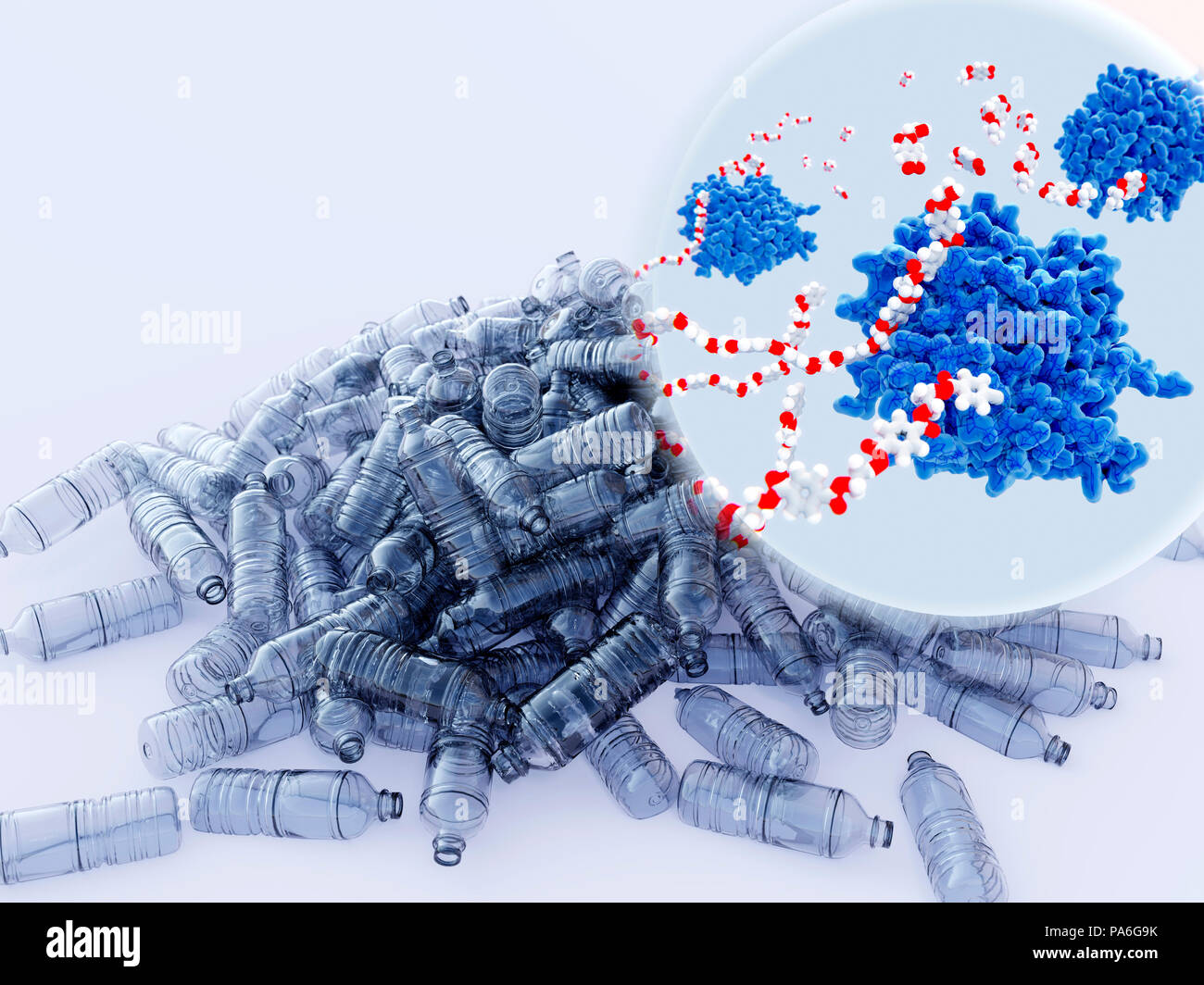
Mechanical recycling is a physical lie. For decades, the public has been sold a vision of circularity where a plastic bottle becomes another plastic bottle, repeating the cycle indefinitely. In reality, most plastic is "downcycled" into lower-grade materials like carpet fibers or park benches before inevitably hitting a landfill. The structural integrity of the polymers degrades every time they are melted. This is why the world is drowning in "hard-to-recycle" plastics—the multilayered pouches, the black food trays, and the contaminated films that current infrastructure simply cannot process.
The industry is now banking on chemical recycling to bridge this gap. Instead of washing and shredding plastic, companies like Mura Technology and PureCycle are using heat, pressure, and solvents to break these materials back down into their molecular building blocks. This isn't just a marginal improvement. It is an attempt to reset the clock on plastic waste, returning it to a virgin-like state that can be used for food-grade packaging or medical equipment. However, the path from a laboratory breakthrough to a global solution is littered with astronomical energy costs and skeptical environmentalists who view these plants as nothing more than glorified incinerators.
The Molecular Reset
Traditional recycling treats plastic like wood. You can sand it and paint it, but you can’t turn a pile of sawdust back into a solid oak plank. Chemical recycling, specifically hydrothermal liquefaction and pyrolysis, treats plastic like a chemical compound. By applying supercritical water or high heat in the absence of oxygen, these processes sever the long polymer chains.
The goal is to produce tacoil or synthetic crude. This liquid can be fed back into existing steam crackers at petrochemical plants, effectively replacing a portion of the fossil fuels used to make new plastic. It sounds like alchemy. But the physics are sound. The challenge is the "feedstock"—the messy, unwashed, disorganized mountain of trash that consumers throw into bins. Chemical processes are sensitive. If you feed the wrong mix of PVC into a pyrolysis reactor, you risk creating corrosive acids that eat the machinery from the inside out.
The Problem of Multilayer Packaging
If you look at a bag of potato chips, you aren't looking at one material. You are looking at a sandwich of polypropylene, polyethylene, and aluminum. Mechanical recyclers hate this. The different melting points make it impossible to create a clean output.
Advanced recycling ventures are targeting these specific "unrecyclables." By using solvents to dissolve specific polymers while leaving others intact, they can strip away the layers. It is surgical. But this surgery requires massive amounts of energy. The carbon footprint of heating plastic to 400 degrees Celsius just to get a liter of oil back is a math problem that the industry is still struggling to solve. If the energy used to recycle the plastic produces more carbon than simply making new plastic from oil, the entire premise of "green" tech collapses.
Scaling the Unscalable
The graveyard of green tech is filled with companies that could recycle five tons of plastic a day but couldn't reach 50,000. Scaling up requires a fundamental shift in how we view waste as a commodity. Currently, it is cheaper for a brand to buy virgin plastic made from cheap fracked gas than it is to buy chemically recycled resin.
Capital is starting to move, however. Major consumer goods companies are under immense regulatory pressure to include "recycled content" in their packaging. This has created a bifurcated market. There is a desperate shortage of high-quality recycled material, leading to a "green premium" where brands pay more for the optics of sustainability. This premium is the only thing keeping these advanced recycling plants in business while they iron out the kinks in their supply chains.
The Myth of Infinite Cycles
Proponents often claim chemical recycling allows for "infinite" loops. This is technically true at the molecular level, but practically impossible in a global economy. You lose material at every step. Some is burned for process heat; some is lost as char or gas.
Even a 70% recovery rate is considered stellar in this industry. That means every time a bottle goes through the loop, 30% of its mass vanishes, requiring a constant infusion of "fresh" fossil fuels to keep the system running. It is a leakier bucket than the marketing brochures suggest. We are not closing the circle; we are just slowing the spiral.
The Infrastructure Wall
You cannot fix the plastic crisis with better chemistry alone. You need better trucks, better sorting centers, and better policy. Most municipalities are still using 1990s-era optical sorters that fail to recognize black plastic because the infrared light is absorbed by the pigment.
Until the sorting centers can provide a steady, clean stream of specific waste types to these high-tech chemical plants, the facilities will run under capacity. This is the "Valley of Death" for the industry. A plant costs $500 million to build, but if it can't get enough feedstock to run at 90% efficiency, it becomes a stranded asset. We are seeing a standoff where tech providers won't build until the waste is guaranteed, and waste managers won't sort until the tech is proven.
Resistance and Regulation
Environmental groups are not cheering for this transition. They argue that chemical recycling is a "false solution" that allows plastic producers to keep pumping out single-use items under the guise of future circularity. They point to the toxic byproducts—heavy metals, dioxins, and hazardous waste—that these plants can emit if not strictly monitored.
In the United States, there is a fierce legislative battle over whether chemical recycling should be classified as "manufacturing" or "waste management." This isn't just semantics. The classification determines what kind of subsidies the companies receive and what kind of emissions standards they must meet. If they are classified as manufacturers, they face fewer hurdles. If they are waste incinerators, the regulatory burden increases significantly.
Economic Reality Check
The price of oil is the ultimate arbiter of recycling's success. When oil is cheap, the incentive to invest in complex chemical reactors disappears. For these technologies to survive, they need a "floor" price for carbon or mandatory recycled content laws that decouple the price of recycled plastic from the price of Brent Crude. Without that decoupling, these companies are essentially gambling on the volatility of the energy market.
The Hidden Cost of Contamination
Consumer behavior remains the biggest wildcard. Even the most advanced reactor in the world struggles with a load of plastic that is 20% organic food waste. We are asking a sophisticated chemical process to handle the ultimate "dirty" input.
This requires a rethink of product design at the source. If a company designs a bottle that is easier for a chemical plant to digest, the entire system becomes more efficient. But design for recycling often clashes with design for shelf-appeal or product freshness. A thinner plastic film might use less material, but it's much harder for a recycler to catch and process. Every "innovation" in packaging creates a new headache for the person trying to melt it down five months later.
A Realistic Path Forward
We have to stop treating all plastics as a single category. Some plastics should be banned because they will never be economically viable to recycle. Others, like the high-density polyethylene used in milk jugs, are already being handled well by mechanical systems. The "middle ground" of difficult plastics—the films and flexibles—is where chemical recycling must prove its worth.
The next five years will determine if this industry is a legitimate pillar of the modern economy or a high-tech distraction. We are seeing the first wave of commercial-scale plants coming online in Europe and the Gulf Coast. If they can maintain high yields without catastrophic energy usage, the narrative changes. If they stumble, we will be forced to admit that the only way to solve the plastic problem is to stop producing so much of it in the first place.
Watch the "yield-to-energy" ratio of these new facilities. That single metric tells you more about the future of the planet than any corporate sustainability report. If it takes the energy equivalent of two gallons of oil to recycle one gallon of plastic, the math is dead on arrival. We are looking for a miracle in a test tube, but we are fighting against the second law of thermodynamics. It is a fight we have been losing for half a century.
Audit the waste stream entering these plants and you will see the physical manifestation of our consumption habits. It is a chaotic mix of convenience and neglect. Fixing it requires more than just a clever catalyst; it requires a wholesale re-engineering of the global supply chain, starting from the moment a designer picks a polymer and ending only when that polymer is successfully stripped back to its base atoms. Anything less is just moving trash from one pile to another.


