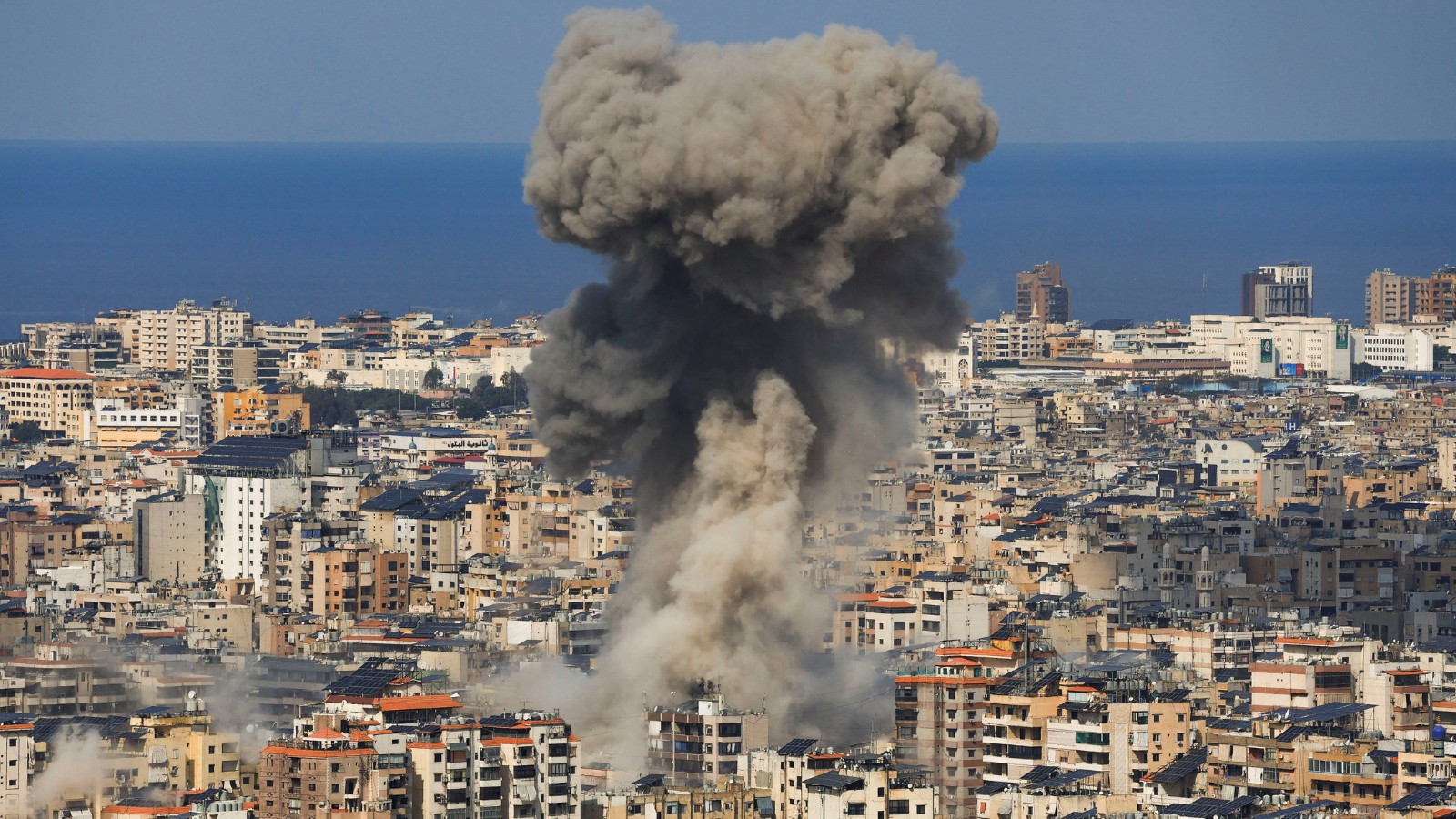
The missile exchange between Islamabad and Tehran in early 2024 was not a momentary lapse in diplomacy. It was a calculated unveiling of a new, dangerous geopolitical reality. While external observers often frame the friction as a localized border dispute over "ungoverned spaces" in Balochistan, the truth is far more structural. Pakistan is currently navigating a crushing economic crisis while simultaneously trying to maintain its status as the only nuclear-armed state in the Muslim world. Iran, emboldened by its proxy successes in the Levant and the Red Sea, is testing the perimeter of its eastern neighbor.
The core premise is simple. Pakistan cannot afford a full-scale war, yet it cannot afford the perception of weakness. For Islamabad, the signaling is directed less at the Iranian public and more at the military establishment in Tehran and the observers in Riyadh and Washington. By striking back after Iran’s initial breach of sovereignty, Pakistan demonstrated that its "Green Line"—the inviolability of its airspace—remains active despite its internal political chaos. This is not about a sudden desire for conflict. It is about a desperate need to preserve a crumbling deterrence framework.
The Myth of the Accidental Escalation
Military historians often look for "trigger events" that spiral out of control. In the case of the Pakistan-Iran standoff, there were no accidents. Iran’s Revolutionary Guard Corps (IRGC) executed strikes in Pakistan’s Panjgur district with the full knowledge that it would force a military response. Tehran’s calculus was likely rooted in the belief that Pakistan, distracted by its internal fracture between the civilian government and the military establishment (the "Establishment"), would swallow the insult.
They were wrong.
Pakistan’s retaliatory "Operation Marg Bar Sarmachar" was a precision-guided message. It utilized high-end Chinese-made JF-17 Thunders and sophisticated loitering munitions to hit separatist targets inside Iran. This wasn't just a "tit-for-tat" maneuver. It was a technical demonstration. Islamabad was showing Tehran—and the world—that even while its economy is on life support from the IMF, its military remains a modernized, lethal entity capable of projecting power beyond its borders.
The Balochistan Pressure Cooker
At the heart of this friction is the Balochistan region. It is a vast, mineral-rich, and chronically underdeveloped territory that straddles the border. On the Pakistani side, the Balochistan Liberation Army (BLA) and the Balochistan Liberation Front (BLF) fight for independence, often using Iranian soil as a sanctuary. On the Iranian side, Sistan-Baluchestan is home to Jaish al-Adl, a Sunni militant group that targets Iranian security forces.
Both nations use these groups as a form of "deniable leverage." When relations are good, they crack down on the militants. When relations sour, the borders become porous.
However, the nature of the insurgency has changed. The BLA has shifted from a tribal militia to a sophisticated urban guerrilla force. They have increasingly targeted Chinese interests, specifically the China-Pakistan Economic Corridor (CPEC). This puts Islamabad in a vice. If they cannot secure Balochistan, they lose their primary economic lifeline—China. If Iran is seen as "hosting" these elements, even passively, the Pakistani military sees it as an existential threat to their economic survival.
The China Factor and the Port of Gwadar
One cannot discuss this conflict without mentioning the "Great Game" of ports. On the Pakistani coast sits Gwadar, the crown jewel of China’s Belt and Road Initiative. Just 170 kilometers to the west lies Iran’s Chabahar port, which India has helped develop to bypass Pakistan and reach Central Asian markets.
Port Competition Dynamics
| Feature | Gwadar (Pakistan) | Chabahar (Iran) |
|---|---|---|
| Primary Backer | China | India |
| Strategic Depth | Deep-sea; access to Arabian Sea | Access to Gulf of Oman |
| Economic Role | CPEC Terminal | North-South Transport Corridor |
| Current Status | Heavily militarized | Undergoing expansion |
For years, the competition between these two ports was purely economic. Now, it is becoming kinetic. Pakistan suspects that external actors—primarily India—use the Iranian border to funnel support to insurgents who sabotage Gwadar. Conversely, Iran fears that Pakistan’s proximity to the United States and its reliance on Saudi Arabian financial bailouts make it a potential staging ground for "Sunni-led" destabilization of the Islamic Republic.
The Nuclear Deterrence Trap
Pakistan’s military doctrine is almost entirely focused on India. This "Eastern Front" obsession has left the "Western Front" with Iran relatively under-defended for decades. The recent skirmishes have forced a terrifying realization in Rawalpindi. If Pakistan is forced to divert significant conventional assets to the Iranian border, it weakens its posture against New Delhi.
This is the "Deterrence Trap." If a nation has nuclear weapons, every conventional skirmish carries the faint, horrific hum of potential escalation. Iran knows this. Tehran does not have a nuclear weapon—yet—but it behaves like a threshold state. By testing Pakistan’s resolve, Iran is mapping out how much room for maneuver it has before it hits the nuclear ceiling.
Proxies and the Sectarian Shadow
While both governments are quick to claim they are fighting "terrorists," the sectarian undertones are impossible to ignore. Pakistan is a majority-Sunni state with a significant Shia minority. Iran is the global vanguard of Shia Islam. In the past, the two countries maintained a "cold peace."
But as the Middle East fragments, the pressure on Pakistan to pick a side has intensified. Saudi Arabia and the UAE are Pakistan’s largest financial benefactors. These Gulf states view Iran’s regional expansion with extreme hostility. While Islamabad insists it remains neutral in the Saudi-Iran rivalry, its dependence on Gulf petrodollars suggests otherwise.
The Iranian leadership views Pakistan’s military as a potential mercenary force for the Riyadh-led bloc. Every time a high-ranking Pakistani official visits Washington or Riyadh, the suspicion in Tehran grows. The missile strikes were, in many ways, a violent demand for attention. They were Iran’s way of saying: "Do not forget we are on your doorstep."
Intelligence Failures or Intelligence Successes?
The most jarring aspect of the recent conflict was the failure of "hotline" communication. Both nations have established protocols for resolving border tensions. Why did they fail?
Most likely, they didn't. They were bypassed.
In Tehran, the IRGC often operates independently of the civilian foreign ministry. Their strikes in Pakistan were a show of strength to their internal hardliners. In Rawalpindi, the military needed to re-establish its "muscularity" in the eyes of a domestic audience that had become increasingly cynical about the military's role in politics. Both sides used the border to solve internal problems.
The China-Mediated Peace?
Beijing is the only power with real leverage in both capitals. China cannot afford a war between two of its "One Belt One Road" partners. If Balochistan is a war zone, the $62 billion CPEC project dies.
But Chinese mediation is not about peace; it is about stability. Beijing wants the ports open and the militants dead. This cold, transactional approach is what keeps the Pakistan-Iran border from becoming a permanent front. For now, the "shadow war" continues. It is a conflict of attrition, where the weapons are not just drones and missiles, but demographic shifts, port access, and the silent, invisible flow of illicit finance.
Islamabad and Tehran have returned to a state of "uncomfortable normalcy." But the seal has been broken. The Iranian regime now knows that Pakistan is willing to cross its borders with airpower. The Pakistani military now knows that Iran is willing to breach its sovereignty with impunity.
The border is no longer a line on a map. It is a live wire.
In the high-stakes game of regional dominance, neither side can afford to blink first. The real tragedy is that the millions of people living in the Balochistan region—on both sides of the border—remain the collateral damage in a struggle that has very little to do with them and everything to do with the survival of two increasingly cornered regimes.
The next missile will not be a signal. It will be a declaration.
Reach out to the Ministry of Foreign Affairs (MOFA) for their latest white paper on border security.