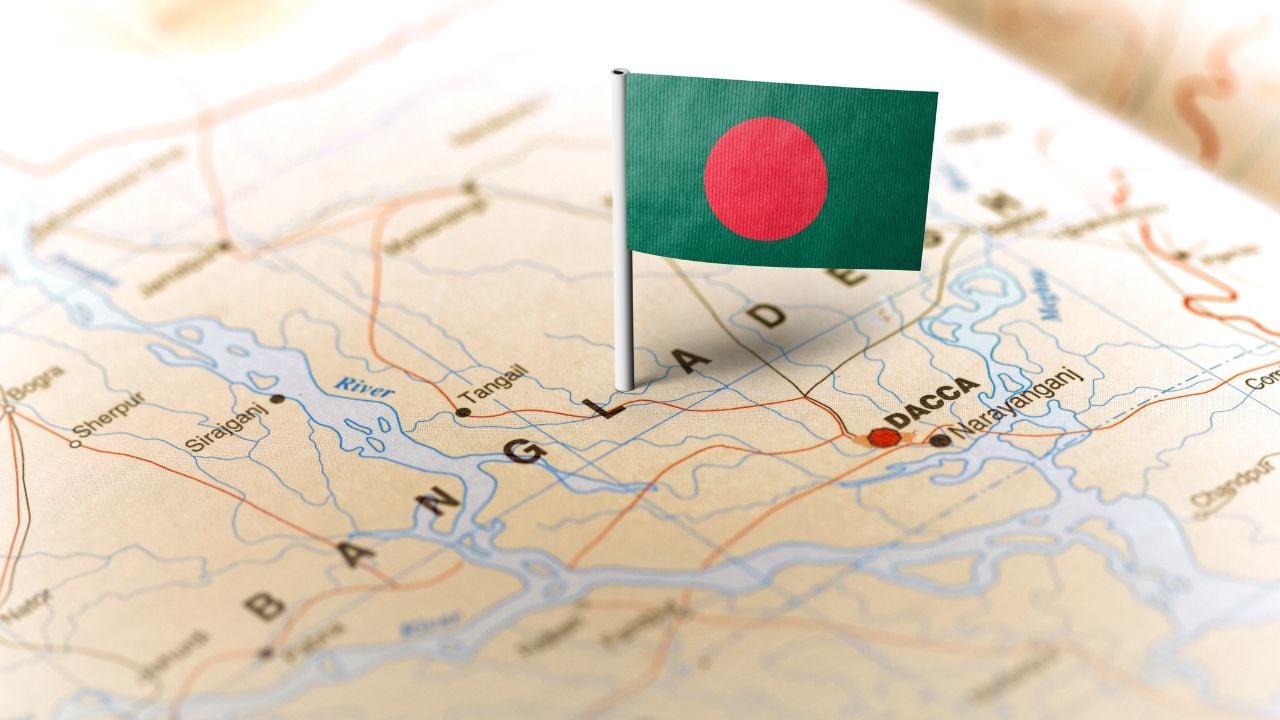
The ink on a passport stamp is usually dry before you even leave the airport. It is a tiny, administrative nothing—a smudge of purple or black that says you are allowed to exist in a space that isn't your own. But for months, for millions of people living between the shifting shadows of India and Bangladesh, that ink didn't just dry. It vanished.
The silence at the visa application centers in India wasn't the peaceful kind. It was heavy. It was the sound of grandmothers missing weddings in Dhaka, of patients in Kolkata clutching medical folders that had become useless paper, and of traders watching their livelihoods rot in the heat of a geopolitical freeze. When the doors finally creaked open recently, signaling that Bangladesh has resumed full visa services for Indian citizens, it wasn't just a policy update. It was a lung finally catching air. Also making headlines in related news: Finland Is Not Keeping Calm And The West Is Misreading The Silence.
The Ghost of a Closed Door
Consider a man we will call Ariful. He lives in a small flat in Kolkata, but his heart is perpetually indexed in a village near Sylhet. For Ariful, the border isn't a line on a map; it is a membrane. His sister was getting married. He had the gold saved. He had the silk bought. Then, the machinery of statecraft ground to a halt. The "security situation" became a wall.
He didn't care about the high-level meetings or the diplomatic cables exchanged in the sterile rooms of New Delhi or Dhaka. He cared about the fact that he was three hundred miles away and might as well have been on Mars. Further insights on this are covered by Reuters.
This is the hidden cost of a suspended visa regime. We talk about "bilateral relations" as if they are abstract concepts handled by men in suits. They aren't. They are the physical ability to hold a relative’s hand before they go into surgery. They are the capacity for a student to sit for an exam they have studied for since childhood. When Bangladesh paused these services following the tumultuous political shifts of late 2024, the human connection was severed.
The resumption of full services means that the "Tourist," "Business," "Student," and "Medical" categories are no longer ghost towns on the application website. The lights are back on.
The Economic Pulse of a Shared Street
If you walk down the streets of South Kolkata near the major hospitals, you will see a specific kind of ecosystem. There are guesthouses with signs in Bengali script that cater specifically to "brothers from across the border." There are pharmacies that stock specific brands of medicine preferred by Bangladeshi patients. There are eateries where the ilish is cooked just the right way.
When the visa services stopped, this ecosystem starved.
It is a mistake to view this through a purely political lens. The math is far more visceral. India provides a massive percentage of Bangladesh’s medical tourism. Conversely, Indian traders rely on the fluid movement of goods and people to keep the supply chains of the Northeast humming. Without the visas, the friction becomes unbearable.
The backlog is now a mountain. Thousands of passports sat in drawers, waiting for a sign. Now that the Bangladeshi High Commission and its consulates are firing on all cylinders again, the pressure is beginning to release. But it isn't as simple as flipping a switch. The bureaucracy has to chew through months of stalled lives.
Why the Wait Felt Like an Eternity
The pause wasn't arbitrary. Bangladesh went through a period of profound internal restructuring. When a government changes in the way it did in Dhaka, every department, from the local police to the foreign ministry, undergoes a frantic recalibration. Security is the first casualty of such transitions, and the visa process—which requires vetting, verification, and a stable communication line between intelligence agencies—was deemed too risky to leave at full throttle.
But a country cannot remain an island, especially not one carved out of the same history as its neighbor. The reality of the subcontinent is that the borders are often unnatural. They cut through families, through dialects, and through the very air.
During the hiatus, only "emergency" visas were being processed. But who defines an emergency? Is a daughter’s wedding an emergency? Is a business deal that keeps ten families fed an emergency? Usually, the answer from a clerk behind a glass window is a cold "no."
Now, the "no" has turned back into a "perhaps," and eventually, a "yes."
The Logistics of a Reunion
The return to normalcy involves more than just a rubber stamp. It involves the reopening of the Bangladesh Visa Application Centers (IVACs) across India. These centers are the cathedrals of hope for travelers. You see the same faces there: the anxious father, the hurried businessman, the wide-eyed student.
The process is being streamlined to handle the surge. For those who have been waiting, the requirements remain largely the same, but the scrutiny is expected to be precise. You need your bank statements, your utility bills, and that elusive "invitation letter" that proves someone on the other side is waiting for you.
- Tourist Visas: The lifeblood of the hospitality sector.
- Medical Visas: Often the difference between recovery and decline.
- Business Visas: The engines of the regional economy.
- Student Visas: The bridge for the next generation.
We often think of travel as a luxury. In the context of India and Bangladesh, travel is a necessity. It is the way the region functions. The two nations are like two rooms in the same house; you can lock the door between them, but you can still hear the breathing on the other side.
The Uncertainty That Lingers
It would be dishonest to say that everything is back to the way it was before the freeze. Trust is a fragile thing. It is built over decades and shattered in a weekend. While the visa offices are open, the atmosphere remains cautious. Travelers report longer wait times for security clearances. There is a sense that the eyes watching the border are narrower, more focused.
But the sheer volume of applications tells the real story. People are willing to wait. They are willing to stand in the sun, to fill out the endless forms, and to pay the fees. Why? Because the pull of the other side is stronger than the fear of the process.
Consider the "Friendship Trains" and the buses that cross at Petrapole. For a while, they were carrying ghosts—empty seats and silent carriages. Now, the chatter is returning. The smell of luggage—that specific scent of plastic, mothballs, and travel—is filling the stations again.
The Invisible Stakes
What happens if this fails? If the services are suspended again?
The stakes aren't just about lost revenue for airlines or hotels. The stakes are the slow erosion of a shared culture. Every day a border is closed, a tiny bit of shared understanding dies. The movies aren't watched together. The songs aren't sung in the same rhythm. The cousins grow up not knowing the sound of each other’s laughter.
The resumption of these services is a gamble on stability. It is an assertion that, despite the political tectonic plates shifting beneath them, the people must be allowed to move. It is a recognition that you cannot govern a people by keeping them apart from their own history.
There is a specific kind of light in the eyes of someone who has just received their passport back with a fresh visa inside. It is the light of a horizon opening up. It is the realization that the world has, for a moment, stopped saying "stay" and started saying "go."
As the first wave of newly minted visa holders crosses the land ports, they aren't just carrying suitcases. They are carrying the threads that sew two nations back together, one footstep at a time. The ink is wet again. The stamps are falling. Somewhere in a village in Sylhet, a sister is finally calling her brother to tell him the date is set, and this time, he will actually be there to see her walk toward her new life.
The border is breathing again. It is a shallow, careful breath, but it is air nonetheless.
Would you like me to look into the specific documentation requirements for the new Bangladesh medical visa category to see what has changed?