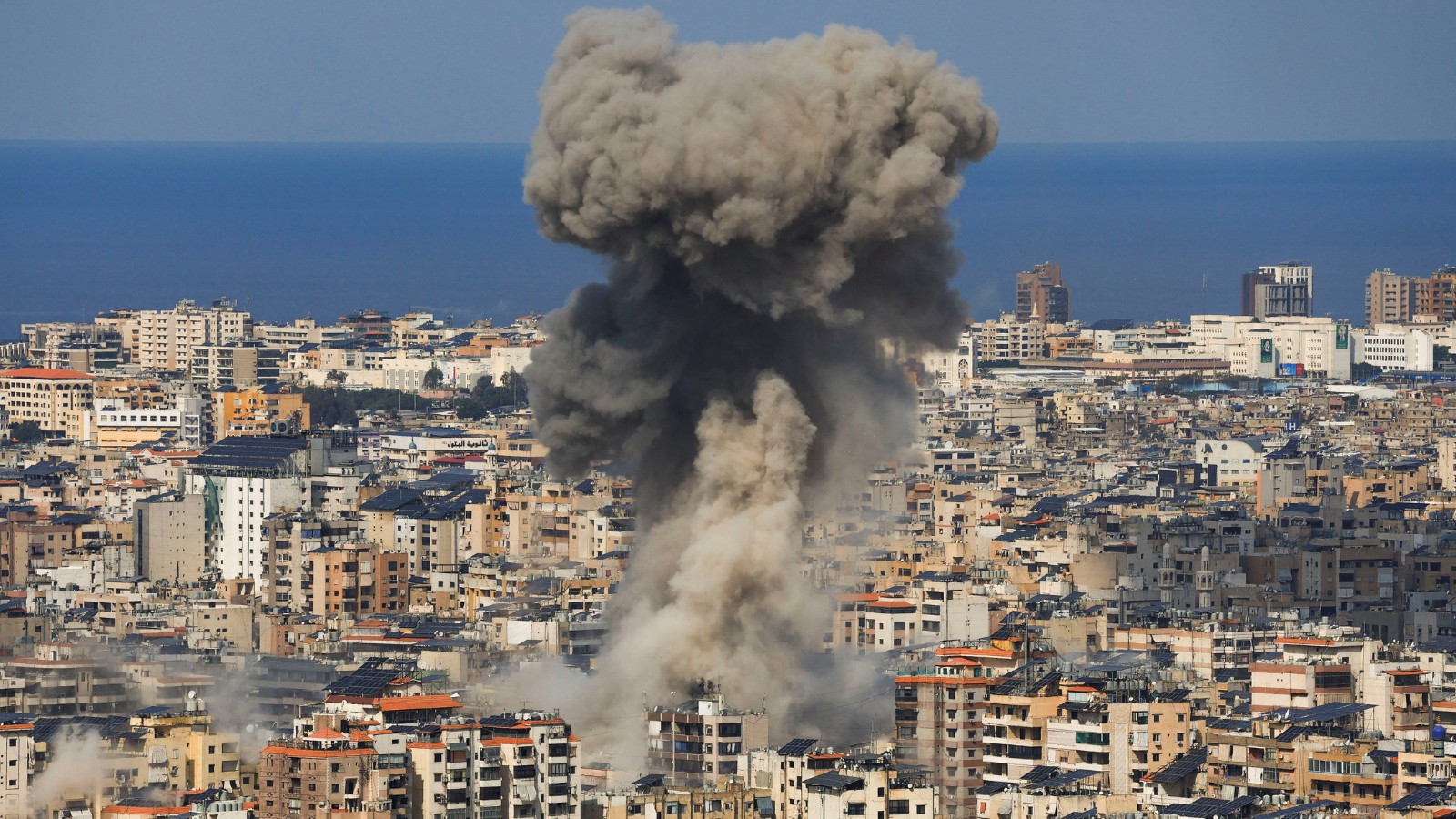
The escalating military friction between Pakistan and the Taliban-led administration in Afghanistan is not a series of isolated border skirmishes but a structural breakdown of a decades-long strategic assumption. This deterioration is driven by a fundamental misalignment between Pakistan’s internal security requirements and the Taliban’s ideological sovereignty. The current conflict centers on a three-way entanglement involving the Pakistani state, the Afghan Taliban, and the Tehrik-i-Taliban Pakistan (TTP), where the costs of inaction for Islamabad have finally outweighed the diplomatic risks of kinetic intervention inside Afghan territory.
The Triad of Deterrence Instability
To understand why air strikes and artillery exchanges have become the new baseline, one must analyze the three specific pillars currently collapsing in the bilateral relationship.
1. The Strategic Depth Fallacy
For forty years, Pakistani security doctrine sought "strategic depth" in Afghanistan—the idea that a friendly government in Kabul would provide a secure western flank. The 2021 Taliban takeover was initially viewed as the realization of this goal. However, the reality has produced a "Strategic Deficit." Instead of a compliant proxy, Pakistan faces a nationalistic insurgent-turned-state-actor that refuses to recognize the Durand Line—the 2,640-kilometer border—as a legitimate international boundary.
2. The TTP Sanctuary Variable
The Tehrik-i-Taliban Pakistan (TTP) serves as the primary friction point. Following the US withdrawal, TTP militants shifted their operational base from Pakistan’s tribal districts into Afghan provinces like Khost and Kunar. The Afghan Taliban provides what is termed "ideological hospitality." While Kabul claims to restrain the TTP, the frequency of cross-border attacks has increased by over 70% since 2021. From Islamabad's perspective, the Afghan Taliban is using the TTP as a lever of influence, while the Taliban views the TTP as ideological kin that cannot be betrayed without losing internal credibility.
3. The Sovereignty-Security Paradox
Pakistan requires a "hard border" to prevent militant infiltration. This involves fencing, biometric checkpoints, and regular patrols. The Taliban requires a "soft border" to maintain their image as the protectors of Pashtun unity across the Durand Line. Every time Pakistan attempts to formalize the border, the Taliban views it as an act of aggression. Every time the Taliban prevents fencing, Pakistan views it as a direct threat to its territorial integrity.
Mechanics of Kinetic Escalation
When diplomatic channels fail, the escalation follows a predictable mathematical progression of force. The transition from border skirmishes to air strikes indicates that Pakistan has moved from a "containment" strategy to a "punitive" strategy.
The Threshold of Intervention
Pakistan’s decision to launch air strikes into Khost and Paktika provinces was a response to a specific "Pain Threshold." The metric for this threshold is the casualty rate of high-ranking Pakistani military officers and the sophistication of the IEDs (Improvised Explosive Devices) used in the border regions. When the TTP began utilizing night-vision goggles and thermal optics—likely remnants of abandoned Western equipment—the technological gap that previously favored Pakistani border forces narrowed, necessitating the use of stand-off air power.
The Taliban Response Function
The Afghan Taliban’s response is constrained by their lack of an air force but compensated for by their "Asymmetric Readiness." Their use of heavy artillery against Pakistani border posts is a signaling mechanism intended to show that they can disrupt the multibillion-dollar border fencing project at any point. This creates a cycle where:
- Action: TTP conducts a high-profile attack in Pakistan.
- Attribution: Pakistan identifies the source in an Afghan province.
- Kinetic Response: Pakistan conducts a drone or jet strike on a TTP camp.
- Retaliation: Taliban border forces open fire on Pakistani frontier posts to reassert sovereignty.
Economic and Trade Weaponization
The conflict is not limited to the kinetic realm. Pakistan utilizes its geography as an economic chokehold, given that Afghanistan is landlocked and heavily dependent on Pakistani ports for transit trade.
The Transit Trade Lever
The Afghanistan-Pakistan Transit Trade Agreement (APTTA) is frequently suspended or throttled during periods of high tension. By introducing "Security Clearances" at the Torkham and Chaman border crossings, Pakistan can effectively halt the Afghan economy. This is a non-kinetic tool designed to force the Taliban to the negotiating table regarding the TTP. However, this tool has diminishing returns; the more Pakistan closes the border, the more the Taliban seeks alternative trade routes through Iran (Chabahar Port) and Central Asia, permanently eroding Pakistan’s economic influence.
The Refugee Repatriation Variable
The forced repatriation of hundreds of thousands of undocumented Afghans from Pakistan serves as a "Demographic Pressure Point." By pushing large populations back into a fragile Afghan economy, Pakistan increases the administrative and financial burden on the Taliban. This is a high-risk strategy, as it risks radicalizing the returnees and creating a larger recruitment pool for militant groups, potentially backfiring on Pakistani internal security in the long term.
Geo-Strategic Constraints and External Actors
The bilateral conflict does not exist in a vacuum. It is shaped by the interests of regional powers who view the stability of the Durand Line through the lens of their own security.
China’s Stability Requirement
Beijing’s primary interest is the protection of the China-Pakistan Economic Corridor (CPEC) and the prevention of the ETIM (East Turkestan Islamic Movement) from gaining ground in Afghanistan. China acts as a quiet mediator, urging Pakistan to avoid a full-scale war while pressuring the Taliban to fulfill their counter-terrorism promises. If the Pakistan-Afghanistan border remains a "forever-war" zone, the expansion of CPEC into Afghanistan becomes a non-starter.
The US Counter-Terrorism Alignment
A strange alignment has emerged where Pakistan’s interests regarding the TTP partially overlap with US interests regarding Al-Qaeda and ISIS-K. While the US-Pakistan relationship is complex, there is a shared intelligence interest in monitoring the "Terrorist Alphabet Soup" in eastern Afghanistan. However, the US is wary of providing Pakistan with advanced kinetic platforms that could be used in other regional contexts, forcing Pakistan to rely on its indigenous drone capabilities and aging F-16 fleet.
Failure Points in Current Counter-Terrorism Logic
The current strategy of "mowing the grass"—conducting periodic strikes to degrade TTP leadership—is failing due to three structural flaws:
- Decentralized Command: The TTP has evolved into a franchise model. Eliminating a commander in Kunar does not stop a cell in North Waziristan from operating.
- The "Good Taliban/Bad Taliban" Legacy: Pakistan’s historical distinction between militants who fight abroad and those who fight at home has blurred. The Afghan Taliban does not see the TTP as "bad"; they see them as the Pakistani version of themselves.
- Border Permeability: Despite the fence, the topography of the Suleiman Mountains makes total sealing impossible. The cost of maintaining a 100% secure border is economically unsustainable for Pakistan in its current fiscal crisis.
Operational Forecast and Strategic Shift
The trajectory of this conflict suggests that a return to the pre-2021 "status quo" is impossible. The relationship has moved into a "Managed Conflict" phase.
Intelligence-Led Attrition
Expect a shift away from high-profile air strikes, which generate international condemnation and Taliban mobilization, toward "Grey Zone" operations. This involves targeted assassinations of TTP leaders within Afghan cities, utilizing local intelligence networks rather than visible military platforms. This reduces the Taliban’s need to respond with heavy artillery since the perpetrator remains officially unconfirmed.
Formalization of the Durand Line
Pakistan will likely continue to treat the Durand Line as a "Hard Border," regardless of Taliban recognition. This means the end of the "Easier Folder" system where local tribes could cross with minimal documentation. The social cost will be a surge in local unrest among Pashtun populations on both sides, which the Pashtun Tahafuz Movement (PTM) will likely capitalize on.
The strategic play for Pakistan is no longer to seek a "friendly" Kabul, but to manage a "hostile" one. This requires a total decoupling of trade and security policies. If Pakistan continues to link transit trade directly to TTP cooperation, it will lose both its economic leverage and its security objectives. The only viable path forward is the "Israel-Lebanon Model": high-tech border surveillance, immediate and proportional kinetic responses to every breach, and an acceptance that the neighboring state is both a necessary trade partner and a permanent security threat.
The Taliban, conversely, must decide if the ideological purity of harboring the TTP is worth the slow strangulation of their national economy. As the Afghan state’s foreign reserves remain frozen and climate-driven food insecurity increases, the "Cost of Hospitality" may eventually become higher than the "Cost of Betrayal." Until that economic tipping point is reached, the border will remain a theater of calibrated violence.