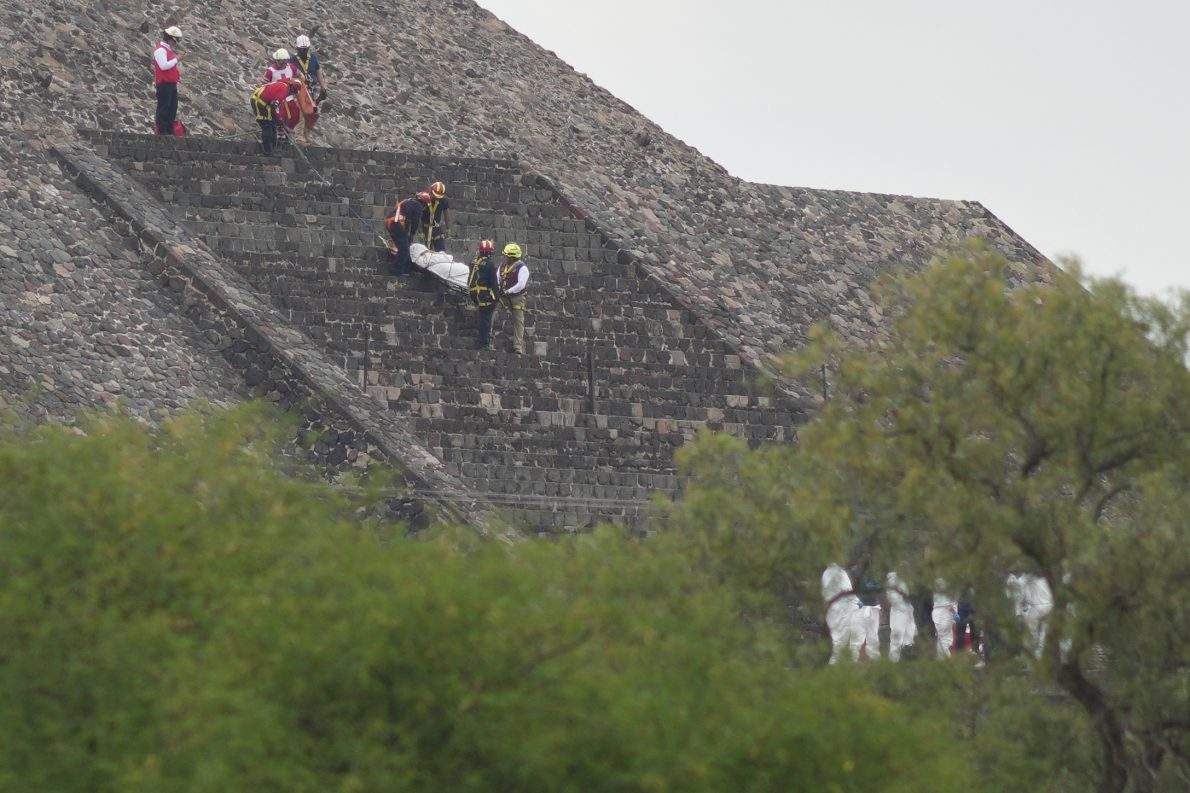
The recent killing of a Canadian citizen in a Mexican resort town has once again punctured the carefully maintained illusion of safety in the Riviera Maya. While Mark Carney and other political figures offer the standard repertoire of condolences, the reality on the ground in Quintana Roo tells a far more sinister story. This wasn't an isolated tragedy or a case of being in the wrong place at the wrong time. It is the predictable outcome of a region where the lines between legitimate hospitality and organized crime have blurred into nonexistence.
For years, the Mexican government and international travel agencies have sold a version of the Yucatan Peninsula that exists in a vacuum. They want you to see the turquoise waves and the all-inclusive luxury. They do not want you to see the shadow economy that fuels every bar, club, and beach bed. When violence spills into the tourist zones, it is usually dismissed as "internal conflict" between cartels. But for the travelers caught in the crossfire, the distinction between a targeted hit and collateral damage is a luxury they no longer have.
The Economics of a Targeted Execution
We need to stop calling these incidents "random acts of violence." In the context of the Mexican Caribbean, violence is a business tool. The assassination of a foreign national in a public space serves a specific purpose, often linked to the control of local distribution networks or the extortion of businesses that cater to wealthy expats and tourists.
The victim, identified in initial reports and mourned by high-level Canadian officials, represents the latest casualty in a war for "plaza" control. In the underworld, a "plaza" is a territory. When a territory is profitable—as the corridor between Cancun and Tulum remains—the friction between rival groups intensifies.
The presence of high-profile foreigners doesn't act as a deterrent anymore. In fact, the high density of international visitors provides a convenient shield for criminal operations. Cartels know that the Mexican state is hesitant to shut down the golden goose of tourism, leading to a culture of impunity where arrests are rare and convictions are even rarer.
The Illusion of the Safe Zone
The Mexican government often touts the "Batallón de Seguridad Turística"—a specialized branch of the National Guard—as the solution to rising crime. You will see them patrolling the beaches in full tactical gear, rifles slung over their shoulders as they walk past sunbathers.
It is theater.
The presence of the military on the sand hasn't stopped the gunfire. If anything, it highlights the absurdity of the situation. You cannot secure a region by placing soldiers on a beach when the systemic rot exists in the local police forces, the licensing offices, and the very hotels where guests stay. The infrastructure of the region is built on land that is often contested, and the utilities that keep the lights on are frequently subject to "protection" fees paid to local bosses.
Why Canada and the US Keep Muting the Alarm
Global powers like Canada and the United States find themselves in a diplomatic bind. If they issue a Level 4 "Do Not Travel" advisory, they cripple the Mexican economy and risk a migrant surge or a breakdown in trade relations. So, they stick to the script. They use words like "terrible" and "tragic." They remind citizens to "exercise a high degree of caution."
This linguistic tap-dancing does a disservice to the public.
- Consular limits: When a Canadian is killed in Mexico, the Canadian government has zero investigative power. They are at the mercy of Mexican state prosecutors who are often underfunded, overworked, or compromised.
- The Repatriation Trap: Families are often left to navigate a labyrinthine legal system just to bring a body home, facing demands for bribes and predatory funeral home practices.
- The Media Cycle: After 72 hours, the story usually dies. The resort cleans the blood off the tiles, the buffet reopens, and a new flight of tourists lands at CUN airport, unaware of what happened in the very spot where they are now ordering margaritas.
The Tulum Effect and the Gentrification of Violence
Tulum was once a sleepy eco-outpost. Now, it is a playground for "digital nomads" and influencers. This rapid influx of capital has created a massive demand for narcotics, which in turn has brought the most violent elements of the Jalisco New Generation Cartel (CJNG) and the Sinaloa Cartel into direct competition over the "party scene."
The violence has moved from the outskirts into the "Green Zone." We are seeing shootings in high-end restaurants and beach clubs that charge $100 for entry. This isn't just about drugs; it's about the entire ecosystem of the region. Real estate developers, often backed by murky capital, are stripping the jungle to build condos for foreigners, frequently encroaching on territories held by local families or collective landholders (ejidos). This creates a secondary layer of conflict that often ends in "disappearances" or public executions.
The Failure of Forensic Diplomacy
When a high-profile figure like Mark Carney speaks out, it brings temporary heat to the situation. But heat without light is useless. Forensic diplomacy—the use of international pressure to ensure a transparent investigation—is almost non-existent in Mexico.
The Mexican judicial system operates on a "guilty until proven innocent" framework that paradoxically allows the truly guilty to walk free through procedural errors or bribery. For the Canadian victim's family, the path to justice isn't just long; it’s likely blocked.
What the data actually shows:
Data from the Secretariado Ejecutivo del Sistema Nacional de Seguridad Pública indicates that homicide rates in Quintana Roo have fluctuated wildly, but the "lethality" of attacks in public spaces is rising. These aren't warning shots. These are professional hits designed to eliminate a target and send a message to anyone else thinking of stepping out of line.
Navigating the New Reality of Mexican Travel
If you are going to travel to the Riviera Maya, you have to discard the brochure. You are entering a conflict zone that happens to have world-class amenities.
- Transport is the biggest vulnerability. The war between Uber and the local taxi unions isn't just a labor dispute; the taxi unions are heavily infiltrated by cartels who use the drivers as "halcones" (lookouts). Using a "trusted" taxi is a myth.
- The "Safety" of All-Inclusives is a Myth. Staying behind a gate doesn't protect you from the supply chain. The people delivering the food, cleaning the rooms, and providing the entertainment live in the neighborhoods where the cartels rule. The conflict is always just a few feet away.
- Avoid the "Party" Infrastructure. If a venue feels like it's trying too hard to be "exclusive" or "VIP," it's a magnet for the people who control those labels through force.
The tragedy in Mexico isn't just the loss of one Canadian life. It is the normalization of that loss. We have reached a point where we accept that a certain number of tourists will be murdered every year as the cost of doing business in paradise.
The Canadian government can mourn all they want. But until there is a fundamental shift in how international bodies hold Mexico accountable for the safety of its visitors, the Riviera Maya will remain a beautiful place to die. The blood on the sand washes away with the tide, but the people who spilled it are still there, waiting for the next plane to land.
Demand more than "terrible" sentiments from your leaders. Demand a travel policy that recognizes the reality of state-sponsored negligence and the predatory nature of a tourism industry that prioritizes occupancy rates over human life.
Don't wait for the next travel advisory to tell you what the locals already know: the sun is hot, the water is blue, and the safety you think you're buying doesn't actually exist. Check your surroundings, know your exits, and understand that in the Riviera Maya, you are a guest in a house that is currently on fire.