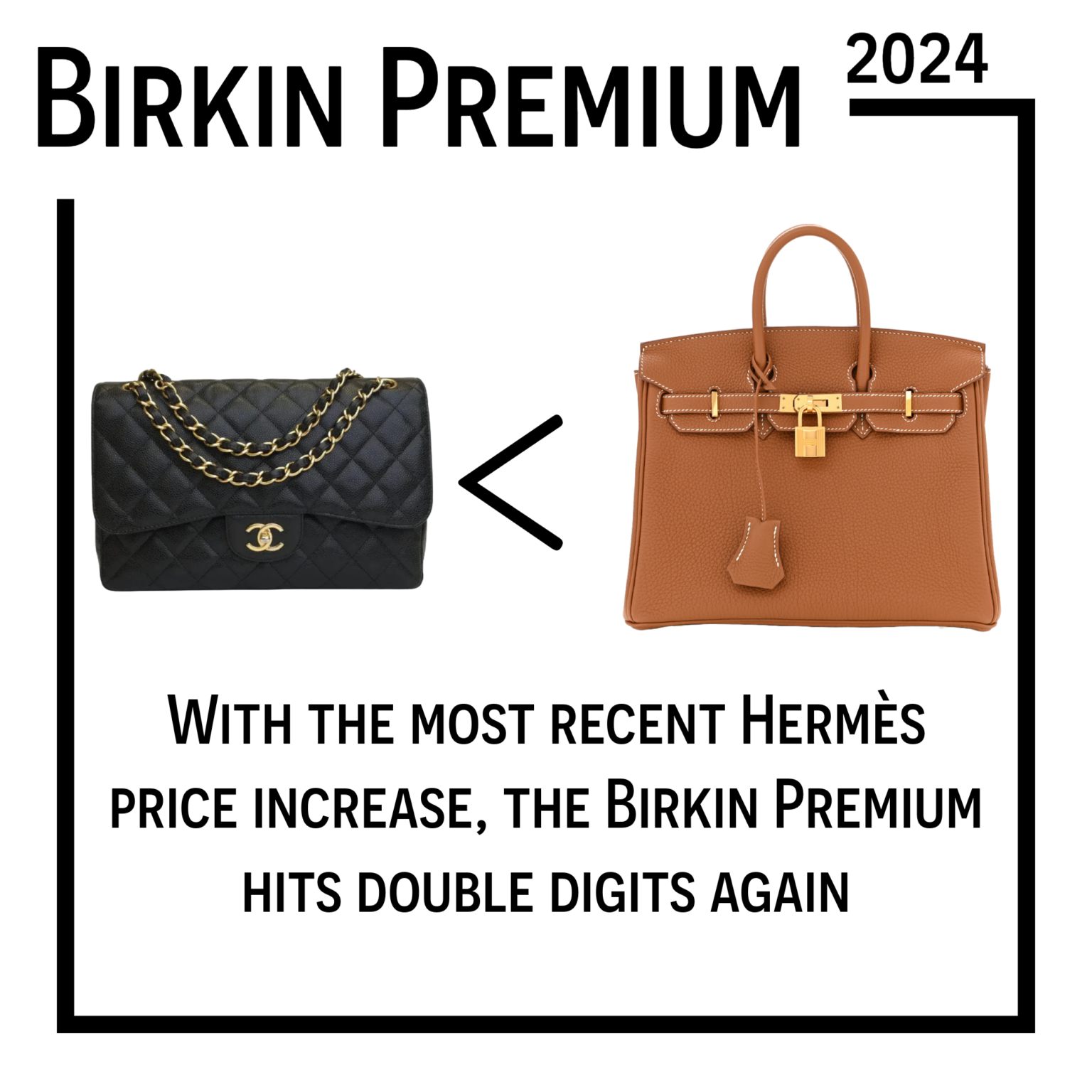
The era of the "investment bag" has hit a structural wall. For a decade, the narrative was simple: buy a Birkin, wait three years, and sell it for a 30% profit. It was a foolproof arbitrage play against Hermès’ controlled scarcity. But the data coming out of the early 2026 auction cycles tells a more nuanced, and for some, a more sobering story. While a prototype once owned by Jane Birkin herself recently shattered records at €8.6 million in Paris, the "working-class" Birkins—the standard Togo 25s and Epsom 30s that make up the bulk of the secondary market—are seeing their premiums compressed.
The primary culprit is not a lack of desire, but a relentless retail price hike that is finally catching up to the resale ceiling. In January 2026, Hermès implemented another round of aggressive price adjustments, pushing the retail cost of a Birkin 25 in Togo leather to $13,500 in the U.S. and €9,600 in Europe. These are not the 2% nudges of the 2010s. We are seeing 7% to 9% year-on-year increases. When the boutique price climbs this fast, the "gap" that resellers live in begins to shrink.
The Illusion of Outperformance
Many collectors look at the 138% value retention rate cited in recent 2025 luxury reports and assume they are making money. They aren't. That figure represents the percentage of retail value the bag maintains on the secondary market. While 138% sounds impressive compared to a Chanel Flap Bag struggling at 85%, it masks the friction of the exit.
Selling a Birkin isn't like selling a share of Nvidia. You face a gauntlet of costs that the "handbags beat gold" headlines conveniently ignore. Consignment houses typically take 15% to 25% of the final sale price. If you bought a Birkin 25 at the new 2026 retail price of $13,500 and sold it tomorrow for a "healthy" premium of $18,000, a 20% commission leaves you with $14,400. After taxes and the initial "pre-spend" required to build the relationship with a sales associate—often a 1:1 ratio of buying scarves, watches, and plates just to get the bag—your "investment" is deep in the red.
The market is bifurcating. We are seeing a "flight to quality" where only the top 1% of bags—Limited Editions, Petit H, or rare "Store Fresh" exotics—maintain the explosive growth investors crave. The middle market is cooling because the aspirational buyer, hit by three years of sustained inflation, has retreated.
The Psychology of the Quota Bag
Hermès has spent forty years mastering the "Veblen effect," where demand increases as the price rises. However, even Veblen goods have a breaking point. The 2026 price reset has forced a shift in collector psychology. The "investment" talk is being replaced by "preservation" talk.
High-profile auction houses are reporting a glut of inventory in the Birkin 35 and 40 sizes. These larger bags, once the gold standard of the 2000s, are now the "distressed assets" of the handbag world. As tastes have shifted toward the "mini" trend, the liquidity of larger leather goods has evaporated. At recent Sotheby’s events, Birkin 35s in common colors like Gold or Noir frequently struggle to meet their low estimates, sometimes clearing for less than their current retail replacement cost.
This is a warning sign. When the secondary market price falls below the current retail price plus tax, the "myth of the Birkin" loses its financial teeth. It becomes just a very expensive, very well-made leather bag.
The Rise of the Professional Authenticator
Another factor suppressing auction prices is the sheer sophistication of "super-fakes." In 2024 and 2025, several high-end resale platforms were rocked by scandals involving 1:1 replicas that bypassed traditional "stamping" and "stitching" checks. By 2026, the cost of absolute certainty has risen.
Serious collectors now demand third-party forensic authentication or blockchain-backed provenance. This adds another layer of friction to the sale. If a bag doesn't have a "full set"—the original receipt, rain cover, clochette, and box—its value at auction can plummet by 30% instantly. The secondary market is no longer a wild west for casual flippers; it is an institutionalized asset class that demands professional-grade maintenance.
The Geographic Arbitrage
The savvy money is currently moving toward geographic arbitrage. With the U.S. price for a Birkin 30 hitting $14,900 while the European price sits at €10,600, the spread is nearly $3,500. This price gap is driving a surge in "travel-to-buy" behavior, which further saturates the U.S. and Asian secondary markets with "fresh" European stock.
When supply increases in the secondary market because professional shoppers are flying to Paris to secure "tax-free" inventory, the local auction prices naturally soften. We are seeing a leveling of the global price floor. The "easy money" of buying in Europe and selling in Hong Kong or New York is being squeezed by Hermès' own internal efforts to harmonize prices across borders.
The Hard Truth for Collectors
If you are buying a Birkin in 2026 with the sole intent of "beating the S&P 500," you are likely a decade too late. The structural alpha has been traded away. The current market rewards the "connoisseur" rather than the "speculator."
The bags that are actually holding value are those with "intrinsic rarity"—colors like Rose Sakura or Vert Criquet in specific leathers like Chevre, which are produced in tiny quantities. The "commodity Birkin"—the black Togo bag—is becoming a victim of its own success. There are simply too many of them in circulation for them to behave like a rare collectible anymore.
Luxury is transitioning from a growth asset to a defensive one. A Birkin remains a better store of value than a car or a tech gadget, but the days of 40% instant premiums are over for everyone except the most elite Tier-1 clients. The "sinking" prices at auction aren't a sign of a crash; they are a sign of a market finally growing up and demanding real value over hype.
Would you like me to analyze the specific resale performance of exotic skins versus traditional leathers for the 2026 fiscal year?