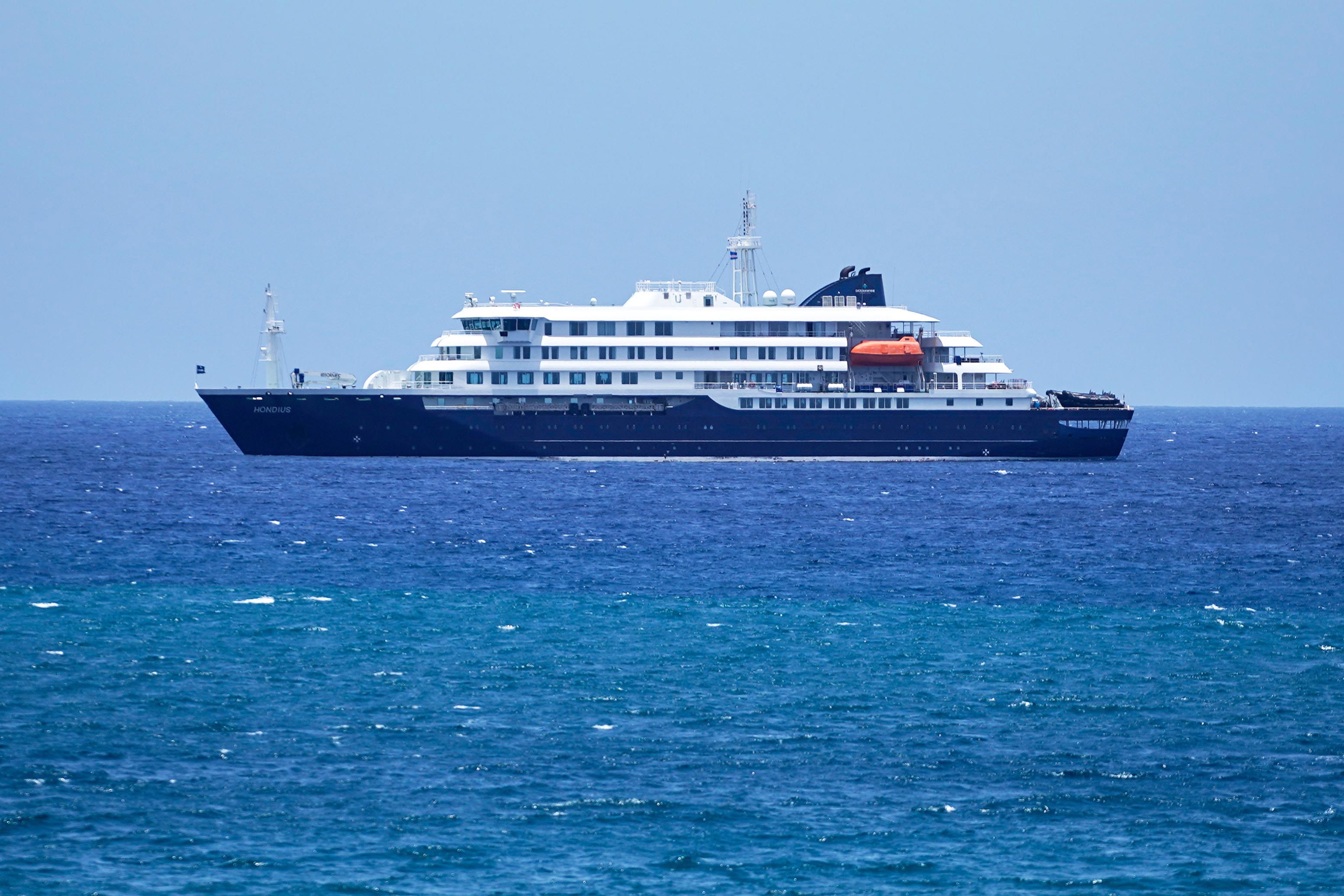
The arrival of the polar expedition vessel MV Hondius at the Port of Rotterdam marks the end of a harrowing maritime journey, but it opens a volatile new chapter in global biosecurity. Carrying only 25 crew members, two medical professionals, and the body of a deceased German passenger, the Dutch-flagged ship has docked at a specialized jetty to undergo intense decontamination. This follows the first-ever documented hantavirus outbreak on a cruise ship, an event that has left three passengers dead, infected at least 11 people, and forced international health agencies into a frantic multi-continental contact-tracing campaign.
The global health apparatus was caught completely unprepared for this specific pathogen to emerge in a marine environment. Learn more on a related issue: this related article.
Public health narratives have comfortably categorized hantaviruses as localized, rural threats. The conventional understanding dictates that humans contract Hantavirus Pulmonary Syndrome (HPS) by inhaling aerosolized particles of wild rodent excreta in enclosed spaces, such as abandoned cabins or barns. Human-to-human transmission is historically regarded as an extreme anomaly.
The MV Hondius crisis shattered that complacency. The outbreak involved the Andes virus (ANDV) strain, a specific variation native to South America. It is the only hantavirus strain scientifically proven to pass directly from person to person. More journalism by World Health Organization highlights related perspectives on the subject.
By allowing a highly lethal pathogen with a long, silent incubation window to board a modern cruise liner, the travel industry and global health authorities exposed a critical, structural vulnerability in how we screen, monitor, and contain mobile bio-risks.
The Unchecked Genesis of a Shipboard Crisis
The seeds of the outbreak were planted months before the vessel even cleared port. According to tracking data from the World Health Organization (WHO), the initial vector was a Dutch couple who spent over three months touring rural regions across Argentina, Chile, and Uruguay. Investigators believe the couple encountered infected long-tailed pygmy rice mice during an eco-tourism excursion, possibly while birdwatching near a regional landfill.
They boarded the vessel entirely asymptomatic.
Hantavirus possesses an agonizingly long incubation period, stretching anywhere from one to eight weeks. Because the virus does not present immediate symptoms, traditional pre-boarding health questionnaires and thermal scans are functionally useless. The index patient, an adult male, did not report a fever, headache, and mild diarrhea until April 6, days after the ship had departed.
What followed was a cascade of clinical missteps and logistical bottlenecks.
The ship’s medical team lacked the specialized diagnostic tools required to differentiate early-stage HPS from routine influenza or standard cruise-ship norovirus. On April 11, the index patient died on board. No microbiological tests were performed. His body, accompanied by his symptomatic wife, was dropped off at the remote British territory of Saint Helena on April 24.
Because the ship continued its itinerary, the Andes virus had nearly three weeks to quietly circulate among passengers in close quarters.
MV HONDIUS HANTAVIRUS TIMELINE (2026)
+----------+-----------------------------------------------------+
| Date     | Event                                               |
+----------+-----------------------------------------------------+
| April 1  | Passenger boards after 3 months in South America     |
| April 6  | Index patient develops initial symptoms             |
| April 11 | Index patient dies onboard; no diagnostic testing    |
| April 24 | Vessel reaches St. Helena; body/spouse disembarked  |
| April 27 | Second patient evacuated to ICU in South Africa    |
| May 2    | Third passenger dies; WHO notified of cluster        |
| May 10   | Ship reaches Tenerife; global repatriation begins  |
| May 18   | Ghost ship docks in Rotterdam for decontamination   |
+----------+-----------------------------------------------------+
By the time a second passenger developed severe pneumonia and was medically evacuated from Ascension Island to South Africa on April 27, the infection chain was entrenched. Lab technicians in South Africa finally confirmed hantavirus via polymerase chain reaction (PCR) testing on May 2. That same day, a German female passenger died on board.
The ship was no longer just a vacation liner. It was a floating incubator for a pathogen carrying a 38% fatality rate.
The Logistics of Containment and Repatriation
When the MV Hondius was finally ordered to halt its voyage and dock at Tenerife in Spain's Canary Islands on May 10, it triggered a repatriation nightmare. Over 140 passengers from nearly 30 countries disembarked into the hands of health workers clad in full-body bio-protective gear.
The passengers did not return to normal life. They were funneled directly onto chartered, non-commercial flights to face mandatory, multi-week quarantines in their home nations.
The logistical strain on receiving countries highlights the severe nature of the Andes strain:
- United States: Eighteen American passengers were diverted directly to high-containment biocontainment units, including the National Quarantine Unit in Nebraska and Emory University Hospital in Atlanta. One American passenger tested positive while abroad and remains in strict isolation.
- Canada: The Public Health Agency of Canada confirmed that a returning passenger tested positive while in isolation, proving that the transmission chain extended right up to the moments of disembarkation.
- The Netherlands: Dozens of passengers and crew are under active observation, while the remaining foreign crew members are currently confined to makeshift quarantine containers erected along the Rotterdam harbor.
While France’s Pasteur Institute successfully sequenced the viral genome from an infected French passenger and confirmed that the strain has not mutated to become inherently more transmissible, the sheer volume of international contact tracing required is staggering. Health agencies are currently tracking individuals across 20 countries who disembarked from the ship during its earlier regional stops, alongside airline passengers who shared flights with evacuated individuals.
The Flawed Illusion of Maritime Biosecurity
The cruise industry spent years upgrading its sanitation protocols following the devastating shutdowns of the early 2020s. Ships were outfitted with advanced air filtration, touchless sanitizing stations, and rigorous cleaning schedules. Yet, the MV Hondius incident reveals that these measures are fundamentally designed for common, short-incubation pathogens like norovirus or standard respiratory influenza. They are entirely inadequate for exotic zoonotic diseases.
The cruise line’s parent company, Oceanwide Expeditions, noted that it intends to proceed with its upcoming Arctic cruise schedule out of Iceland on May 29, assuming the Rotterdam decontamination is complete. This corporate optimism downplays the deeper operational vulnerabilities exposed by the outbreak.
Decontaminating a vessel hit by hantavirus is a painstaking, high-risk endeavor. Because dry sweeping or vacuuming would violently aerosolize any lingering viral particles from undetected rodent presence or human fluids, workers must wash every surface by hand using targeted liquid disinfectants.
Standard Bio-Defense vs. The Reality of Andes Hantavirus

[Standard Screening] ------------> Fails to catch long-incubation vectors
[Air Filtration]   ------------> Insufficient against close-proximity droplet spread
[Hand Sanitizer]    ------------> Does not mitigate inhaled aerosolized viral loads
Furthermore, the industry’s reliance on local shore-side infrastructure for medical emergencies failed spectacularly in the remote South Atlantic. The delay between the first death on April 11 and the formal identification of the virus on May 2 occurred because remote island territories lack the advanced molecular diagnostic infrastructure required to handle high-consequence pathogens.
Rethinking Eco-Tourism and Border Screening
The true systemic failure of the MV Hondius crisis lies at the intersection of international eco-tourism and border bio-surveillance. South American health officials in Argentina, Chile, and Uruguay are currently engaged in diplomatic finger-pointing, trying to deflect blame regarding where the initial exposure occurred. This political maneuvering obscures a broader, structural reality.
As high-end eco-tourism pushes affluent, older travelers further into pristine, deep-wilderness environments, the likelihood of human intersection with obscure sylvatic disease reservoirs increases exponentially.
Travelers spend weeks hiking through dense brush or birdwatching near rural landfills, accumulate exposure to specialized pathogens, and then step directly into the high-density, recirculated environments of modern cruise ships or commercial aircraft.
Global border screening protocols remain stubbornly reactive. They are calibrated to flag individuals displaying active symptoms or those arriving from well-publicized pandemic hot zones.
If a passenger has spent months in a region known for endemic Andes virus, a self-reported health card is an unacceptable line of defense. The industry requires mandatory, rapid molecular screening for high-risk itineraries, alongside a radical overhaul of shipboard medical capabilities, including mandatory onboard PCR panels for atypical respiratory illnesses.
The white isolation containers lined up against the windmills of Rotterdam are a stark warning. If the cruise industry and international maritime authorities treat the MV Hondius as an isolated stroke of bad luck rather than a failure of systemic bio-surveillance, the next exotic pathogen to board a cruise ship will not wait until it reaches port to reveal its presence.