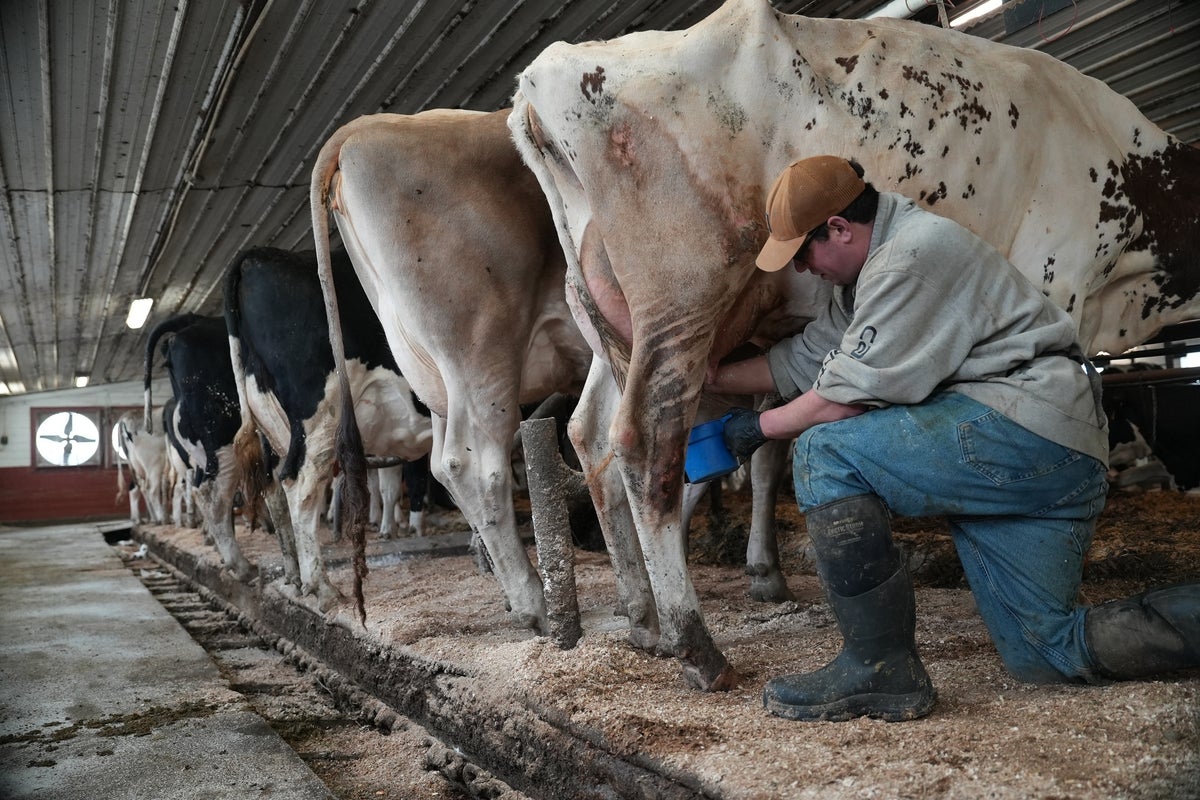
The current surge in raw milk consumption represents a direct collision between decentralized consumer autonomy and centralized biological risk management. While proponents frame the movement as a return to nutritional purity, a structural analysis of the dairy supply chain reveals a fundamental breakdown in the "Safety-Utility Tradeoff." The expansion of unpasteurized dairy markets is not merely a lifestyle shift; it is a stress test for public health infrastructure that operates on a probabilistic model of containment.
The Triple Risk Framework of Unpasteurized Dairy
To quantify the risk profile of raw milk, one must move beyond the binary of "safe" versus "dangerous" and examine the three specific vectors that determine the probability of a localized outbreak becoming a systemic crisis.
1. The Pathogen Load Variance
Raw milk lacks the "thermal kill step" (pasteurization), which serves as a standardized filter for biological hazards. Without this intervention, the safety of the product depends entirely on the hygiene of the source farm—a variable that lacks industrial consistency. The primary threats include:
- Campylobacter: The most frequent cause of raw milk-related illness, often resulting in severe gastrointestinal distress.
- Salmonella and E. coli O157:H7: High-virulence pathogens that can lead to hemolytic uremic syndrome (HUS), particularly in pediatric populations.
- Listeria monocytogenes: A resilient pathogen that thrives in cold, damp environments, posing a high mortality risk for pregnant women and immunocompromised individuals.
2. The Asymmetric Information Gap
Consumers often lack the technical tools to verify the microbial status of their milk at the point of purchase. Standard sensory cues—smell, taste, and color—are ineffective for detecting microscopic pathogens. This creates a market where the producer holds all the technical data while the consumer absorbs the entirety of the biological risk. The "Raw Milk Paradox" exists because the very transparency consumers seek (direct-from-farm) often masks a lack of rigorous, frequent laboratory testing that larger, regulated processors are mandated to perform.
3. The Multiplier Effect of H5N1
The introduction of Highly Pathogenic Avian Influenza (HPAI) H5N1 into the bovine population has fundamentally shifted the risk calculus. Unlike traditional bacterial contaminants, H5N1 in cattle presents a novel zoonotic threat. High viral loads have been detected in the milk of infected cows. While pasteurization effectively inactivates the virus, raw milk serves as a direct conduit for human exposure to a virus with pandemic potential. Every unpasteurized consumption event becomes a high-stakes biological experiment in viral adaptation.
Structural Deficiencies in the Nutritional Superiority Thesis
The demand for raw milk is driven by the perceived "loss of vitality" in processed dairy. However, when subjected to molecular analysis, the nutritional delta between raw and pasteurized milk is statistically marginal compared to the risk delta.
The Enzyme Inactivation Myth
A common argument posits that pasteurization "kills" essential enzymes like lactase that aid digestion. Biologically, this is inaccurate. Bovine milk does not contain lactase; it contains lactose. Humans who are lactose intolerant lack the endogenous enzyme in their own small intestine. While milk contains some indigenous enzymes (e.g., alkaline phosphatase), these are largely broken down by human gastric acid during digestion, rendering their survival through the pasteurization process irrelevant to human systemic health.
Immunological Claims vs. Clinical Evidence
Proponents cite the "Alpine Study" and similar epidemiological observations suggesting that children raised on farms have lower rates of asthma and allergies. While the correlation exists, it is widely attributed to the "Hygiene Hypothesis"—exposure to a diverse array of environmental microbes found in a farm setting (barn dust, animal dander, soil)—rather than the ingestion of pathogens in raw milk specifically. Conflating environmental exposure with oral ingestion of unpasteurized liquids is a category error in immunology.
The Regulatory Fragmentation Bottleneck
The legality of raw milk in the United States is a patchwork of state-level mandates, creating a fractured regulatory environment that complicates outbreak tracing.
- Retail Sale States: California and several others allow raw milk on grocery shelves, treating it as a high-risk consumer good with mandatory warning labels.
- Farm-Gate Only: States like Texas restrict sales to the point of production, theoretically limiting the "cold chain" distance and the number of potential exposures.
- Herd-Share Agreements: In states where sales are illegal, consumers "buy" a share of a cow, technically consuming milk from an animal they "own." This legal loophole bypasses health inspections, creating a regulatory "dark zone" where neither the producer nor the consumer is protected by state safety standards.
The second-order effect of this fragmentation is the delay in epidemiological response. When an outbreak occurs, cross-border commerce (often illegal) makes it difficult for the CDC to pinpoint the source before the pathogen spreads through secondary and tertiary contacts.
The Economic Cost of the "Right to Risk"
The liberalization of raw milk sales introduces significant externalities that the market currently fails to price. An individual's choice to consume raw milk is not a localized event; it is a public expenditure.
The Healthcare Subsidy
When a raw milk consumer develops HUS or chronic Guillain-Barré syndrome (linked to Campylobacter), the resulting long-term medical costs are often subsidized by private insurance pools or public programs like Medicaid. The price of a gallon of raw milk does not include the "actuarial premium" required to cover these catastrophic outcomes.
The Reputational Risk to the Dairy Industry
The broader dairy industry relies on a "safety halo." A single high-profile death linked to raw milk can depress consumer confidence across the entire dairy category, affecting sales of pasteurized milk, cheese, and yogurt. This creates an economic friction where a small, vocal minority of producers can jeopardize the stability of a multibillion-dollar commodity market.
Regulatory Enforcement Costs
As the raw milk market expands, state health departments must redirect resources from routine inspections to emergency outbreak investigations. The labor-intensive nature of tracing a cluster of Salmonella cases back to an unregulated herd-share operation represents a significant drain on public funds that could otherwise be used for preventative health measures.
The Mechanism of Bacterial Proliferation in the Cold Chain
Raw milk is a highly efficient growth medium. Even if a sample is "clean" at the moment of milking, the absence of a thermal kill step means that any subsequent contamination—from a dirty container, a sneeze, or a slight rise in temperature during transport—will result in exponential bacterial growth.
$$N_t = N_0 \cdot 2^{t/d}$$
In this equation, $N_t$ is the final number of bacteria, $N_0$ is the initial count, $t$ is the time elapsed, and $d$ is the doubling time. In raw milk kept at suboptimal temperatures, the doubling time for pathogens like Listeria can be as short as a few hours. Without the safety buffer provided by pasteurization, the window for safe consumption is drastically compressed.
Strategy for Mitigating Systemic Risk
The current trajectory of raw milk expansion requires a shift from total prohibition—which has failed and driven the market underground—to a "Harm Reduction" model rooted in data and liability.
Implementing Quantitative Microbial Risk Assessment (QMRA)
States that permit raw milk sales should mandate a QMRA framework for producers. This involves:
- Mandatory Weekly Pathogen Testing: Shifting from simple somatic cell counts to specific DNA-based testing for the "Big Four" pathogens.
- Standardized Cold-Chain Telemetry: Requiring producers to use IoT sensors that log the temperature of the milk from milking to point-of-sale, with the data accessible to consumers via QR code.
- Tiered Licensing: Producers who meet higher safety benchmarks (e.g., closed-herd systems, automated milking) receive lower insurance premiums and expanded distribution rights.
Realigning Liability
The most effective way to regulate the market without government overreach is through the legal system. Explicitly clarifying that raw milk producers are strictly liable for any illness caused by their product—regardless of whether they followed "best practices"—would force the market to price risk accurately. This would naturally lead to higher prices for raw milk, reflecting its status as a luxury, high-risk artisanal product rather than a daily staple.
The expansion of raw milk is a symptom of a larger skepticism toward industrial food systems. However, skepticism is not a substitute for microbiology. The data indicates that while the individual probability of illness may seem low to the average consumer, the aggregate risk to the public health system is increasing. The strategy moving forward must prioritize the hardening of the raw milk supply chain through technological verification and clear legal accountability, rather than relying on the hope that nature will provide a clean product without human intervention.