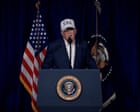
Bill Clinton says he "saw nothing." He says he "did nothing wrong."
After a six-hour closed-door deposition on February 27, 2026, the former president emerged with a defense that felt like a replay of his 1990s legal battles. He wasn't just defending his actions; he was defending his memory. But for those of us watching the House Oversight Committee’s investigation into the Jeffrey Epstein saga, the "I didn't know" defense is starting to wear thin.
Clinton’s testimony, conducted in his hometown of Chappaqua, New York, marked a historic first. Never before has a former U.S. president been compelled by subpoena to testify before Congress. He didn't have a choice—not after the committee threatened him with a contempt vote.
The I saw nothing defense
Clinton’s opening statement was a masterclass in distancing. He didn't just deny knowing about Epstein's crimes; he claimed he would have been the one leading the charge to put Epstein in jail if he'd had even an "inkling" of what was happening. He even invoked his own childhood in a home with domestic abuse to drive the point home.
"I saw nothing, and I did nothing wrong," Clinton said. It’s a bold line.
But here’s the problem. We’ve seen the photos. We’ve seen the flight logs. We know Epstein visited the White House at least 17 times during the Clinton administration. We know Clinton flew on Epstein’s private jet—the so-called "Lolita Express"—at least 27 times.
When you spend that much time in someone’s orbit, the "I saw nothing" defense starts to sound more like "I chose not to look."
The hot tub photo and the memory gap
During the deposition, Republican lawmakers reportedly grilled Clinton about a specific, recently unsealed photo showing him in a bubbling hot tub with a woman whose face was redacted. Clinton’s response? He didn't know who she was.
He also claimed he couldn't remember when he first met Ghislaine Maxwell. He said he didn't recall any specific interactions with Epstein while in the White House, despite those 17 visits.
It’s the classic "I do not recall" strategy. Under oath, "I don't remember" is a much safer harbor than a flat "no" that could later be proven false. Clinton told the committee he was bound by his oath "not to speculate or guess." Basically, if it happened 20 years ago and there isn't a clear record of it, it might as well have never happened in his mind.
Why this testimony matters right now
This isn't just about reliving the scandals of the early 2000s. The House Oversight Committee, led by Chairman James Comer, is digging into how Epstein used his connections to powerful people to avoid justice for so long. They’re looking at:
- The mismanagement of federal investigations into Epstein and Maxwell.
- How Epstein used his wealth to buy influence and protection.
- Potential ethics violations by elected officials.
Clinton isn't the only one in the crosshairs. His wife, Hillary Clinton, testified the day before. She reportedly punted many of the more difficult questions to her husband. Meanwhile, Democrats on the committee are calling for Donald Trump to be subpoenaed next. Trump’s name also appears in those unsealed Epstein files, and the partisan finger-pointing is reaching a fever pitch.
The precedent of a former president under subpoena
The fact that Clinton was forced to sit for this deposition is a huge deal. It sets a precedent that being a former president doesn't make you untouchable when Congress comes calling.
Republican Rep. Nancy Mace noted that Clinton was surprisingly cooperative, even when his own lawyers were trying to get him to stop talking. That might be because he knows the optics of refusing to cooperate are worse than the optics of a few more uncomfortable questions about a 20-year-old vacation.
What we still don't know
The transcripts and videos of these depositions are supposed to be made public soon. That’s when we’ll see if the "I saw nothing" defense holds up under intense, six-hour questioning.
We’re still waiting on more documents from the Justice Department. There are millions of pages out there, and every new batch seems to include a fresh photo or a new mention of a high-profile name.
If you're following this, don't expect a "smoking gun" to appear in a single afternoon. This is a slow burn. The real story isn't just about whether Clinton saw something in 2003; it's about how the entire system—the FBI, the DOJ, and the political elite—allowed a predator like Epstein to operate in plain sight for decades.
Keep an eye on the House Oversight Committee's website for the release of the full transcripts. That's where the real details are buried. If you want the truth, you have to look past the carefully crafted opening statements and see what happens when the cameras are off and the lawyers are nervous.