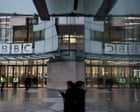
The British Broadcasting Corporation is begging for a set of golden handcuffs. In its latest push for a "permanent charter" and an end to political board appointments, the BBC is framing its plea as a crusade for editorial independence. It is a brilliant PR move, but it is fundamentally dishonest. By seeking to cement its existence into the bedrock of British law, the BBC isn't trying to save journalism; it is trying to escape the accountability of the market and the voters alike.
A permanent charter is not a shield for the truth. It is a tombstone for innovation.
The "lazy consensus" among the London media elite is that the 10-year Charter review cycle is a "politicized distraction" that threatens the BBC’s long-term planning. The reality is far more biting. That 10-year cycle is the only thing keeping the institution from sliding into a state of total, unearned complacency. Without the threat of structural change, the BBC becomes a self-perpetuating bureaucracy that answers to no one—a media Vatican with a mandatory tithe.
The Board Appointment Red Herring
The BBC’s demand to end political appointments to its board sounds noble on paper. Who wouldn't want a board of "independent experts" instead of "government cronies"? But ask yourself: who defines an expert?
In the absence of political appointments—which, for all their flaws, are at least tied to a democratically elected government—you get a self-selecting oligarchy. When an institution appoints its own overseers, it doesn't become independent; it becomes an echo chamber. I have watched legacy media organizations "internalize" their governance before, and the result is always the same: a narrowing of perspective and an allergic reaction to any idea that didn't originate in a specific post-code in North London.
If the government stops appointing board members, the "Great and the Good" will simply appoint their friends. It replaces public accountability with a private club. At least with political appointments, the public knows exactly who to blame when things go sideways. "Independent" boards are a mask for unaccountable power.
The Permanence Trap
The request for a permanent charter is an admission of fear. The BBC knows that in a world of Netflix, YouTube, and decentralized content creators, a flat tax on every household with a screen is an 18th-century solution to a 21st-century reality.
By locking in its status permanently, the BBC seeks to bypass the one question it can no longer answer: Why does it deserve to exist in its current form?
Modern media is defined by agility. Look at the shift from cable to streaming, or from long-form broadcast to the fragmented, algorithm-driven feeds of today. A permanent charter is a static response to a fluid environment. It would grant the BBC the right to be irrelevant on the public's dime forever.
Imagine a scenario where a tech company in 2005 secured a "permanent charter" from the government to be the sole provider of digital social interaction. We would be stuck with a government-subsidized MySpace, funded by a mandatory fee, while the rest of the world moved on to tools that actually serve their needs. Permanence is the enemy of excellence.
The License Fee Is a Regressive Relic
The BBC argues that a permanent charter would provide financial "certainty." Of course it would. It’s the certainty of a protected monopoly.
We need to stop pretending the license fee is a "public service contribution." It is a regressive tax that hits the poorest households the hardest. In any other sector, a flat fee for a service you might not use would be called a scam. In the context of the BBC, it’s called "civilized."
If the BBC were truly confident in its "world-class" content, it would stop hiding behind the legal requirement for people to pay for it. A permanent charter would effectively end the debate over the license fee, stripping the public of their only leverage: the right to demand a better deal every ten years.
The Myth of the "Market Failure"
The standard defense for the BBC’s funding model is the "market failure" argument—the idea that without the BBC, high-quality news, arts, and educational programming would vanish. This is a nostalgic fantasy.
- News: We are drowning in news. The problem isn't a lack of supply; it's a lack of trust. A state-guaranteed media giant doesn't solve the trust gap; it widens it by appearing as the voice of the establishment.
- Arts: Niche streaming services and platforms like Patreon have proven that the "long tail" of culture can be funded by those who value it, without forcing a pensioner in Newcastle to subsidize an opera review she’ll never watch.
- Innovation: The BBC’s scale actually crowds out private investment. Why start a British news tech startup when you have to compete with a taxpayer-funded behemoth that gets $5 billion a year regardless of performance?
The True Cost of "Independence"
The BBC wants the benefits of a state department (guaranteed funding, legal protection) with the freedom of a private corporation (no government interference). You cannot have both.
If you want to be truly independent, you must be financially independent. That means an end to the license fee and a move toward a subscription model or a focused, limited-scope public grant.
The current proposal is a "heads I win, tails you lose" setup. The BBC gets a permanent, unchallengeable stream of income, and the public loses the ability to reform the institution through their elected representatives. It is a massive transfer of power from the citizen to the broadcaster.
Stop Trying to Save the 1920s
The BBC’s leadership is obsessed with preserving a 1922 model in a 2026 world. They talk about "universalism" as if it’s a virtue, but in a fragmented culture, universalism is just another word for "blandness." By trying to be everything to everyone, the BBC has become increasingly disconnected from the very people it claims to serve.
The push for a permanent charter isn't about protecting the BBC from "political interference." It’s about protecting the BBC from the future.
The British public is being told that a permanent charter is the only way to save the BBC. In reality, it is the one thing guaranteed to kill it. An institution that does not have to fight for its right to exist will eventually lose the reason for its existence.
Stop asking for a permanent charter. Start asking why the BBC is still terrified of the people who pay for it.
If the BBC wants to survive, it needs to stop acting like a protected government department and start acting like a media company that earns its keep. A permanent charter isn't a lifeline; it's the final nail in the coffin of British media competition.
Burn the charter. Open the gates. Let the BBC compete.
If it’s as good as they say it is, they have nothing to fear. The fact that they are so desperate for a permanent legal shield tells you everything you need to know about their actual confidence in the product.
Give the BBC the independence it claims to want: the independence to succeed or fail on its own merits, without a mandatory tax and a government-guaranteed monopoly on the British living room.
That is the only way to save British broadcasting. Anything else is just a managed decline behind a very expensive, permanent velvet curtain.