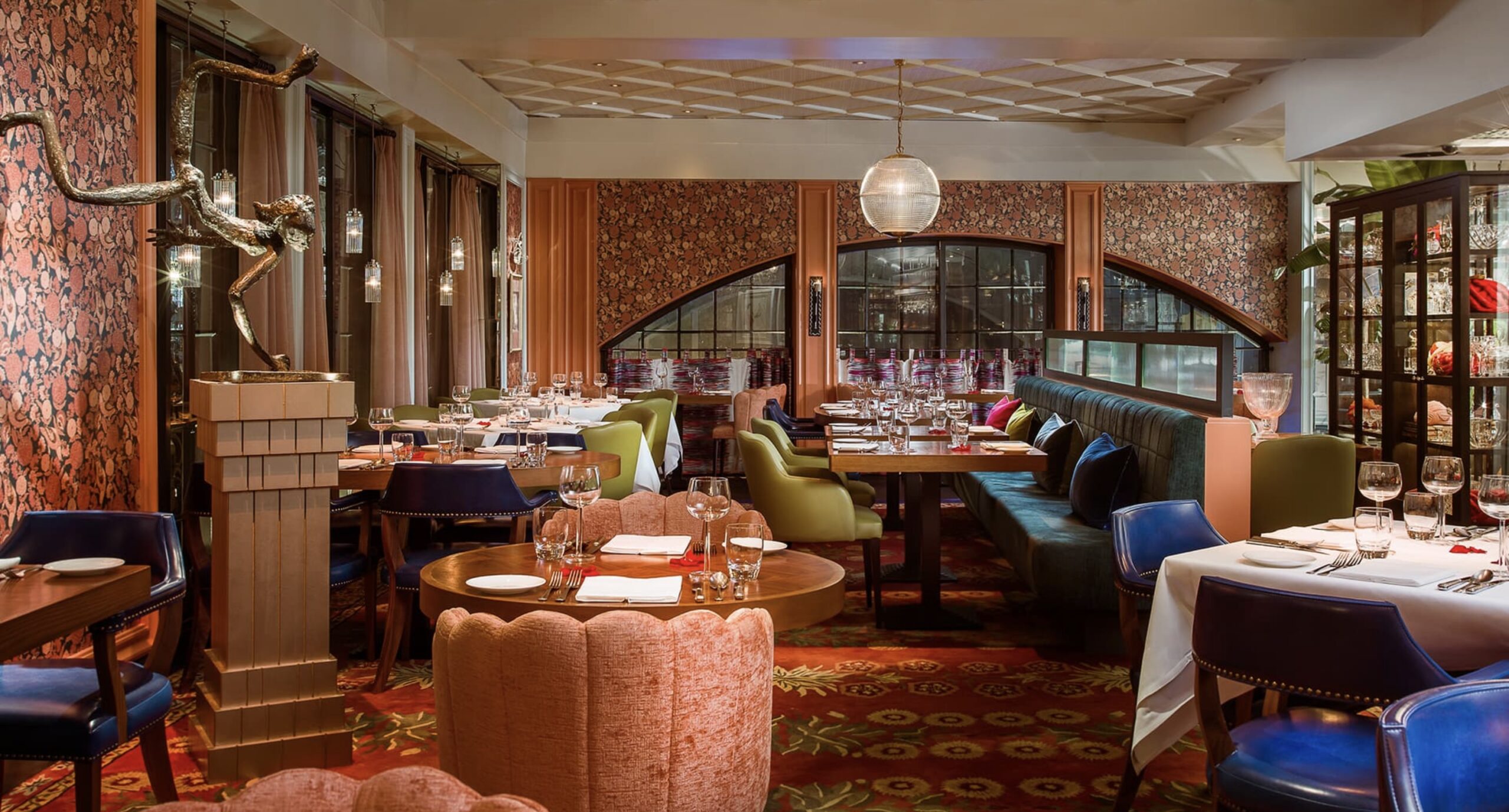
The survival of Veeraswamy isn't just a matter of keeping a restaurant open. It's about protecting a piece of British history that has stood on Regent Street since 1926. When news broke that the UK's oldest Indian dining institution faced potential closure, the reaction wasn't just disappointment. It was a full-blown cultural emergency. Now, a petition has reached King Charles III, and the stakes couldn't be higher for the London landmark that literally introduced the British public to authentic Indian flavors.
We aren't talking about a trendy pop-up or a flash-in-the-pan Michelin star winner that’ll be forgotten in five years. Veeraswamy is the bedrock. It survived the Blitz. It survived decades of economic shifts and changing tastes. If this place shutters, it signals a terrifying trend for the West End.
Why King Charles is the Last Hope for Veeraswamy
The move to petition the King might seem dramatic to some, but it’s a calculated play based on deep historical ties. Veeraswamy has always been the playground of royalty. Its founder, Edward Palmer, was the great-grandson of an English general and an Indian princess. From the day it opened, it was designed to be a bridge between two worlds.
The current crisis stems from a mix of skyrocketing commercial rents and the brutal post-pandemic economic environment that has hollowed out many independent legacy businesses in Central London. When your neighbors are global flagship stores with bottomless marketing budgets, staying true to a 100-year-old mission becomes an uphill battle. The petition asks the Crown Estate, which owns a massive chunk of Regent Street, to recognize the restaurant's status as a "living museum" rather than just another commercial tenant.
It’s about heritage status. In many European cities, businesses this old receive protections that prevent them from being priced out. London has been slow to adopt similar "legacy business" designations, and that’s a mistake we’re seeing play out in real-time.
The Secret History of the Regent Street Icon
Most people think Indian food in Britain started with the curry houses of the 1970s. They’re wrong. Veeraswamy was serving high-end regional Indian cuisine when most of London was still obsessed with boiled mutton.
Edward Palmer didn't just want to feed people. He wanted to educate them. He brought over chefs from India at a time when that was a logistical nightmare. He insisted on copper pots and specific spices that were nearly impossible to source in the UK at the time. By the time the legendary Sir William Steward took over in the 1930s, it had become the place to be seen.
Prince Axel of Denmark was such a regular that he famously sent a barrel of Carlsberg to the restaurant every year. That’s why you’ll still find it on the menu today. It's those little quirks—the stories baked into the walls—that you lose when a place like this goes under. You can’t recreate a century of anecdotes with a clever interior designer and a PR firm.
A Crisis of Identity in London’s West End
The threat to Veeraswamy isn't happening in a vacuum. It's part of a broader, more cynical transformation of London's iconic districts. We’re seeing a "blandification" where unique, historic venues are replaced by homogenized luxury brands.
If you walk down Regent Street today, you’ll see the same shops you find in Dubai, New York, or Paris. Veeraswamy is one of the few things left that makes the street feel like London. The argument being made to the King is simple: if the Crown Estate prioritizes maximum rent over cultural value, the city loses its identity.
- Rent Hikes: Central London commercial leases have hit breaking point for many hospitality venues.
- Staffing Shocks: Post-Brexit visa rules have made it harder for high-end Indian restaurants to bring in specialized talent.
- Utility Costs: Running a kitchen of this scale with traditional methods is becoming prohibitively expensive.
This isn't just about one business failing to adapt. It’s about the system making it impossible for legacy to survive. Honestly, it’s a miracle they’ve held on this long without formal protection.
What Happens if the Petition Fails
If the petition doesn't move the needle, we’re looking at more than just a locked door on Regent Street. We’re looking at the end of an era for British-Indian relations. Veeraswamy earned its Michelin star in 2016, proving it wasn't just resting on its laurels. It’s still producing world-class food.
The loss would be a blow to the culinary education of the city. This is the place that taught London that Indian food wasn't just a "late-night curry" after the pub. It showed that it was royal, complex, and worthy of the finest white tablecloths.
Losing it would likely trigger a domino effect. If a landmark with this much history and royal backing can’t survive, what hope does the local family-run spot have? The petition isn't just a plea for a restaurant; it’s a protest against the idea that everything has a price tag and nothing has a value beyond its square footage.
How to Support Local Heritage Right Now
Don’t just sign a petition and think the job is done. The best way to save a landmark is to give them your business. If you’re in London, go. Experience the Raj-era opulence and the Duck Vindaloo while you still can.
Write to the Crown Estate. Let them know that you value the cultural diversity of Regent Street over another generic retail outlet. Public pressure works, especially when it’s directed at entities that care about their public image.
Support the "Legacy Business" movement. Other cities like San Francisco and Barcelona have formal registries that provide grants and rent caps for businesses over 50 years old. It’s time London caught up. We need to demand that the government creates a protected status for venues that have shaped the city’s culture for over a century. History is easy to destroy but impossible to replace.