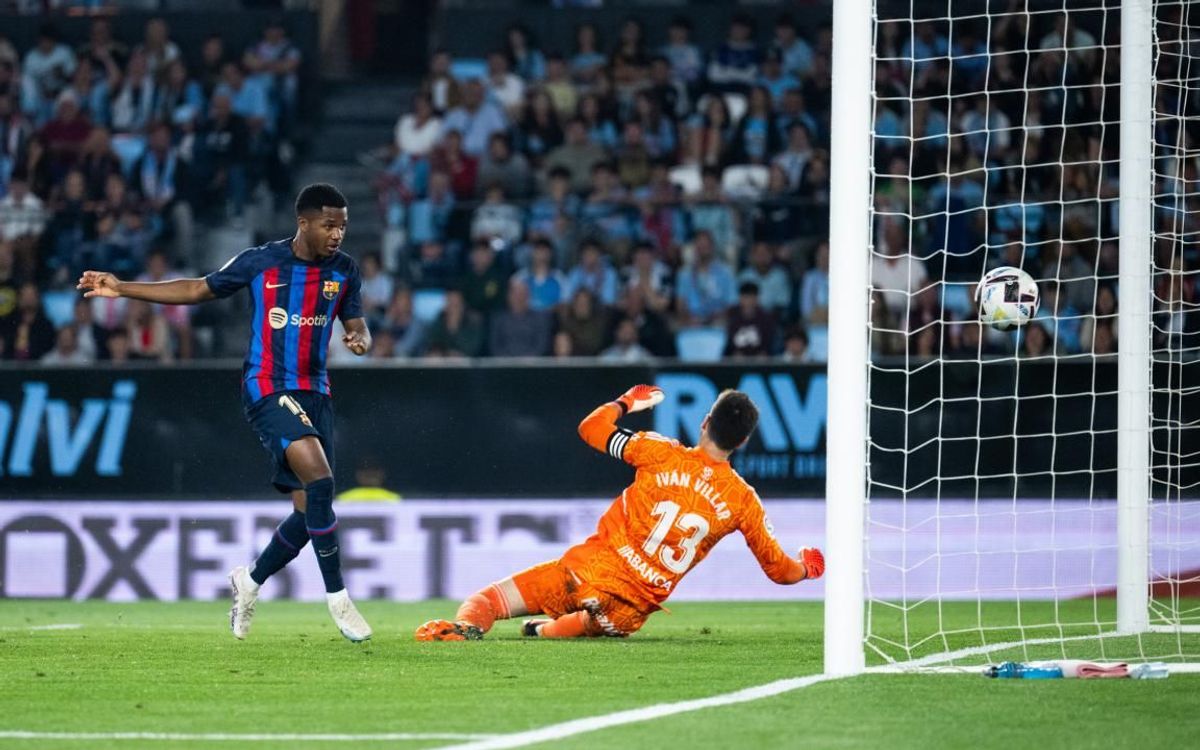
The press is currently busy printing the coronation invitations. They see a 4-0 drubbing of Getafe and a climb to second place as the definitive signal that Barcelona is back. They are wrong. Winning a match in February against a side that essentially invited Barcelona to run into open space isn't a resurgence. It’s a mirage.
If you think this victory puts Barcelona on the brink of defending a title, you aren't watching the matches. You’re watching the scoreboard. There is a massive difference between a team finding its rhythm and a team benefiting from a tactical suicide pact by the opposition.
The Getafe Fallacy
José Bordalás is many things, but a defensive strategist against elite transitions isn't one of them. Getafe played a high line that was practically an open invitation for Raphinha and João Félix to sprint into forty yards of grass. This wasn't a masterclass in breaking down a low block—the very thing that has suffocated Barcelona all season. This was a gift.
In football, we often mistake "comfortable wins" for "improved performance." I’ve spent two decades analyzing tactical structures, and I can tell you that beating a team that refuses to track runners isn't a sign of a title-winning DNA. It’s a statistical anomaly. Real Madrid and Girona aren't going to hand over the keys to the city by playing a suicidal high line in the final third.
The Midfield Structural Void
Look past the four goals. Look at the space between Andreas Christensen and the rest of the midfield. The experiment of pushing a center-back into the pivot role works against Getafe because Getafe didn't press the middle of the pitch. They pressed the wings and left the center wide open.
Against a disciplined Champions League side or a top-three La Liga rival, that gap is a highway. Barcelona’s defensive transition remains a mess. They are still conceding chances at a rate that would make a mid-table side blush. The only reason it didn't matter this weekend is because Getafe’s attackers couldn't finish their lunch.
The Financial Delusion of Stability
Everyone talks about the "momentum" this creates. In the modern game, momentum is a myth created by broadcasters to keep people from changing the channel. What actually exists is squad depth and physical sustainability. Barcelona has neither.
The club is currently operating on a knife-edge. Relying on teenagers like Lamine Yamal and Pau Cubarsí to carry the weight of a historic institution isn't "visionary." It’s desperate. I have seen clubs burn out their brightest sparks by asking them to play 50 games a season before their bones have fully fused. If the "title charge" depends on 17-year-olds never having a bad day, the charge is already over.
Why the Pursuit of the Title is Actually Counterproductive
Here is the take that will get me banned from the Camp Nou: Barcelona should stop caring about the title this season.
The obsession with "defending the crown" is forcing Xavi—or whoever is pulling the strings this week—to prioritize short-term results over long-term structural repair. By chasing a title they are statistically unlikely to win (unless Real Madrid suffers a collective nervous breakdown), they are ignoring the fundamental flaws in their pressing triggers and their reliance on individual brilliance over a cohesive system.
Imagine a scenario where Barcelona actually wins their next five games. What happens? The board decides the "project" is fine. They ignore the fact that the team can't control a tempo to save their lives. They ignore that Robert Lewandowski is a year older and a step slower. They double down on a flawed philosophy because the results papered over the cracks.
The Metrics Don't Lie
Let’s talk numbers, but not the ones the mainstream media uses.
- PPDA (Passes Per Defensive Action): Barcelona’s intensity has dropped significantly compared to their title-winning season. They aren't winning the ball back high; they are waiting for the opponent to make a mistake.
- Expected Goals Against (xGA): Ter Stegen is being forced into "miracle" saves at a higher frequency per 90 minutes than any Barcelona keeper in the last decade.
- Field Tilt: They are losing the battle for territory against teams that aren't even in the top half of the table.
The Xavi Paradox
The manager announced his departure to "remove the pressure." The media claims it worked. It didn't. The players are playing with more freedom because they know the consequences for failure have been shifted onto a man who is already leaving. That’s not a tactical shift; that’s a psychological relief valve. It has a shelf life of about three weeks.
When the pressure returns in the Champions League or in the final six games of the domestic season, that "freedom" will turn back into the same anxiety that has plagued this squad since they realized Messi wasn't coming back.
The Real Cost of "Fighting to the End"
If Barcelona finishes second, it’s a success in the eyes of the financiers. But in terms of footballing identity, it’s a stagnation. They are currently a team of moments, not a team of movements. They are the footballing equivalent of a blockbuster movie with a terrible script: high production value, great actors, but no soul.
Stop asking if Barcelona can catch Real Madrid. Start asking if Barcelona can survive a match where the opponent actually stays organized. Until they prove they can win without forty yards of gifted space, this victory against Getafe is nothing more than a statistical outlier in a season of decline.
The title isn't coming back to Catalonia this year. And frankly, for the long-term health of the club, it shouldn't. Success right now would be the worst thing that could happen to a club that needs to admit it’s broken before it can truly be fixed.
The table says they are second. The reality says they are miles away.
Check the tape. Stop reading the headlines.