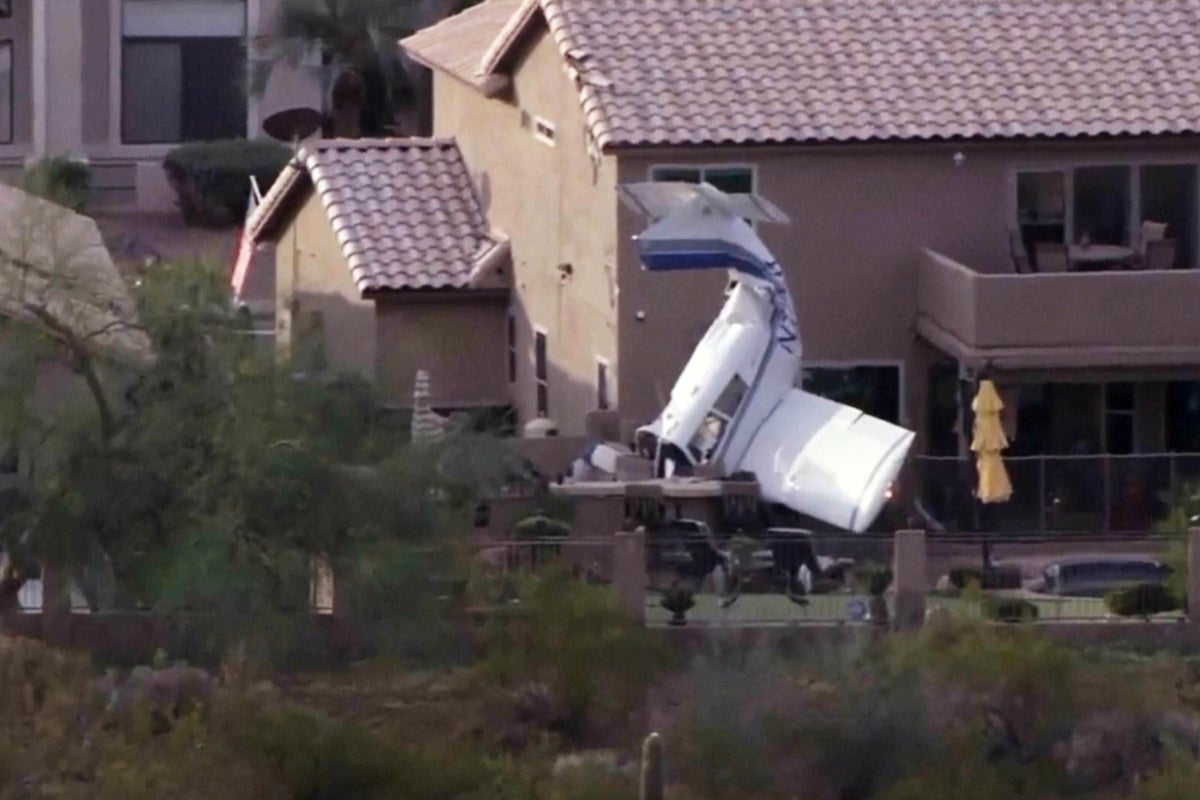
The headlines regarding the Phoenix plane crash are predictable. Reporters focus on the backyard, the proximity to a residential fence, and the immediate shock of the neighbors. They treat the event as an anomaly—a freak occurrence of bad luck. They are wrong.
I have spent years navigating the regulatory labyrinth of general aviation and municipal zoning. When a light aircraft goes down in a suburban area, the media screams about safety standards. They ignore the uncomfortable, mechanical reality: our suburbs are designed to be crash zones for the thousands of small planes crisscrossing the skies daily.
The Myth of Residential Exclusivity
We treat our homes like fortresses of privacy. We cultivate gardens and build walls, believing we are isolated from the dangers of the sky. This is a delusion born of suburban planning that assumes the ground is a fixed asset and the air above it is effectively dead space.
It is not.
Modern residential sprawl has aggressively pushed into the flight paths of small airports that were once surrounded by open desert or farmland. When you move into a subdivision five miles from a regional airport, you are buying a house on a runway’s extended center line. You are living in a statistical kill zone. Yet, we act surprised when physics dictates that a mechanical failure results in a gravity-fed impact with a pool deck.
The Mechanical Reality of General Aviation
Let us be precise. A small aircraft, such as the one involved in the recent Phoenix incident, is not a commercial jetliner. It does not have the glide ratio of a Boeing 737. When an engine fails, you have seconds, not minutes, to react.
Most pilots are trained to look for "suitable" landing spots. In a dense residential area, there are no suitable spots. There are only choices between bad and catastrophic. If a pilot aims for a street, they risk power lines and vehicles. If they aim for a yard, they risk lives.
The aviation industry loves to talk about "training" and "maintenance." They want you to believe that if every pilot followed the checklist perfectly, these crashes would disappear. That is a dangerous fairy tale. Airframes break. Engines seize. Fuel lines corrode. Even with the most meticulous maintenance, the probability of failure is never zero. As long as we permit light aircraft traffic over high-density population centers, the only variable is when, not if, the next impact happens.
The Zoning Lie
Local governments enable this disaster daily. They approve high-density zoning under flight paths because they crave the property tax revenue. They pretend that air traffic is a federal issue, ignoring that they have the power to influence land use.
Imagine a scenario where municipal planners were legally mandated to disclose the "crash probability index" of every new subdivision based on historical traffic data. Sales would tank. The expansion would stop. So, instead, they keep the data buried under layers of bureaucratic jargon. They sell you the dream of a quiet cul-de-sac while ignoring the traffic buzzing three thousand feet above your head.
I have watched developers ignore flight path noise studies for years, betting that the buyers won't know enough to ask. They are usually right.
Beyond The Headlines
The people who focus on the "tragedy" of the Phoenix crash are missing the structural incompetence that led to it. They want to talk about the pilot’s skill or the engine's age. That is irrelevant. The problem is the architecture of our living spaces.
We have built a world where our personal sanctuary is functionally an emergency landing site for machines that were built decades ago. We accept this because we value convenience and the illusion of safety over the reality of urban planning.
If you are living in one of these zones, stop pretending that a fence protects you. Start looking at the air maps for your neighborhood. If you see a heavy concentration of flight paths, you aren't living in a home; you are living in a risk assessment that you haven't been paid to sign.
Stop waiting for the authorities to "fix" flight safety. They cannot, and they won't, because the infrastructure is already baked into the geography. Accept that you are exposed, stay vigilant, and stop viewing your backyard as a shield against the sky. Physics has no respect for your property lines.


