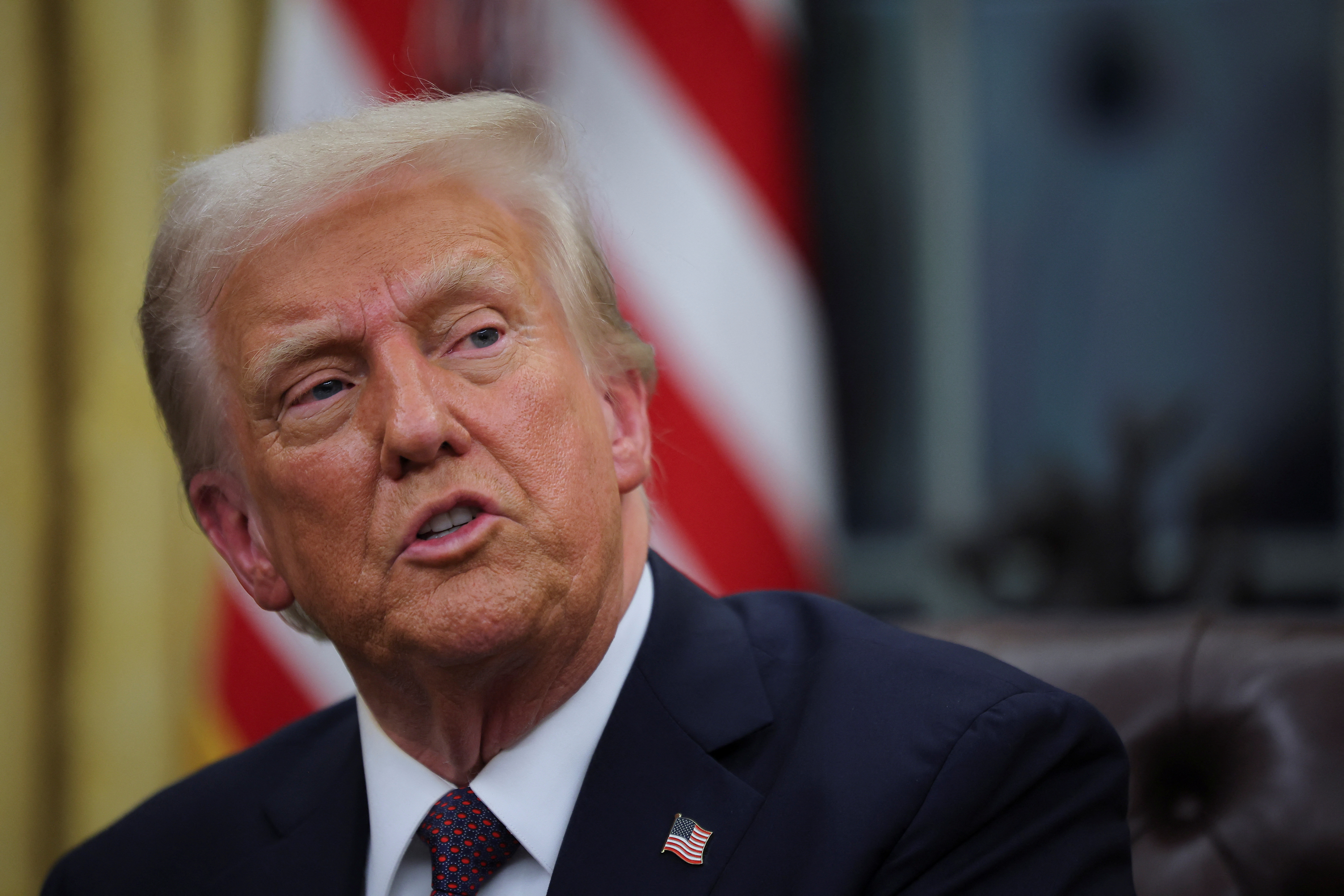
The strategic value of a diplomatic overture is inversely proportional to the duration of the crisis it seeks to resolve. In the context of the current US-Iran friction, the window for a high-leverage bargain has closed, replaced by a regime of "diminishing diplomatic returns." When Donald Trump asserts that Iranian leaders "waited too long" to negotiate, he is describing a structural shift in the geopolitical cost-benefit analysis. The leverage that Iran might have exercised during the initial phases of Maximum Pressure has eroded, not because their goals changed, but because the American strategic posture has moved from seeking a transactional "Grand Bargain" to managing a state of permanent economic containment.
The Decay of Negotiating Leverage
The primary error in Tehran’s strategic calculus was an overestimation of "strategic patience." This concept, while effective in previous cycles of regional tension, fails when applied to a unilateral economic decoupling. In a typical negotiation, time is a shared resource. In the US-Iran dynamic, time has been weaponized as an asymmetrical variable.
- Asset Depreciation: The value of the Iranian nuclear program as a bargaining chip decreases as the American sanctions regime becomes institutionalized. Once global supply chains reroute to bypass Iranian energy and financial markets, the "threat" of those markets remaining closed loses its shock value.
- The Cost of Inaction: Iranian leaders likely anticipated that the 2020 election or subsequent administrative shifts would reset the baseline to the 2015 JCPOA status quo. This failed to account for the "ratchet effect" of sanctions: it is politically and legally simpler to maintain a sanction than to dismantle it.
- Strategic Sunk Costs: Every year Iran persists under the current sanctions regime, the domestic political cost for a US president to offer concessions rises. For a negotiator like Trump, the "buy-in" price for Iran has spiked because the US has already invested years in a containment infrastructure that is functioning at a low overhead cost.
The Three Pillars of Post-Delay Diplomacy
The current impasse is defined by three structural pillars that make a return to 2015-style diplomacy mathematically impossible.
1. The Institutionalization of Economic Exclusion
Sanctions are no longer a temporary lever; they are the new operating system for Iranian trade. The "Maximum Pressure" campaign successfully triggered a decoupling that forced the Iranian economy into a "resistance" model. While this prevented a total collapse, it also removed the primary incentive for the US to talk: the desire to re-integrate Iran into the global financial system. From a US perspective, the Iranian economy is now a closed loop with minimal impact on global oil prices or Western financial stability.
2. The Erosion of Multilateral Hedging
In previous decades, Iran could play the "EU-China-Russia" card to bypass US pressure. However, the hardening of US-China competition and the conflict in Ukraine have forced a global realignment. The "hedging" options for Tehran have narrowed. China’s interest in Iranian oil is transactional and discounted, not a strategic alliance that offers Tehran diplomatic cover in Washington. This narrows the "Threat of an Alternative" that usually underpins diplomatic leverage.
3. The Shift from Intent to Capability
US intelligence and policy circles have moved past debating Iranian intent (e.g., "Do they want to talk?") and are now focused entirely on capability. Because the delay in negotiations allowed for technical advancements in enrichment and regional proxy networks, the US requirement for a "deal" has expanded. A negotiation that might have focused on a simple freeze in 2018 now requires a rollback of advanced centrifuge technology and regional disengagement—demands that are structurally incompatible with the current Iranian political framework.
The Cost Function of Delayed Iranian Entry
The price of Iranian re-entry into the international community follows a nonlinear growth curve. In 2018, the "cost" of a deal for Tehran was a freeze on nuclear activity in exchange for sanctions relief. By 2024, the cost has expanded to include:
- Direct Accountability for Regional Escalation: The US no longer views the nuclear issue in isolation from the broader regional security architecture.
- Increased Compliance Thresholds: Because trust has been zeroed out, any future agreement will require verification protocols that are far more intrusive than those in the original JCPOA.
- The "Premium" for Late Arrival: Trump’s rhetoric signals that the US is no longer desperate for a deal. This "disinterest premium" means Iran must offer significantly more to get the same level of sanctions relief they could have secured five years ago.
The Mechanism of the "Trumpian" Closing Window
The Trump administration’s approach to Iran is not purely ideological; it is a manifestation of "Dominance Strategy" in negotiation. By stating they "waited too long," Trump is signaling that the US has reached a point of indifference. When one party in a negotiation becomes indifferent to the outcome, they hold absolute power over the terms.
The logic follows a classic game theory model:
- Phase 1 (2018-2020): High tension, high reward for a deal. Both parties are actively seeking to influence the other’s behavior.
- Phase 2 (2021-2023): Stagnation. The parties test the limits of the new status quo.
- Phase 3 (Present): Equilibrium. The US has normalized the sanctions environment. Iran has normalized its state of siege.
The "too long" threshold is the point where the cost of maintaining the status quo for the US (sanctions enforcement) becomes lower than the perceived risk of a new deal (political blowback, potential Iranian non-compliance).
Structural Bottlenecks in the Current Iranian Hierarchy
The failure to negotiate early is partly a result of internal Iranian political bottlenecks. The dual-sovereignty system in Iran—the elected presidency versus the unelected clerical and IRGC leadership—creates a "veto-heavy" environment.
- The Consensus Problem: Any significant negotiation requires a consensus among hardline factions that view compromise as an existential threat.
- The Sunk Cost Fallacy: Having endured years of economic hardship, hardline factions argue that "giving in" now would render the previous years of suffering meaningless. This psychological barrier prevents a rational pivot to a more favorable negotiation window.
- Information Asymmetry: It is probable that the Supreme Leader and the high command received overly optimistic reports regarding the effectiveness of their "Look to the East" policy and the likelihood of US domestic fatigue.
Tactical Realities of the 2026 Strategic Landscape
If Iranian leaders decide to talk now, they are entering the room with a significantly weakened hand. The "wait and see" approach has backfired because the external environment has become more hostile, not less.
- Israel’s Strategic Autonomy: The regional dynamic has shifted. Israel now acts with greater independence regarding Iranian targets, reducing the US’s ability to "guarantee" regional stability as part of a deal.
- Energy Market Resilience: The US has become a net exporter of energy, and global supply chains have diversified. The "oil weapon" that Iran once held is now a blunt instrument.
- The Precision of Financial Sanctions: The technology used to track and block Iranian financial flows has improved, making the "grey market" more expensive and less efficient for Tehran.
The Strategic Path Forward
The only remaining path for Iranian diplomacy is to seek a "Limited Scope Agreement" rather than a comprehensive deal. A "Grand Bargain" is no longer on the table because the trust deficit and the "Too Long" penalty are too high.
Tehran must prioritize a series of small, verifiable concessions—specifically regarding regional stability and specific enrichment caps—in exchange for targeted, reversible sanctions waivers. This "Low-Stakes Pivot" is the only way to break the inertia without triggering an internal collapse or a military escalation. For the US, the play is to maintain the current ceiling on Iranian growth while leaving the door ajar just enough to prevent a total nuclear breakout, effectively managing Iran as a contained, mid-tier regional actor rather than a peer competitor or a legitimate partner in regional security.