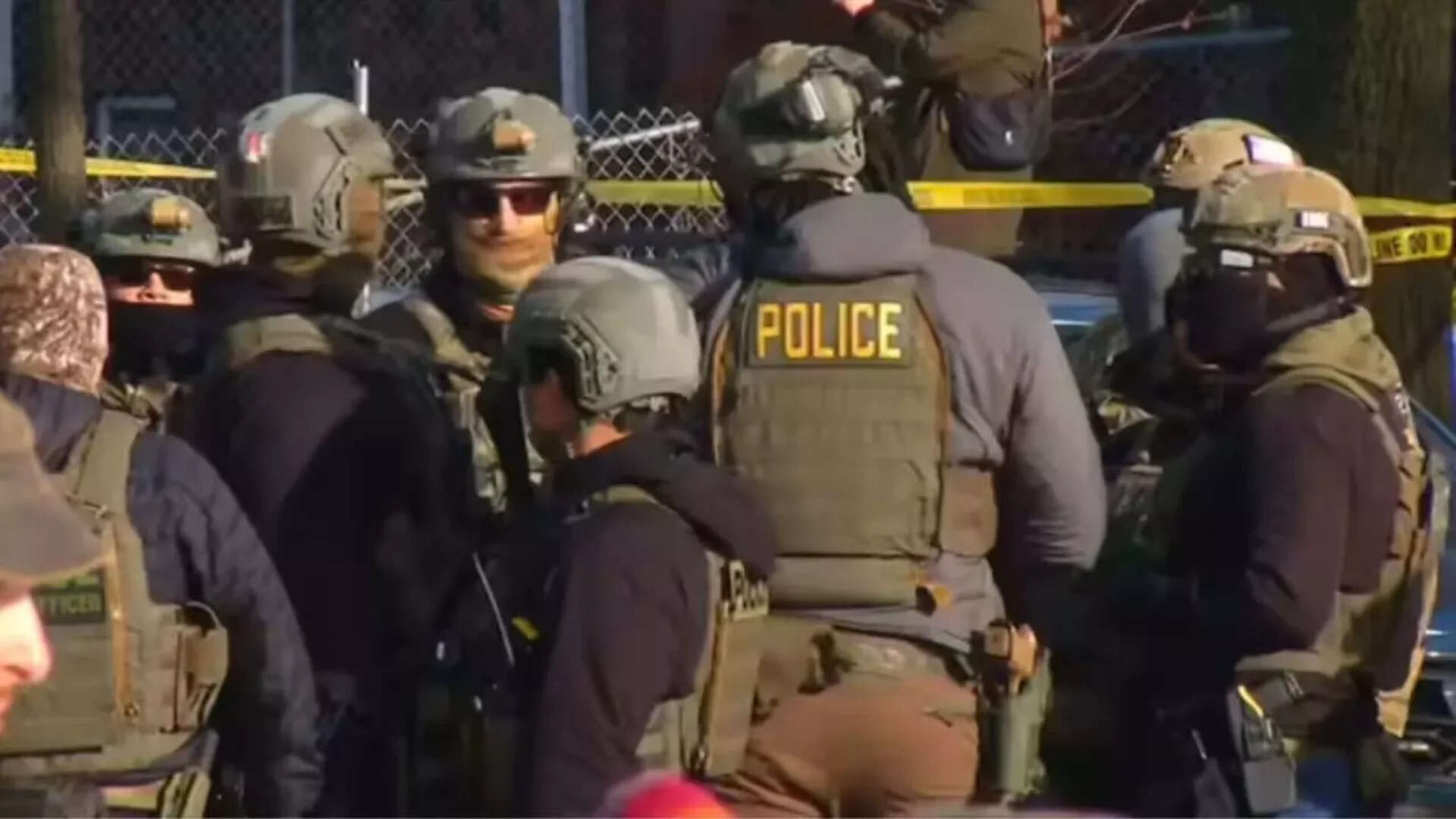
The wind didn't just blow that night; it screamed. In Altadena, when the Santa Anas crest the San Gabriel Mountains, they carry a specific scent—a mix of dried sage, ancient dust, and the electric anxiety of a canyon that knows it is made of tinder. For those living along the edge of the Angeles National Forest, the sound of a transformer blowing isn't just a noise. It is a starter pistol.
When the smoke clears and the sirens finally fade, a strange silence settles over the scorched neighborhoods. It is the silence of the "rebuild." We talk about rebuilding as if it is a simple act of carpentry, a linear path from ruins back to roofs. But anyone who has stood in the footprint of a lost home knows better. Rebuilding is an interrogation. It asks us: Are you going to invite the same ghost back into the house, or are you going to build something that the next wind can’t touch?
Altadena stands at this exact crossroads. As hammers swing and permits are pulled for homes lost to the recurring nightmare of California wildfires, there is a quiet, persistent argument happening on front porches and in community meetings. It isn't just about floor plans or paint colors. It is about the power lines overhead and the heavy, invisible reliance on a grid that feels increasingly like a liability.
The Fragility of the Old Wire
Consider a hypothetical resident—let's call her Elena. Elena grew up in a house tucked into the folds of the foothills. Her memories are anchored by the hum of the refrigerator and the glow of the porch light. But in the last decade, that hum has become intermittent. When the winds pick up, the power goes out. Sometimes it’s a Public Safety Power Shutoff (PSPS), a clinical term for "we have to turn off your lights so the lines don't spark a catastrophe." Other times, it’s just the sheer exhaustion of a grid built for a climate that no longer exists.
Elena’s story is the story of thousands. We have spent a century dragging electricity from distant power plants, across mountain ranges and through parched forests, using technology that hasn't fundamentally changed since the era of the telegraph. It is a miracle of engineering, but it is also a massive, brittle antenna for disaster. Every mile of wire is a point of failure. Every wooden pole is a matchstick waiting for a reason to ignite.
The traditional grid is a top-down hierarchy. It is a king delivering bread to the peasants; if the road is blocked, the village starves. In Altadena, when the "road" is a canyon road blocked by fire or a high-voltage line downed by a gust, the village goes dark. This isn't just an inconvenience. For the elderly neighbor who needs a CPAP machine to breathe at night, or the family watching their food spoil during a three-day blackout, it is a crisis of safety.
Catching the Fire Before it Starts
The alternative isn't just a "green" choice. It is a survival strategy.
Solar energy is often framed as a luxury or a political statement, something for people with deep pockets and a desire to feel virtuous. That framing is a mistake. In the context of a community rebuilding from the ashes, solar plus battery storage is a fortress. It is the transition from a top-down hierarchy to a localized democracy of energy.
When you put panels on a roof in Altadena, you aren't just lowering a utility bill. You are shortening the distance between the source and the need to zero.
$E = P \times t$
This simple physics—energy equals power multiplied by time—governs our lives, but we rarely think about where that $P$ comes from. If it comes from a natural gas plant three counties away, it has to survive a gauntlet of risks to reach your toaster. If it comes from the photons hitting your shingles, the gauntlet disappears.
Modern lithium-ion battery systems have changed the math. A decade ago, solar was a fair-weather friend; it worked when the sun shone, but left you in the dark at dinner time. Now, the battery acts as a reservoir. It captures the frantic, midday energy of the sun and holds it in a silent, chemical embrace until the house needs it. During a wildfire-induced blackout, a home with a properly sized solar-and-storage system doesn't just flicker—it stays vibrant. The lights stay on. The communication lines stay open. The "invisible stakes" become visible when your neighbor’s house is a black silhouette and yours is a sanctuary.
The Economic Friction of the New Frontier
Of course, the path to a sun-drenched Altadena isn't paved with pure optimism. There is friction. There is the "Net Billing Tariff," often referred to as NEM 3.0, which has fundamentally shifted the economics of going solar in California.
Under older rules, the utility companies acted like a bank that gave you a 1:1 credit for every kilowatt-hour you sent back to the grid. It was a generous system that spurred a massive boom in installations. The new rules, however, have slashed that export value by roughly 75%. The message from the utilities is clear: we don't want your extra energy as much as we used to, and we certainly don't want to pay full price for it.
This shift has left many residents feeling cynical. It feels like the goalposts were moved just as they were getting ready to kick. But this is where the narrative needs to shift. The value of solar in a high-fire-risk zone like Altadena is no longer found in the "sell-back." It is found in the "self-use."
When the export rates drop, the battery becomes even more essential. Instead of selling your excess power to the utility for pennies, you store it. You use your own "harvest" to power your lights at 8:00 PM when the utility would otherwise charge you peak prices. The economics have shifted from a merchant model—selling power—to a self-sufficiency model.
Building for the Next Century
There is a psychological weight to rebuilding. When you lose a structure, there is a desperate urge to put back exactly what was there before. It is a way of reclaiming the past. But the past is a dangerous blueprint for the future of the foothills.
If Altadena rebuilds with the same total reliance on the centralized grid, it is essentially building a house with a "pre-existing condition." It is accepting that every summer and autumn will be a season of uncertainty. It is agreeing to be a hostage to the maintenance schedules and liability fears of a massive utility corporation.
The "opportunity" mentioned in dry policy papers is actually a chance for a community-wide transformation. Imagine an Altadena where these rebuilt homes aren't just passive consumers, but active nodes in a microgrid. Imagine a neighborhood where, during a fire emergency, the houses can "island" themselves—disconnecting from the vulnerable main lines and running on their own stored light.
This isn't science fiction. It is happening in pockets across the world, from the mountains of Puerto Rico to the bushlands of Australia. It is a shift in how we perceive our relationship with the environment. Instead of trying to shield ourselves from the sun’s heat while begging for power from a wire, we use the very source of that heat to provide our cool.
The Weight of the Decision
We often talk about the "cost" of solar as a hurdle. It is true; a full system with battery backup is a significant investment. But we rarely talk about the cost of not doing it.
The cost of not doing it is the $400 grocery bill that goes into the trash when the power is out for 48 hours. It is the hotel room you have to book because your home is an oven in July without AC. It is the existential dread that ripples through your chest every time the wind picks up and the lights flicker. What is the price of knowing your home will remain a functional shelter, no matter what happens to the lines on the street?
Altadena is more than just a collection of addresses; it is a laboratory for the California of tomorrow. The San Gabriel foothills are beautiful, but they are also a frontier where the climate crisis is no longer a debate—it is a neighbor.
As the new frames go up and the smell of fresh lumber replaces the scent of ash, the residents have a choice that transcends architecture. They can build monuments to the 20th century, or they can build the foundations of the 21st. They can remain at the mercy of the wire, or they can look up, see the star at the center of our solar system, and decide to catch it.
The hammers are falling. The permits are being signed. The sun is rising over the peaks, pouring thousands of watts of raw, clean potential onto every scorched lot, waiting for someone to finally hold out a hand and take it.
Would you like me to analyze the specific financial incentives and rebates currently available for Altadena residents looking to integrate solar and battery storage into their rebuild?