The mainstream media is currently obsessed with a 10-day loop around the Moon. They treat the Artemis II mission like a giant leap for mankind. It isn't. It’s a multi-billion dollar orbit of nostalgia that risks four lives to perform a maneuver the Soviet Union and the United States mastered during the Nixon administration.
If you’re waiting for the launch date to feel "inspired," you’ve bought into a space program that prioritizes legacy over logic. We are using 1960s orbital mechanics wrapped in modern touchscreens to justify a budget that should have been spent on permanent infrastructure decades ago.
The Safety Myth and the Cost of Caution
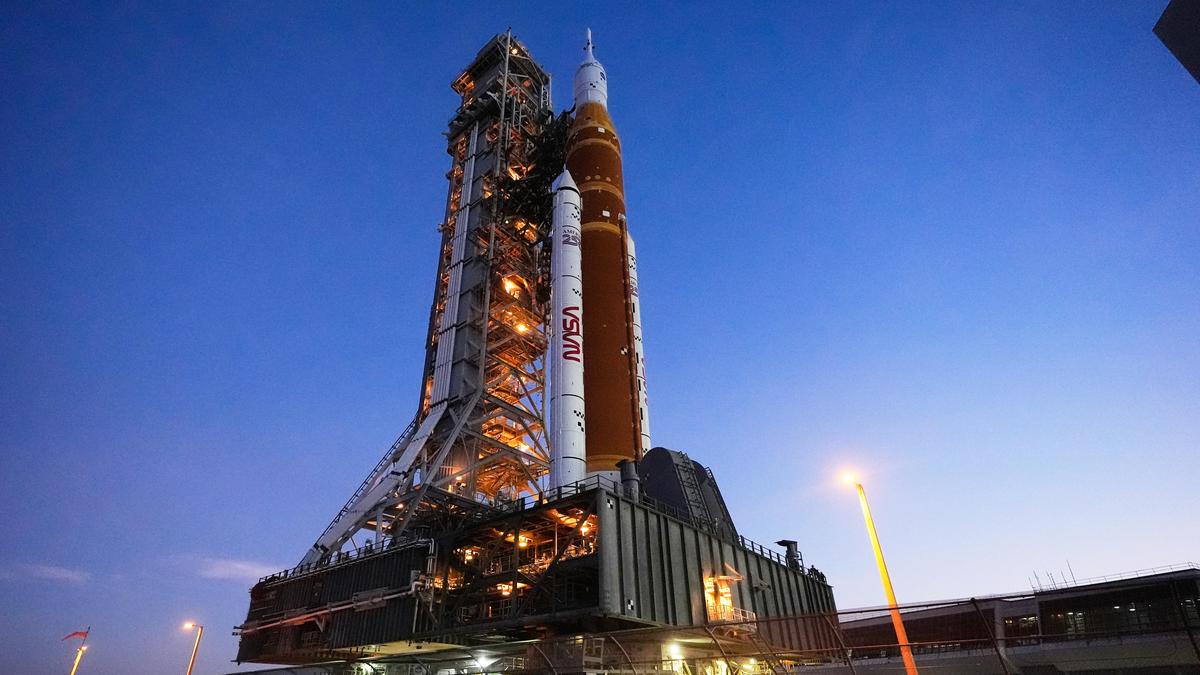
NASA claims Artemis II is the "necessary step" to prove the Orion capsule can support life in deep space. This is a classic bureaucratic stall tactic. We have spent over $50 billion on the Space Launch System (SLS) and Orion. If the hardware isn't "proven" after nearly twenty years of development and the uncrewed Artemis I flight, a 10-day loop isn't going to fix the fundamental architecture flaws.
The "Safety First" mantra is actually a "Static First" reality. By insisting on a crewed flyby before a landing, we aren't being cautious; we are being slow. Private aerospace firms launch, fail, iterate, and fly again in the time it takes a federal agency to double-check a heat shield bolt.
I’ve sat in rooms with aerospace engineers who whisper the truth: SLS is a "jobs program" designed to keep legacy contractors in business. It is a non-reusable rocket in an era where reusability is the only metric that matters. Every time an SLS launches, we throw $2 billion into the ocean. That isn't exploration. That’s arson.
The Crew is a Distraction
Meet the crew: Reid Wiseman, Victor Glover, Christina Koch, and Jeremy Hansen. They are incredibly talented, highly trained, and entirely wasted on this mission.
The media focuses on their biographies because the mission profile itself is boring. They aren't landing. They aren't building a base. They aren't conducting groundbreaking science that requires a human hand. They are passengers on a highly automated trajectory.
The "People Also Ask" sections of the internet want to know "Who are the Artemis II astronauts?" because we’ve been conditioned to hero-worship the pilot instead of questioning the flight path. The real question should be: "Why are we sending humans to do a satellite’s job at 1,000 times the cost?"
We send humans to space to do what robots cannot:
- Intuitive geological sampling.
- Complex, unforeseen hardware repairs.
- Establishing long-term habitats.
Artemis II does none of these. It is a high-altitude photo op.
The Hidden Failure of the Lunar Gateway
The broader Artemis "landscape"—a word I use only to describe the barren wasteland of current policy—relies on the Lunar Gateway. This is a planned space station that will orbit the Moon.
Sounds cool, right? It’s a logistical nightmare.
Adding a space station between Earth and the Moon adds a massive delta-v (velocity change) requirement for every single mission. To get to the lunar surface via the Gateway, you have to slow down to dock, then speed up to leave, then slow down to land. It’s like adding a mandatory layover in a city that has no airport just because the airline owned a hotel there.
The physics don't lie. $\Delta v$ is the currency of space.
$$\Delta v = v_e \ln \frac{m_0}{m_f}$$
When you increase the maneuvers, you increase the fuel ($m_0$). When you increase the fuel, you decrease the payload. By the time we actually put boots on the ground for Artemis III (whenever that actually happens), the Gateway will have sucked the mission dry of its scientific potential.
Stop Asking "When" and Start Asking "Why"
The competitor articles want to give you a calendar. They want you to mark down a date in late 2025 or 2026.
Don't.
Dates in government space flight are polite fictions. The heat shield on the Orion capsule charred more than expected during Artemis I. The life support systems are still being tweaked. The mobile launcher is leaning. These aren't "glitches." They are symptoms of an aging philosophy.
If we actually wanted to be a multi-planetary species, we wouldn't be building one-off, expendable rockets. We would be focused on:
- Orbital Refueling: The ability to launch small loads and gas up in LEO (Low Earth Orbit).
- Nuclear Thermal Propulsion: Cutting travel time to Mars from months to weeks.
- In-Situ Resource Utilization (ISRU): Learning to make oxygen and fuel from lunar regolith before we arrive, not bringing it all with us like a nervous camper.
Artemis II ignores these. It is a "flags and footprints" mission dressed up in 21st-century PR.
The Harsh Reality of the New Space Race
We are told this is a race against China. If it is, we are running in circles while they are building a straight line. China’s lunar program is methodical. They aren't trying to recreate the 1960s glory days; they are looking at the Moon as the "Eighth Continent" for resource extraction.
While we argue over the diversity of a four-person crew for a flyby, other nations and private entities are looking at the south pole of the Moon for water ice. They aren't interested in the "who." They are interested in the "what."
The Counter-Intuitive Truth
The best thing that could happen to the Artemis program is a total cancellation of the SLS.
Yes, it would be "painful." Yes, it would look like a failure. But it would force the transition to commercial heavy-lift vehicles that cost a fraction of the price. If we outsourced the "bus ride" to the Moon, NASA could focus on what it’s actually good at: building the sensors, the habitats, and the science experiments that actually change the world.
Instead, NASA is stuck being a trucking company. And they are a very expensive, very slow trucking company.
If you want to see the future of space, don't look at the SLS launch pad. Look at the Starship tests in Texas. Look at the orbital fuel depot concepts. Look at the companies trying to mine asteroids.
Artemis II is a ghost of the Cold War. It is a mission designed to make us feel like we are doing something, without actually doing the hard work of building a permanent presence in the solar system.
Stop celebrating the lap. Demand the destination.