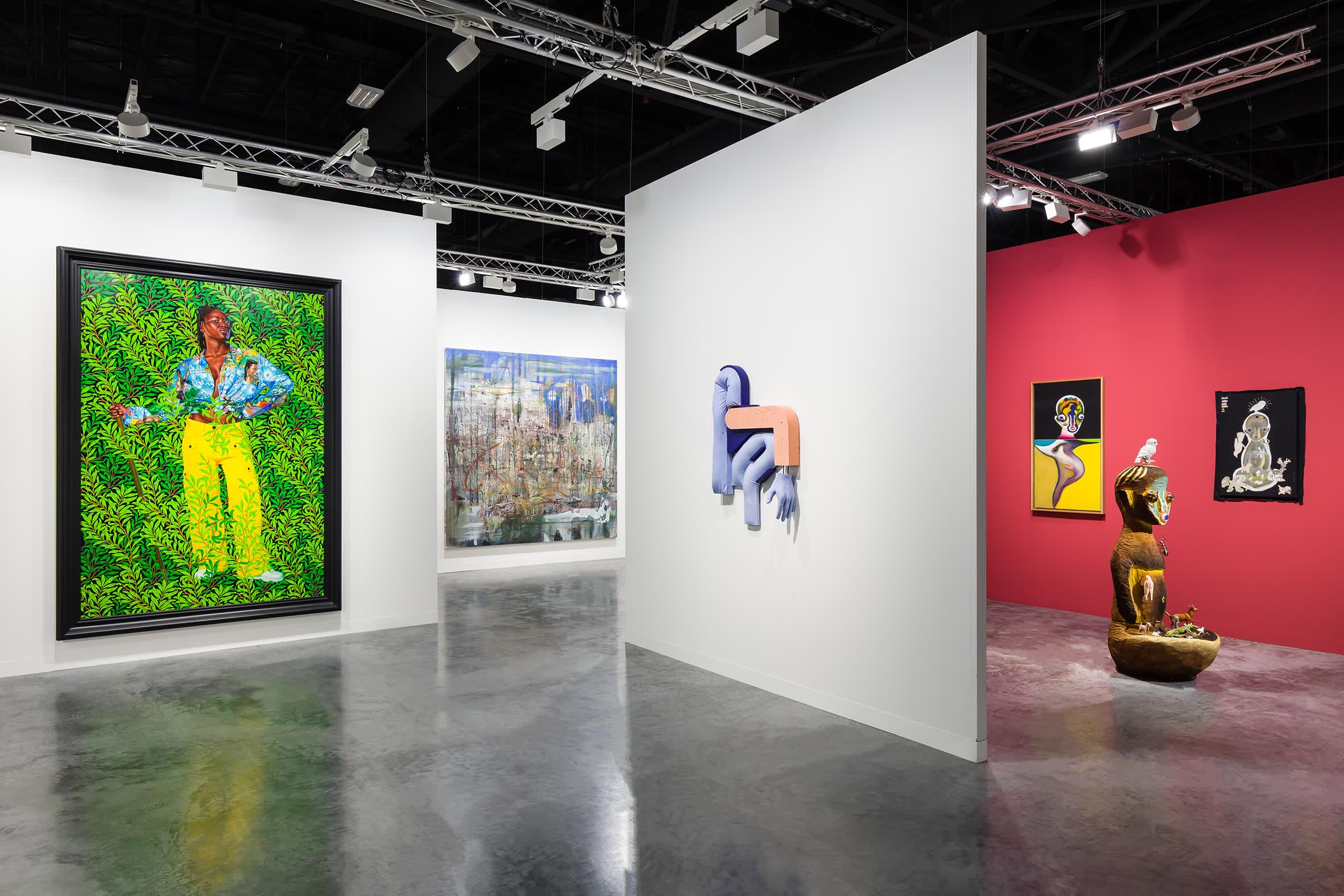
The headlines are predictable. "Strong attendance." "Robust sales." "Market recovery." If you believe the mainstream art press, Art Basel Miami Beach was a triumphant return to form for an industry that spent the last two years hyperventilating.
They are lying to you. Or, more accurately, they are reading the menu while the kitchen is on fire.
What we saw in Miami wasn't a recovery. It was a desperate liquidity event. When you see a "sold" sticker on a $5 million canvas within twenty minutes of the VIP opening, you aren't witnessing a surge in cultural appreciation. You are witnessing a high-speed exit. The smart money is rotating out of stagnant blue-chip inventory and into anything that looks like a cash equivalent before the next tax cycle hits.
The industry is addicted to the narrative of "resilience," but if you look at the actual mechanics of these transactions, the facade crumbles.
The Myth of the Sold-Out Booth
Galleries love to report sell-through rates. It creates the illusion of scarcity. But anyone who has spent ten minutes behind the scenes of a mega-gallery knows that "sold" is a flexible term.
In the current climate, a significant portion of these high-ticket sales are pre-arranged weeks in advance. The fair isn't a marketplace; it’s a stage play. The transaction happens in a PDF exchange in November, and the physical hanging in Miami is merely the closing ceremony. Why do they do it? Because the appearance of a frenzy drives up the "fair market value" for the rest of the artist’s primary work.
It is price manipulation disguised as a party.
If you want to understand the health of the art market, stop looking at the primary sales from Gagosian or Hauser & Wirth. Look at the secondary market auctions. Look at the "bought-in" rates—the pieces that fail to meet their reserve price and are slunk back into storage. In the last year, those numbers have been grim. Miami is the shiny distraction designed to keep collectors from noticing that their "investments" are becoming increasingly illiquid.
The Death of the Mid-Tier Gallery
The "recovery" narrative conveniently ignores the carnage in the middle. The mega-galleries are doing fine because they represent the 0.01% of artists who function as a global currency. If you have a Richter or a Basquiat, you have a portable bond.
But the mid-tier galleries—the ones supposedly "nurturing" the next generation—are getting slaughtered by the overhead of these fairs. Between booth fees, shipping, insurance, and the mandatory "hospitality" (translation: overpriced champagne for people who won't buy anything), a gallery can easily drop $300,000 before they sell a single drawing.
We are moving toward a bipolar market. You have the "Veblen goods" at the top, which defy the laws of economics, and you have the decorative junk at the bottom. The middle—the place where actual art history used to happen—is being hollowed out.
Stop Asking if Art is a Good Investment
People ask this question because they want the cultural cachet of an intellectual and the bank account of a private equity shark.
Brutal honesty: Art is a terrible investment for 99% of the people in the room.
- Transaction Costs: When you buy a stock, you pay a fraction of a percent in fees. When you buy art at a fair, you’re paying a 50% gallery markup. If you try to sell it back a year later, an auction house will take another 20-25% in seller's premiums. Your "asset" has to appreciate by nearly 80% just for you to break even.
- Maintenance: You have to insure it, climate-control it, and pray the artist doesn’t say something career-ending on social media.
- Liquidity: Try selling a $50,000 painting during a recession. You can’t. You’re stuck with a very expensive piece of fabric while the rest of your portfolio is bleeding.
If you are buying art in Miami because you think it’s a "hedge against inflation," you’ve been sold a bill of goods by a salesperson in a $4,000 suit. You aren't hedging; you’re gambling on a game where the house always wins and the house is owned by the guy who sold you the painting.
The NFT Hangover is More Than a Headache
A few years ago, the "tech-art synergy" was supposed to save the industry. Miami was the epicenter of the NFT craze. Now, the silence is deafening.
The collapse of the digital art market wasn't just a correction; it was a realization that the art world’s gatekeepers hate competition. They didn't want "democratization." They wanted to keep the velvet rope exactly where it was. The "recovery" people talk about today is actually a retreat to the most boring, conservative, "safe" art imaginable.
Look at the walls in Miami. It’s a sea of "zombie formalism" and figurative paintings that look like they were designed to match a sofa in a penthouse. Innovation is dead because risk is too expensive. We are witnessing the commodification of mediocrity.
The Tax Write-Off Strategy
Let’s talk about the one thing the fluff pieces never mention: the private museum loophole.
A "collector" buys a work for $1 million. They hold it for a few years, get a friendly appraiser to say it’s now worth $5 million (based on those "pre-arranged" sales we discussed earlier), and then donate it to their own private foundation. They get a $5 million tax deduction, effectively subsidized by the taxpayer, while the art stays in a building they own.
Miami is the scouting ground for these maneuvers. It is a trade show for tax avoidance. When the media reports "record-breaking sales," they should be reporting "record-breaking tax subsidies for the ultra-wealthy."
The Actionable Truth for Real Collectors
If you actually care about art—and not just the social signaling associated with it—stay away from the fairs.
- Buy from the Studio: If you like an artist, find them. Buy directly. Cut out the middleman who is taking 50% to pay for their Miami hotel suite.
- Ignore the "Hot" Lists: By the time an artist is on a "ones to watch" list, their price is already inflated. You are buying at the top of the pump.
- Accept the Loss: Buy art because you want to look at it every day for the next thirty years. Assume the value will go to zero. If it doesn't, consider it a lucky accident.
The art market isn't recovering; it's mutating. It’s becoming an extension of the luxury goods industry, indistinguishable from high-end watches or limited-edition handbags. The "culture" is just the marketing department.
The next time you read a report about "buoyant sales" in Miami, remember that the person writing it likely had their flight paid for by a sponsor. The party is loud because they don't want you to hear the sound of the bubble losing air.
Stop buying the hype and start looking at the math. The math says the exit is to your left.