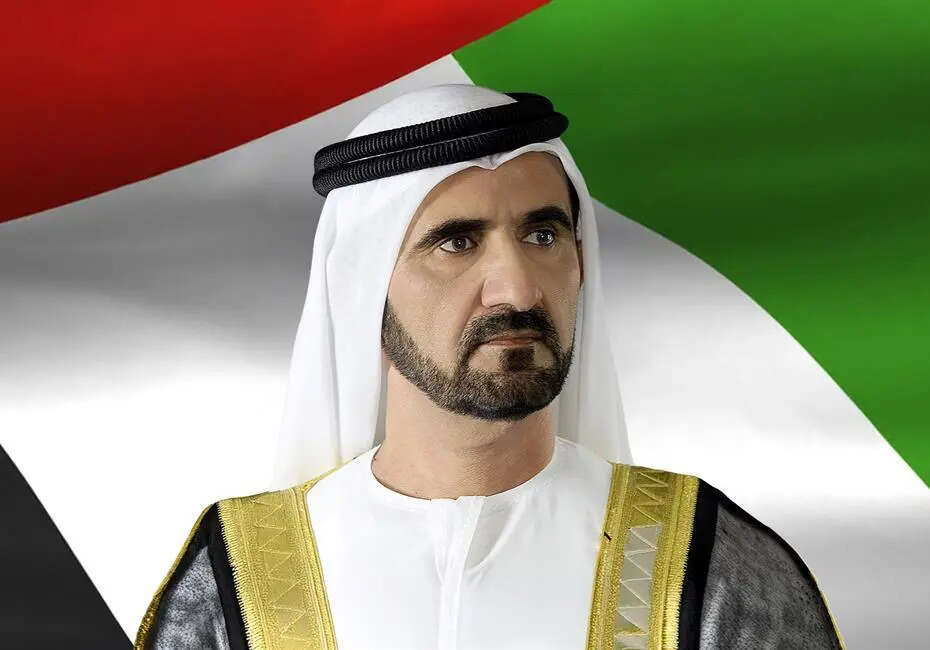
The annual mandate from UAE leadership to raise the national flag across all public and private structures functions as more than a ceremonial gesture; it is a synchronized mobilization of social capital designed to reinforce the sovereign brand. By quantifying this directive through the lens of institutional alignment and civic participation, one reveals a sophisticated mechanism for maintaining social cohesion within a highly diverse demographic. The directive targets a specific psychological and operational window—November 3rd—to consolidate the "Spirit of the Union" into a visible, measurable display of loyalty and continuity.
The Tripartite Framework of National Mobilization
The UAE Flag Day initiative operates on three distinct levels of utility: the Symbolic, the Institutional, and the Economic. Understanding how these layers interact explains why a seemingly simple request for flag-raising results in a near-total participation rate across seven emirates.
1. The Symbolic Integration of the Federal Timeline
The timing of Flag Day is not arbitrary. It marks the anniversary of His Highness Sheikh Khalifa bin Zayed Al Nahyan’s accession as President of the UAE in 2004. By tethering the symbol of the flag to the office of the Presidency, the state merges the abstract concept of "country" with the concrete historical timeline of its leadership. This creates a feedback loop where the flag represents both the founding history (1971) and the modern administrative era.
2. Institutional Standardization
The directive issued by His Highness Sheikh Mohammed bin Rashid Al Maktoum serves as a master synchronization signal. When the ruler of Dubai calls for a unified time—11:00 AM—for the flag-raising, it creates an "instantaneous nation" effect.
- Public Sector Compliance: Government entities use this as a stress test for organizational readiness and protocol adherence.
- Private Sector Integration: The call to businesses and homes to participate effectively bridges the gap between the state and the expatriate-heavy private sector, providing a low-friction entry point for non-nationals to demonstrate alignment with the state’s objectives.
3. The Economic Signaling of Stability
National symbols are leading indicators of political stability. For international investors, a high-participation national event demonstrates internal social order and high levels of government trust. The visual uniformity of the UAE flag across commercial hubs like DIFC or ADGM signals a unified regulatory and social environment, reducing the perceived risk often associated with emerging markets.
The Physics of Participation: Why the 11:00 AM Mandate Matters
Temporal synchronization is a powerful tool in social engineering. By specifying a precise minute for the ceremony, the UAE leadership eliminates the "dilution effect" that occurs with week-long or loosely defined celebrations.
The 11:00 AM mandate creates a "High-Intensity Focal Point." In a digital age, this concentration of activity generates a massive, simultaneous surge in social media content and media coverage. This results in a global visibility spike that would be impossible to achieve if the events were staggered. The cost-benefit ratio of this strategy is exceptionally high: the state incurs almost no direct cost for the millions of flags raised by private citizens and businesses, yet it reaps the full rewards of the resulting soft power and global brand equity.
Operational Protocol and Material Standard
The UAE government enforces strict guidelines regarding the dimensions, colors, and condition of the flag. This is not mere bureaucracy; it is quality control for the national brand.
- Color Precision: The red, green, white, and black must adhere to specific Pantone-equivalent shades. Faded or tattered flags are considered a violation of protocol.
- Spatial Hierarchy: On Flag Day, the national flag takes precedence over corporate or secondary banners. This hierarchy reinforces the primacy of the state in the social and economic hierarchy.
This standardization ensures that the visual data transmitted globally is uniform. Whether a photograph is taken in a remote area of Fujairah or the center of Downtown Dubai, the brand identity remains consistent.
The Demographic Bridge: Engaging the Expatriate Majority
One of the most complex challenges for the UAE is maintaining national identity in a country where approximately 90% of the population consists of foreign nationals. Flag Day serves as a primary tool for "Soft Integration."
Unlike political processes which are reserved for citizens, the flag is a universal symbol that residents can adopt without legal friction. By encouraging residents—not just citizens—to raise the flag, the state provides a mechanism for expatriates to signal their "stakeholder" status in the UAE’s success. This reduces social friction and creates a shared sense of purpose between the local population and the global workforce.
Mapping the Logistics of Civic Pride
The logistical surge required for Flag Day involves a massive uptick in the manufacturing and distribution sectors. Weeks prior to November 3rd, retail supply chains must pivot to meet the demand for flags of varying scales, from handheld versions for school children to massive skyscraper-draping textiles.
The Supply Chain Effect
- Production Volume: Estimates suggest millions of flag units are circulated during this period.
- Material Science: High-durability textiles are required to withstand the high UV index and wind speeds at the top of the UAE’s vertical architecture.
- Disposal Logistics: Post-event, the respectful decommissioning of flags is managed through institutional guidelines to prevent the symbol from appearing in waste streams, which would damage the sanctity of the icon.
The Cause-and-Effect of Unified Messaging
The primary omission in standard reporting on this event is the direct link between unified national messaging and the UAE's "Glocalization" strategy. The state successfully acts as a global hub while maintaining an intensely local identity.
The flag-raising ceremony acts as a "Social Reset." It pauses the frantic pace of the UAE’s commercial life to realign all participants with the central mission of the state. This alignment is critical for the execution of long-term strategic projects like "Operation 300bn" or the "UAE Centennial 2071." Without these regular pulses of national unity, a diverse, fast-growing population risks fragmenting into isolated economic silos.
Risks of Symbolic Saturation
While highly effective, the strategy faces the risk of "Symbolic Fatigue" if not managed correctly. If the flag-raising becomes purely perfunctory, its value as a social capital lubricant diminishes. The leadership mitigates this by layering the event with educational components in schools and tying the event to specific national achievements—such as space missions or economic milestones—to ensure the symbol remains dynamic rather than static.
Strategic Recommendation for Institutional Leaders
To maximize the utility of the Flag Day mandate, private sector entities and government departments should move beyond the physical act of raising the flag. The ceremony should be utilized as a platform for "Internal Alignment Audits."
- Vertical Integration: Use the 11:00 AM window to hold brief, high-impact town halls that connect corporate goals to the national agenda.
- Cultural Diplomacy: For multinational firms, the event is an opportunity to educate global headquarters on the UAE’s stability and vision, using the flag as a shorthand for the country’s business-friendly environment.
- Digital Amplification: Organizations should leverage the 11:00 AM spike to publish CSR reports or milestone updates, riding the wave of high national engagement to increase the reach of their own brand communications.
The UAE Flag Day is not a suggestion; it is a vital component of the state’s operational infrastructure. Success in the UAE market requires not just an understanding of its laws, but a deep integration into its symbolic and national cycles. Organizations that treat November 3rd as a mandatory checklist item rather than a strategic opportunity miss a critical chance to solidify their standing within the nation’s long-term economic trajectory.