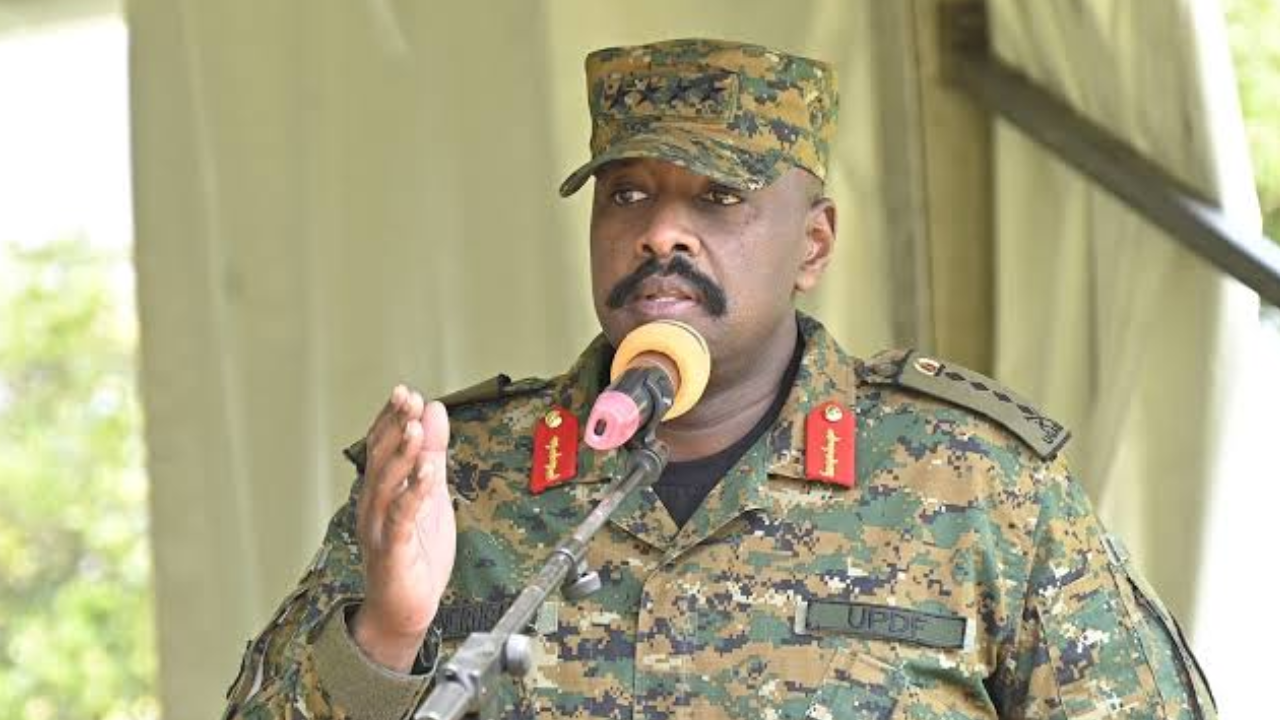
The recent diplomatic ultimatum issued by General Muhoozi Kainerugaba to the Turkish government represents more than a social media outburst; it is a clinical case study in the intersection of sovereign debt, domestic power succession, and the weaponization of bilateral relations. When the commander of Uganda’s land forces—and the presumed successor to the presidency—demands a $1 billion investment, a marriage alliance, or a total severance of ties, he is not merely engaging in "bizarre" rhetoric. He is signaling a shift in Uganda’s foreign policy procurement strategy from traditional diplomacy to transactional coercion.
To understand the mechanics of this friction, one must isolate the three primary drivers: the infrastructure financing gap, the internal competition for the "Muhoozi Project" legitimacy, and the specific irritant of exiled political dissidents.
The Capital Extraction Framework
Uganda’s demand for $1 billion in investment is rooted in a widening fiscal deficit and the urgent need for non-Western capital to fund the Standard Gauge Railway (SGR). The SGR project is the central nervous system of Uganda’s economic strategy, intended to link Kampala to the Kenyan border and, eventually, to the oil-rich Albertine Rift.
The financing of this project has historically relied on Chinese credit. However, as Beijing tightens its Belt and Road Initiative (BRI) lending criteria due to debt sustainability concerns, Kampala has been forced to seek alternative "Big Push" investors. Turkey, through its construction giants like Yapı Merkezi, has emerged as the primary alternative. The $1 billion figure is not arbitrary; it represents the approximate liquidity injection required to keep the SGR project from stalling.
Muhoozi’s ultimatum functions as a high-stakes negotiation tactic designed to skip the bureaucratic delays of traditional Export Credit Agency (ECA) financing. By framing the investment as a condition for diplomatic "friendship," the Ugandan leadership is attempting to force the Turkish state to provide sovereign guarantees for private Turkish contractors. This shifts the risk of the project from the Ugandan balance sheet to the Turkish treasury.
The Logic of the Marriage Ultimatum
The mention of a "bride" appears archaic or nonsensical to the casual observer, but within the context of Great Lakes regional politics, it serves a specific function: the formalization of a "Blood Brotherhood" or dynastic alliance. In pre-colonial and early post-colonial East African statecraft, inter-marriage between ruling elites was the ultimate mechanism for non-aggression pacts and shared economic destiny.
By invoking this, Muhoozi is signaling that he does not view Turkey as a mere development partner, but as a potential dynastic patron. This is a deliberate attempt to elevate Turkey above other regional players like the UK or the US, who maintain a distance based on human rights benchmarks. Muhoozi is testing Turkey’s willingness to engage in "Pre-Modern Diplomacy"—a system where personal loyalty to the ruling family supersedes institutional agreements. If Turkey accepts the premise of a symbolic marriage or a deeply personal alliance, they signal to the world that they are willing to ignore the institutional norms that Western powers hold sacred.
The Dissident Variable and Information Control
The "breakup" threat is primarily fueled by the presence of Ugandan dissidents in Turkey, most notably Fred Lumbuye. The Ugandan security apparatus views digital dissidents as a primary threat to the stability of the upcoming presidential transition. The logic of the Ugandan state follows a specific causal chain:
- Information Leakage: Dissidents abroad use social media to bypass domestic censorship.
- Internal Destabilization: These broadcasts incite local populations and demoralize the security forces.
- Sovereignty Violation: The host country (Turkey) is perceived as providing the "weaponry" (internet freedom and physical safety) for this destabilization.
The ultimatum is a demand for the extradition or silencing of these individuals. For Kampala, the cost of allowing a dissident to operate in Istanbul is higher than the benefit of a standard diplomatic relationship. The threat to "break up" is a signal that Uganda is willing to trade its regional cooperation—essential for Turkey’s "Africa Opening" strategy—for the heads of political enemies.
The Cost Function of Turkish Non-Compliance
Turkey’s geopolitical strategy in Africa relies on being the "Third Way"—an alternative to both Western paternalism and Chinese debt-traps. Uganda is a pivot point in this strategy due to its role in the African Union Transition Mission in Somalia (ATMIS) and its influence in the Great Lakes.
If Turkey ignores Muhoozi’s ultimatum, the potential costs include:
- Contractual Forfeiture: The immediate cancellation of Yapı Merkezi’s involvement in the SGR, resulting in hundreds of millions in lost revenue for Turkish firms.
- Geopolitical Displacement: Uganda would likely pivot back toward Russian or Iranian influence, both of whom have shown increasing interest in the region's security sector.
- Intelligence Blackout: Uganda’s intelligence services are among the most sophisticated in East Africa; a severance of ties would blind Turkish interests in the South Sudan and DRC border regions.
Conversely, the cost of compliance is high. For Ankara to meet these demands, it would have to compromise its judicial independence (in the case of extrusions) and expose its banking sector to significant risk (in the case of the $1 billion demand).
Structured Risk Assessment
The current tension is characterized by an asymmetry of stakes. For Turkey, Uganda is an important, but non-essential, trade partner. For Muhoozi, the acquisition of massive infrastructure capital and the elimination of overseas critics are essential for his path to the presidency.
The Successor’s Burden
Muhoozi Kainerugaba is operating under a compressed timeline. President Yoweri Museveni has ruled since 1986, and the transition of power is the single most volatile event in the country’s modern history. Muhoozi needs a "Grand Achievement" to legitimize his claim to the throne. A $1 billion Turkish-funded railway is that achievement. The aggression of the ultimatum is a direct reflection of the domestic pressure he faces; he cannot afford the slow, methodical pace of standard diplomatic engagement.
The Turkish Counter-Strategy
Ankara's response will likely be a "Strategic Delay." Turkey cannot grant a $1 billion gift, nor can it easily hand over dissidents without international blowback. However, they can offer "Security Cooperation" packages—drones, surveillance tech, and training—which provide the Ugandan elite with the tools for domestic control without the massive price tag of a sovereign loan.
The Irreversibility of Digital Diplomacy
This episode marks a permanent change in how African middle powers interact with emerging global powers. The use of social media to issue ultimatums removes the "exit ramps" usually provided by quiet diplomacy. When a demand is made public, neither side can retreat without losing face. This creates a "Commitment Trap."
The Ugandan state has calculated that Turkey’s desire for African markets makes them vulnerable to this type of public bullying. If this succeeds, it will provide a blueprint for other regional leaders to bypass foreign ministries and negotiate directly through public provocation.
The primary bottleneck for Uganda remains its credit rating and its debt-to-GDP ratio. No amount of social media pressure can change the actuarial reality that Uganda is a high-risk borrower. Turkey’s construction firms require insurance through entities like UK Export Finance or other European backers. By threatening Turkey, Muhoozi is inadvertently threatening the very institutions that make Turkish investment possible.
The strategic play for the Turkish side is to decouple the "Muhoozi Persona" from the Ugandan State. By engaging directly with the Ugandan Ministry of Finance and the traditional diplomatic corps, Turkey can offer a path to the $1 billion that is contingent on institutional stability rather than personal whims. This forces the Ugandan leadership to choose between the immediate gratification of a "strongman" victory and the long-term viability of their national infrastructure.
Uganda’s next move will likely involve a cooling-off period followed by a "Technical Delegation" to Ankara. The ultimatum has served its purpose: it has moved Uganda to the top of Turkey’s priority list. Now, the hard math of sovereign debt will replace the rhetoric of marriages and breakups. The SGR will either be built on the back of rigorous financial modeling or it will remain a ghost project, a victim of the gap between dynastic ambition and economic reality.