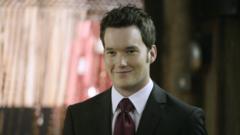
Amy Madigan is currently the frontrunner to win the Academy Award for Best Supporting Actress on March 15, 2026. This is not a sentence anyone in Hollywood would have dared to type eighteen months ago. Before Zach Cregger’s Weapons became a $270 million juggernaut, Madigan was relegated to the "working actress" tier—a polite industry euphemism for someone whose talent is respected but whose name no longer moves the needle for greenlight committees.
Her performance as Aunt Gladys has shattered that ceiling, but the numbers behind her "overnight" resurgence tell a much grittier story about ageism and the industry's selective memory. Madigan’s nomination for Weapons comes exactly 40 years after her first nod for Twice in a Lifetime (1985). This is the longest gap between Oscar nominations for any actress in history, surpassing the 39-year record held by Helen Hayes. While the trades frame this as a heartwarming "comeback," it is actually a glaring indictment of a system that frequently discards female veterans once they pass a certain demographic threshold.
The Calculus of the Comeback
To understand why Madigan is winning the "by the numbers" game, you have to look at the precursor sweep. The Academy rarely rewards horror, yet Madigan has defied the genre bias by securing wins at the Critics’ Choice Awards and the New York Film Critics Circle.
The statistics are leaning heavily in her favor for three distinct reasons:
- The Narrative Factor: Academy voters love a legacy play. At 75, Madigan represents a link to a "Golden Age" of gritty 80s drama.
- The Transformation Metric: Madigan is nearly unrecognizable as Gladys. Historically, the Academy rewards physical erasure—think Nicole Kidman’s nose in The Hours or Charlize Theron in Monster.
- The Box Office Multiplier: Weapons isn't just a critical darling; it’s a financial monster. Universal and Warner Bros. have leaned into the "Gladys" character as the face of the film’s viral success.
Why Gladys Shouldn't Have Worked
On paper, Aunt Gladys is a caricature. She is a child-snatching, scissor-wielding force of nature with a red wig and baby bangs that should have felt ridiculous. In the hands of a lesser performer, the character would have been a meme and nothing more. Instead, Madigan approached the role with a terrifying, grounded empathy. She famously told reporters she didn't view Gladys as a villain, but as a woman doing what she had to do to survive.
That psychological depth is what transformed a "slasher" role into a prestige performance. Cregger, fresh off the success of Barbarian, reportedly wrote the script with an "interweaving" structure inspired by Magnolia. He needed a veteran who could anchor the chaos. Madigan didn't just anchor it; she hijacked the entire production.
The industry's internal data shows that "horror icons" rarely translate to Oscar gold. Only six actors have ever won for horror roles. If Madigan takes the trophy, she will be the first since Ruth Gordon in 1968 (Rosemary’s Baby) to win for playing a "witch-like" antagonist.
The Industry’s Double Standard
While the media celebrates Madigan’s 40-year gap, we should be asking where the roles were in the intervening four decades. Madigan has been vocal about the "brutal" nature of the business, noting that while her husband, Ed Harris, saw a steady stream of high-profile work in blockbusters like Top Gun: Maverick, her opportunities were on "subsistence rations."
Her resurgence isn't just a win for a single actress; it’s a market correction. The success of Weapons proved that a female lead over 70 can carry a massive commercial hit. The numbers don't lie:
- Budget: $38 million
- Global Gross: $270 million
- Marketing Focus: Heavy emphasis on Madigan's "secret" role.
The ROI on Madigan’s casting has been astronomical. Studios are now scrambling to find their own "Madigan moment," looking for underutilized veterans to front genre films that traditionally relied on 20-somethings.
The Path to March 15
Despite the momentum, the race isn't a locked vault. She faces stiff competition from Teyana Taylor (One Battle After Another) and the double-threat of Elle Fanning and Inga Ibsdotter Lilleaas in Sentimental Value. Taylor represents the "rising star" narrative that the Academy often finds irresistible.
However, Madigan has the "overdue" factor. In the high-stakes poker game of Oscar campaigning, "It’s her time" is the strongest hand you can hold. The 40-year wait has moved from being a statistical oddity to a moral imperative for voters. They aren't just voting for Aunt Gladys; they are voting for the 40 years of work that the industry failed to properly acknowledge.
The final stretch of this campaign will likely focus on Madigan's versatility. From the pregnant convict in Love Child to the grieving homeowner in the upcoming Rebuilding, her career is a testament to durability. But it shouldn't take a horror movie and a 40-year hiatus for the industry to remember how to use its best weapons.
Would you like me to analyze the specific voting blocks within the Academy that are most likely to swing in Madigan's favor?