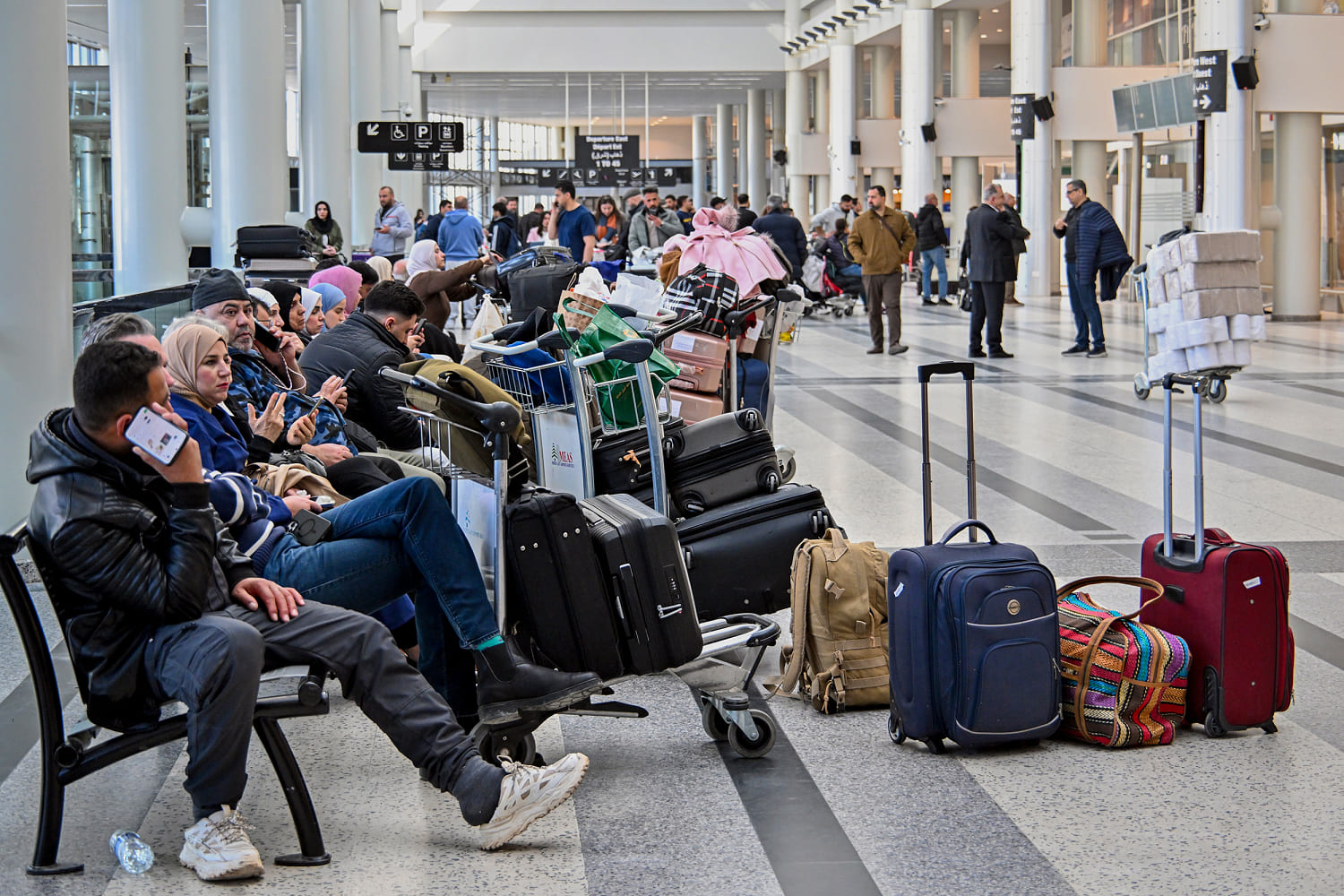
The text message arrived at 3 a.m. for most Americans in the Gulf. "DEPART NOW," it read in blunt, all-caps urgency. But for the thousands of U.S. citizens currently sitting on suitcases in darkened hotel lobbies in Dubai, Doha, and Amman, that's easier said than done. While the State Department has issued its most aggressive travel warning in years, the reality on the ground is a mess of canceled flights, shuttered airspaces, and a frantic scramble for the few remaining exits.
If you're one of the estimated hundreds of thousands of travelers caught in the crossfire of the U.S.-Israel-Iran conflict, you don't need a lecture on geopolitics. You need to know which borders are open, which airlines are still flying, and why the "evacuation flights" you keep hearing about on the news haven't picked you up yet.
The flight cancellation crisis is real
Since hostilities kicked off on February 28, the aviation map of the Middle East has basically been erased. More than 12,300 flights have been axed across seven major hubs. Dubai International (DXB), usually the busiest airport on the planet for international passengers, is a ghost town. Emirates has officially suspended all scheduled flights until at least March 7.
Don't just show up at the airport. I can't stress this enough. Security at DXB and Abu Dhabi (AUH) is turning away anyone without a confirmed seat on a specific repatriation flight. If you're holding a ticket for a "scheduled" flight that hasn't been officially canceled yet, call the airline. Chances are, it’s not going anywhere. Etihad has signaled it might resume some operations by March 6, but that’s a moving target.
Where the exits are actually open
While the air is closed, the ground is moving. If you’re in Israel, Ben Gurion is a no-go zone. It’s been shut to civilian traffic since the start of the month. The smartest move right now isn't waiting for a plane in Tel Aviv; it's looking south.
The Taba Border Crossing into Egypt is currently the primary artery for getting out of Israel. It’s open 24 hours. The Israeli Ministry of Tourism is even running shuttle buses from major cities like Tel Aviv and Beersheba to the border. Once you’re in Egypt, Cairo (CAI) is still functional. It’s busy, and prices are astronomical, but planes are taking off.
In the Gulf, Oman has become the unofficial safety valve. Travelers in the UAE are paying upwards of $600 for taxi rides to Muscat. It’s a 10-hour haul, and the border is a bottleneck, but Muscat International (MCT) has remained a reliable hub for those lucky enough to snag a seat on a flight to India or Europe.
The truth about U.S. charter flights
There’s been a lot of noise about the "historic action" the State Department is taking. As of March 4, the government claims to have helped over 17,500 Americans leave the region. That sounds like a big number until you realize there are likely over 500,000 U.S. nationals living in or visiting these 14 high-risk countries.
The U.S. is facilitating charter flights from three specific locations:
- United Arab Emirates
- Saudi Arabia
- Jordan
Secretary of State Marco Rubio mentioned that nearly 1,600 Americans have requested direct departure assistance. If you haven't filled out the Crisis Intake Form on the State Department’s website, you don't exist to them. This is the only way to get on the list for a seat.
One bit of good news: the government is waiving the usual requirement for citizens to reimburse the cost of these evacuation flights. Usually, you’d have to sign a promissory note to pay back the equivalent of a full-fare commercial coach ticket. Right now, they just want you out.
Why you feel ignored by the Embassy
It’s frustrating to call an emergency helpline only to hear a recorded message. I get it. Members of Congress are currently grilling the administration because embassies in Kuwait and Amman have limited their services or shut down entirely after drone threats.
The State Department’s budget was slashed recently, and their "consular affairs" muscle isn't what it used to be. They aren't going to send a Black Hawk to your hotel. Their role is "facilitating" travel, which mostly means they negotiate for extra plane capacity and tell you where to show up. If you're in a country with no commercial options, they’re trying to move people via ground convoys to "third countries"—usually meaning Turkey or Oman.
Practical steps to take right now
Stop scrolling through Twitter and do these three things immediately.
- Register for STEP. The Smart Traveler Enrollment Program is how the embassy sends you the "go" signal. If you aren't registered, you won't get the specific meetup coordinates for charter flights.
- Check your passport expiration. Even in a war zone, some border agents are sticklers. If you have less than six months left, mention this specifically when you call the emergency line (+1 202-501-4444).
- Secure your cash. ATM networks in Lebanon and parts of the West Bank are glitchy. If you're planning a land crossing, you need hard currency for transport and potential visa fees at the border.
The situation isn't going to stabilize by tomorrow. If you have a path out—even if it's a 12-hour bus ride to a different country—take it. Don't wait for a "more convenient" flight that might never show up on the board.
Move now while the corridors are still open. Once the airspace stays dark for more than a week, the logistics of getting thousands of people home becomes an architectural nightmare. If you can see the sky and there aren't planes in it, you're in the wrong place. Get to the border.