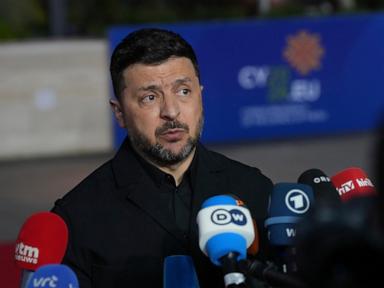
The standoff began with two armored bank vehicles and ended with a diplomatic thaw that few saw coming. On Wednesday, Hungary finally released $82 million in cash and gold to Ukraine, ending a two-month saga that saw Kyiv accuse Budapest of "state-sponsored banditry." The assets, belonging to Ukraine’s state-owned Oschadbank, were returned in full following a period of intense geopolitical friction that threatened to permanently sever the fragile link between the two neighbors.
The return of the shipment marks more than just a financial transaction. It signals a hard pivot in Central European politics following the electoral defeat of Viktor Orbán. While the cash was ostensibly held under the guise of a money-laundering investigation, the reality on the ground suggested a much grittier game of leverage.
The Ambush at the Frontier
In March 2026, Hungarian counter-terrorism forces intercepted a routine transfer of assets from Austria to Ukraine. Seven Oschadbank employees were detained, and the vehicles—laden with bars of gold and stacks of hard currency—were impounded. Budapest’s official line was one of regulatory caution. They claimed the shipment lacked the necessary documentation and hinted at criminal origins.
Kyiv’s reaction was immediate and vitriolic. Foreign Minister Andrii Sybiha did not mince words, labeling the seizure "racketeering." The timing was suspicious. At the time, Hungary and Ukraine were locked in a bitter dispute over oil transit and EU aid packages. To many analysts in the region, the $82 million was not a suspect shipment but a high-value hostage.
The mechanics of the seizure were legally aggressive. Shortly after the vehicles were stopped, the Hungarian parliament passed a fast-tracked law allowing the tax authority to hold assets for 60 days without filing formal charges. This created a legal limbo that left Oschadbank powerless while its capital sat in Hungarian vaults.
Blood Money and Political Leverage
To understand why $82 million mattered enough to risk a total diplomatic breakdown, one has to look at Ukraine’s wartime economy. State banks like Oschadbank are the lifeblood of the country’s liquidity. Moving physical gold and cash through land corridors is a necessary, if dangerous, reality when traditional electronic settlement systems face constant cyber threats or infrastructure damage.
Hungary’s decision to lock down these assets coincided with the height of Viktor Orbán’s re-election campaign. For years, Orbán had positioned Hungary as the primary skeptic of Western support for Ukraine. By seizing the gold, he provided his base with a powerful narrative: Hungary was the "law and order" bulwark against what he portrayed as an unstable, corrupt neighbor.
However, the internal logic of the seizure crumbled when the people involved were considered. The seven detainees were bank professionals, not shadowy couriers. They were released within days, yet the money remained. This discrepancy fueled the theory that the gold was being used as a bargaining chip to force Ukraine into resuming oil shipments that had been disrupted by sanctions and sabotage.
The Magyar Shift
The resolution of the crisis did not come from a court ruling or a sudden discovery by tax investigators. It came from the ballot box. The rise of Péter Magyar and his landslide victory over the Fidesz party changed the calculus in Budapest overnight.
Magyar’s pro-Western platform made the continued detention of Ukrainian state assets a political liability rather than an asset. The "civilized step" mentioned by President Volodymyr Zelenskyy on Wednesday was a direct result of the incoming administration’s desire to reset relations. The cash and gold were moved across the border under heavy guard, returning to a country that desperately needs every cent of its reserves to maintain its currency's stability.
The logistics of the return were handled with significantly less fanfare than the seizure. Ukrainian officials confirmed the arrival of the convoy on Wednesday afternoon. The vehicles, which had been returned empty weeks earlier, are now being reunited with their cargo in Kyiv.
The Cost of the Standoff
While the $82 million is back in Ukrainian hands, the damage to regional trust is not so easily repaired. The incident set a dangerous precedent. If a NATO and EU member state can unilaterally seize the sovereign assets of a neighbor under the nebulous umbrella of "investigative hold," the security of all cross-border financial corridors in Eastern Europe is called into question.
Financial institutions in the region are already adjusting. Rumors are circulating among banking circles in Warsaw and Prague about the creation of new transit protocols that bypass Hungary entirely. The "Orban tax" on transit has become a phrase used by logistics managers to describe the risk of political interference in legitimate business.
The $82 million saga is a reminder that in the current climate, money is never just money. It is a weapon, a shield, and a signal. For now, the gold is home, but the border remains a place where the law of the land is often dictated by the politics of the moment.


