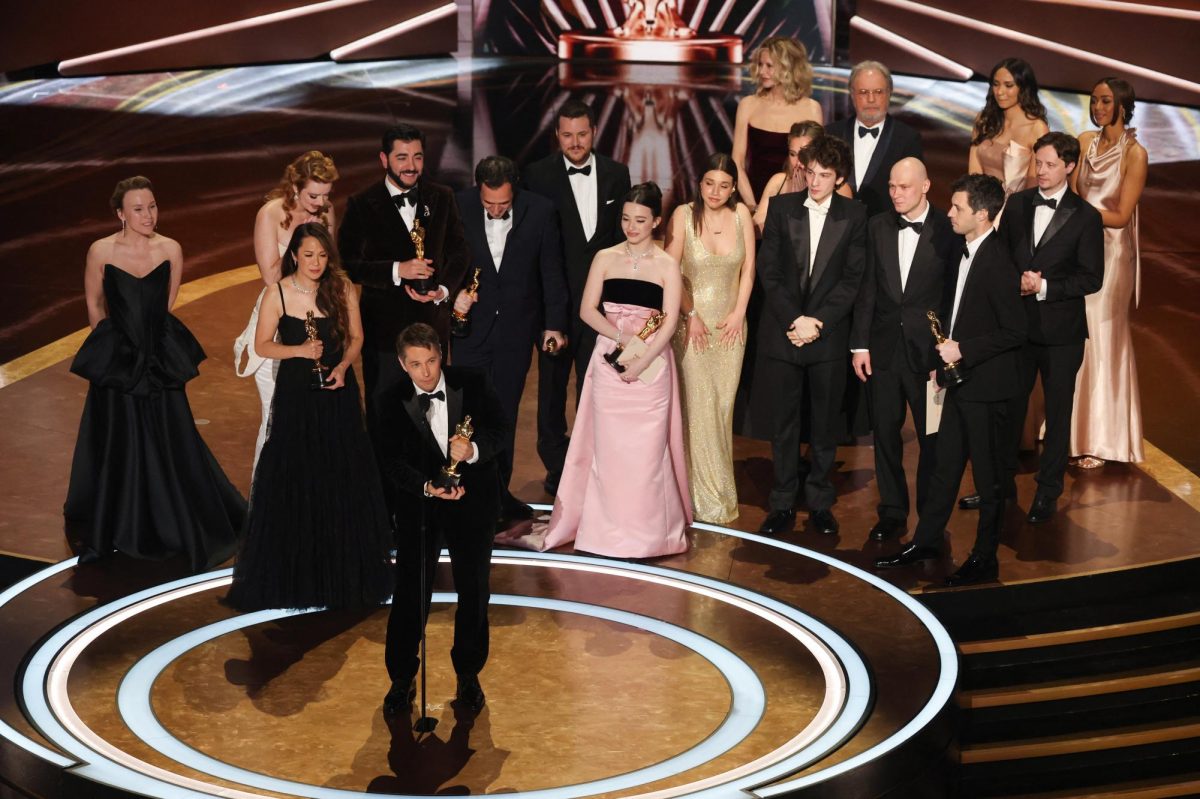
The 98th Academy Awards nominations have arrived with a definitive message: the era of the "safe" prestige drama is over. While traditionalists might see the 2026 Best Picture lineup as a chaotic scramble of genres—ranging from Ryan Coogler’s vampire-horror Sinners to Joseph Kosinski’s high-octane F1—the reality is far more calculated. This list represents an Academy desperate to remain relevant in a fractured media environment, balancing massive record-breaking hits with the increasingly niche output of the old-guard auteurs.
Leading the pack with a historic 16 nominations, Sinners has already won the battle for visibility. But as veteran observers know, nominations do not always translate to the night's final trophy. The real tension lies in the friction between Paul Thomas Anderson’s sprawling One Battle After Another and the intimate, grief-stricken poetry of Chloé Zhao’s Hamnet. This is not just a list of ten films; it is a map of where the money and the influence are moving in an industry that no longer knows if it wants to be a circus or a cathedral. If you liked this post, you might want to look at: this related article.
The Industrial Weight of Sinners and One Battle After Another
Warner Bros. has effectively cornered the market this year by backing both the most nominated film and the critical frontrunner. Sinners is a massive achievement for Ryan Coogler, blending the visceral mechanics of a vampire thriller with a 1930s Mississippi setting that demands social interrogation. Its 16 nods break the all-time record, yet the industry whisper network suggests a "ceiling" for horror. The Academy has historically used nominations to reward technical ambition while reserving the top prize for something more traditionally "prestigeworthy."
That "something" is One Battle After Another. Paul Thomas Anderson has finally delivered a film that feels like a summation of his career: a political thriller, a domestic drama, and a satire all colliding in 1970s California. With Leonardo DiCaprio leading a cast that includes Sean Penn and Benicio del Toro, the film smells like Oscar gold. It currently holds a dominant 74% win probability in betting markets. It is the kind of big, messy, intellectual spectacle that voters love because it makes them feel like the smartest people in the room. For another look on this event, see the latest coverage from GQ.
The Auteur Stand-off
- The Safdie Split: Josh Safdie’s Marty Supreme proves he didn't need his brother to maintain that signature, heart-attack pacing. Timothée Chalamet’s turn as a ping-pong prodigy is the definitive performance of his young career, but the film’s "artificiality"—highlighted by a polarizing bathtub sequence—might keep it in the "cool but not winning" category.
- The Lanthimos Experiment: Bugonia is Yorgos Lanthimos at his most restrained, which is to say, it’s still profoundly weird. Emma Stone and Jesse Plemons are locks for acting praise, but the film’s "eat the rich" subtext feels a bit well-trodden for a 2026 audience.
The International Shift and the Netflix Ceiling
The presence of Kleber Mendonça Filho’s The Secret Agent and Joachim Trier’s Sentimental Value in the Best Picture category is not a fluke. It is the result of the Academy’s expanded international membership finally flexing its muscles. The Secret Agent, a 1977-set Brazilian thriller, is perhaps the most "perfect" film on the list from a craft perspective. It managed a 98% on the Tomatometer by being both a political indictment and a masterclass in tension.
Meanwhile, Netflix continues its expensive pursuit of the top prize with Guillermo del Toro’s Frankenstein. It is a visual marvel, anchored by Jacob Elordi’s creature, but it feels like a legacy nomination. Critics have pointed out that del Toro isn't breaking new ground here; he’s merely refining the gothic aesthetics he perfected in The Shape of Water. If Netflix couldn't win with Roma or The Irishman, a monster movie—no matter how beautifully shot—is unlikely to be the one to break the streak.
Ranked by Tactical Strength
- One Battle After Another: The undeniable heavyweight. It has the guild support, the star power, and the narrative of a "long-overdue" win for Anderson.
- Sinners: The populist choice. If the Academy wants to prove it isn't out of touch with what people actually watch, this is the pick.
- Hamnet: The emotional dark horse. Chloé Zhao’s adaptation of the Maggie O'Farrell novel is devastating. It appeals to the "literary" wing of the voters who find Anderson too cynical.
- The Secret Agent: The critical darling. It will likely take Best International Feature, but its presence here shows that "Global Hollywood" is the new reality.
- Sentimental Value: A showcase for acting. Renate Reinsve and Stellan Skarsgård are the film’s greatest assets, but the story might be too "Nordic-quiet" for a Best Picture sweep.
- Marty Supreme: The "vibe" pick. It’s the most energetic film in the lineup, but its lack of "importance" hurts it.
- Train Dreams: The quiet contender. A beautiful, elliptical Western that feels like a painting. It’s too small to win, but it’s the film most likely to be remembered in twenty years.
- F1: The blockbuster anomaly. Brad Pitt and Joseph Kosinski made a better movie than anyone expected, but its nomination is the reward. The "Maverick" effect only goes so far.
- Bugonia: The intellectual exercise. It’s masterfully acted, but it feels more like a stage play than a cinematic event.
- Frankenstein: The technical giant. It will sweep the craft categories (Production Design, Makeup), but the narrative is too familiar to snag the big one.
The Economics of the 98th Oscars
We have to look at the money. F1 and Sinners represent a shift toward high-budget, "elevated" genre filmmaking that actually makes a profit. The Academy is terrified of the ratings slide that plagued the early 2020s. By nominating a racing movie and a vampire flick alongside a Shakespearean tragedy, they are attempting a "big tent" strategy.
The real casualty in this new landscape is the mid-budget drama. Films like Train Dreams only make it in because of the 10-slot rule. Without the mandatory ten nominees, the 2026 race would likely be a three-way brawl between One Battle, Sinners, and Hamnet. Everything else is just noise designed to keep different segments of the industry happy.
The voting period ends on March 5. Between now and then, expect a ruthless campaign from Warner Bros. to ensure Anderson finally gets his trophy, while Ryan Coogler’s team will continue to push the "historical record" narrative of those 16 nominations. It is a collision of prestige and power that reveals more about the state of the studios than the quality of the art.
Keep a close eye on the Supporting Actor race. If Sean Penn takes it for One Battle After Another, the Best Picture win is essentially a formality. If Stellan Skarsgård pulls off an upset for Sentimental Value, we are looking at a split night where the Academy spreads the wealth to avoid looking like a corporate monopoly.